


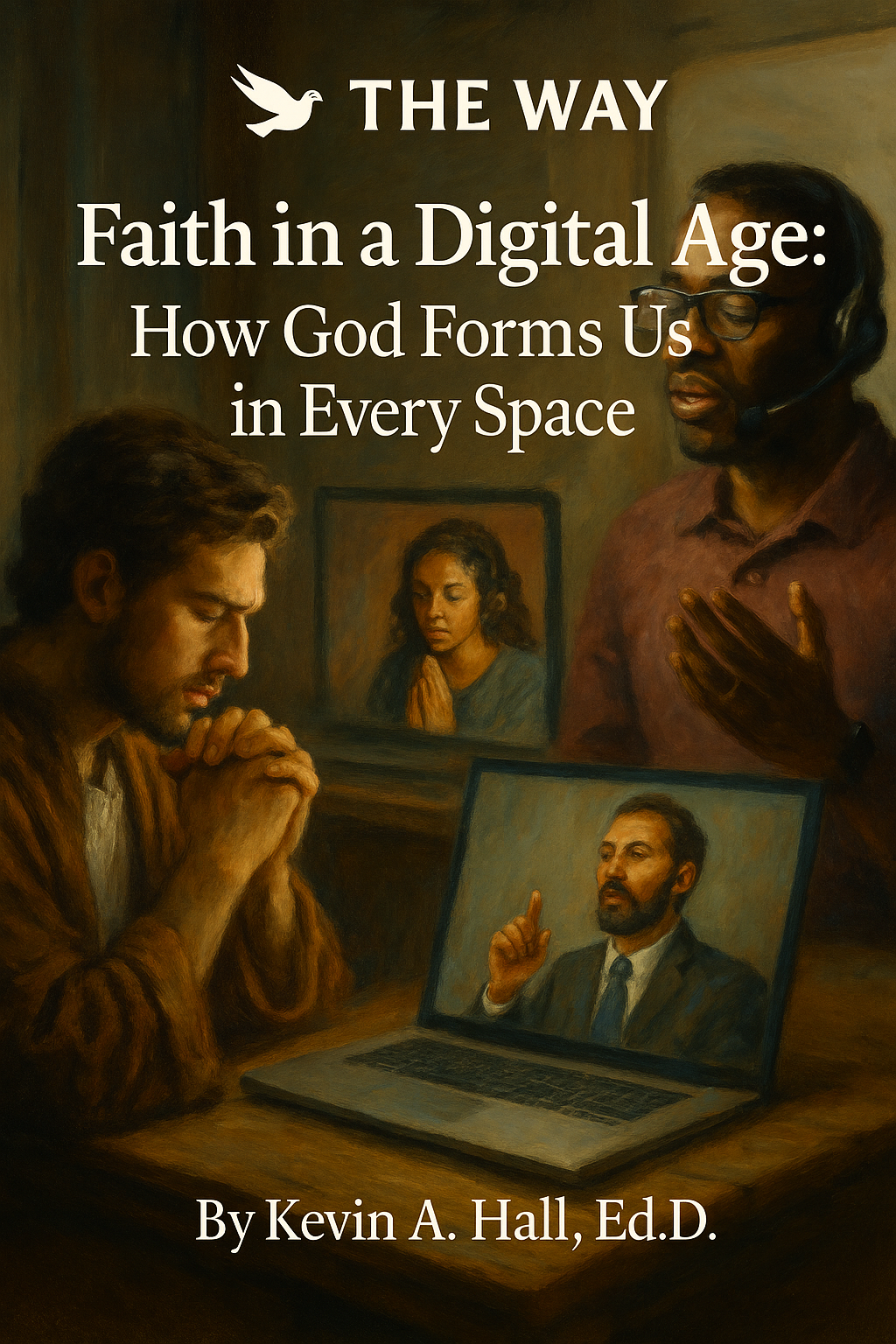
Virtual Fellowship, Real Transformation
Many Christians today worship, study, or seek counsel through digital platforms. For some, it’s a supplement to local church life. For others — introverts, the homebound, or those without a nearby community — it’s a lifeline.
Digital faith communities have become modern expressions of koinonia — fellowship through shared faith and conversation. Within these virtual spaces, believers exchange ideas, pray for one another, and hold each other accountable. Social media, when redeemed by love, becomes a sacred tool for connection.
Technology is not replacing the Church; it is expanding the reach of the Church. Whether through blogs, live worship, or small-group chats, the Spirit uses these tools to foster authentic discipleship. When Christians share testimonies, resources, and reflections online, they create what Campbell and Garner call “storied identity” — faith lived and shared in public digital space.
The Spirit Beyond Distance
One of the great theological insights of the digital era is that space does not limit grace. The Holy Spirit transcends walls and Wi-Fi alike. As Lowe and Lowe write, “It is the relationship that is the important thing, not the communication medium.”
This means that a student praying with a classmate over Zoom, or a pastor encouraging a small group in a WhatsApp chat, participates in the same Spirit-led fellowship that once filled upper rooms and catacombs. God’s presence meets us in all the ways we gather — in-person, online, or hybrid.
Still, formation requires intentionality. Growth doesn’t happen automatically; it happens when communities design their learning, worship, and outreach with spiritual maturity in mind. Christian leaders must therefore design digital discipleship with purpose — using online spaces not for performance, but for presence.
