


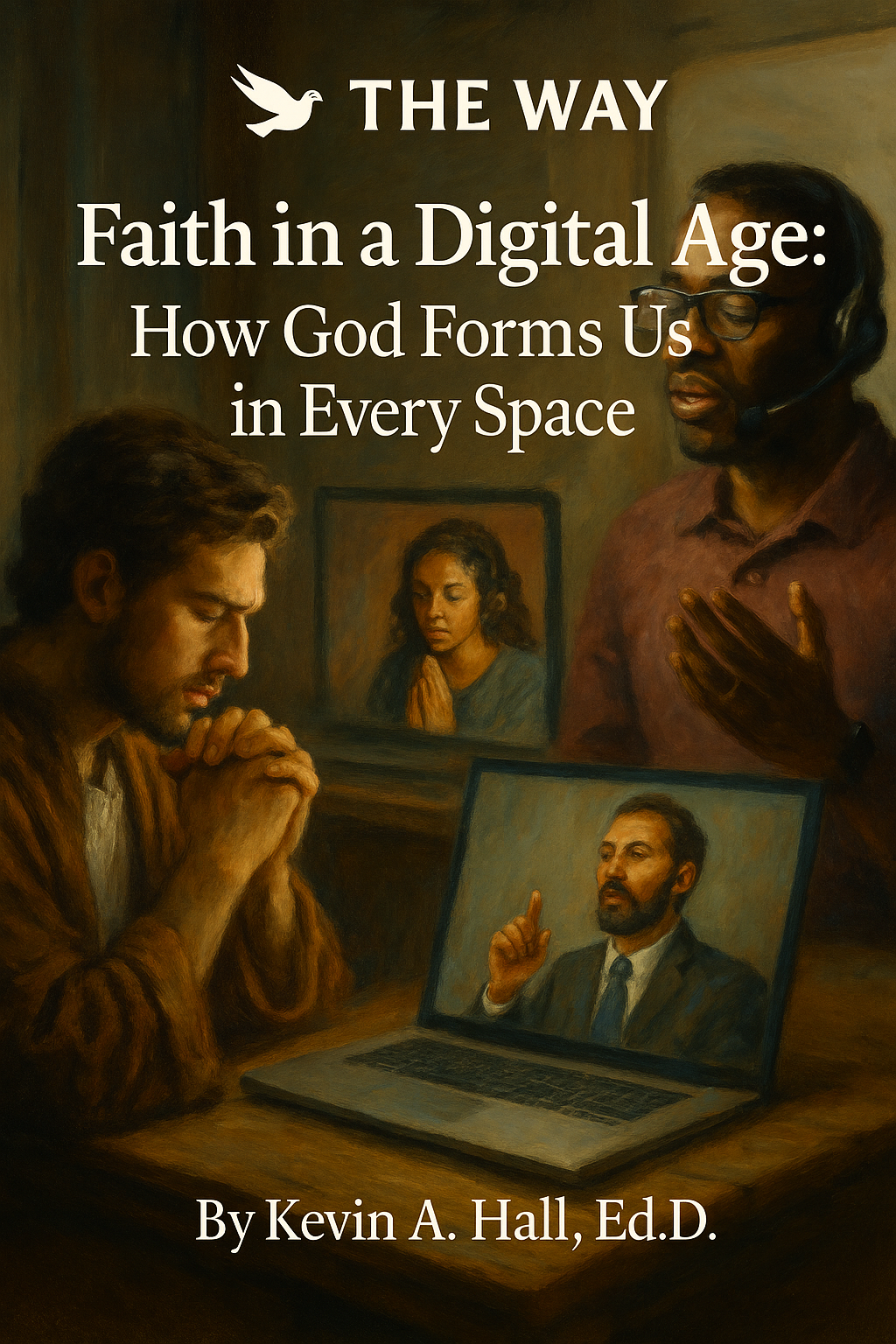
Intentional Formation in the Online World
Formation is both personal and communal. It happens as we worship, converse, and serve together. Digital platforms can help by connecting believers across borders and generations. A senior pastor can mentor emerging leaders in another nation; a youth worker can offer real-time encouragement to struggling teens.
The goal is not simply connection but transformation. Lowe and Lowe call this “intentional design” — creating environments that nurture knowledge, empathy, and service. Technology gives us a new canvas for this sacred task.
Churches can now design “digital monasteries” — spaces of prayer, study, and community shaped by love and truth. The measure of success is not the number of followers, but the depth of fellowship. True formation online looks like believers growing together in grace, guided by the Spirit who unites us beyond walls and time zones.
Theology, Technology, and the Image of God
If we are made in God’s image, then our use of technology must reflect His nature — relational, creative, redemptive. God invites humanity to be “formers of culture,” not passive consumers of it.
When believers use digital tools to teach truth, model justice, and extend compassion, they bear His image faithfully. The question is not whether Christians should be online, but how we can inhabit these spaces with holiness. Each platform becomes a pulpit, every screen a mission field.
Our theology must shape our technology — reminding us that discipleship is not about escaping the world, but transforming it through the Spirit’s power.
