


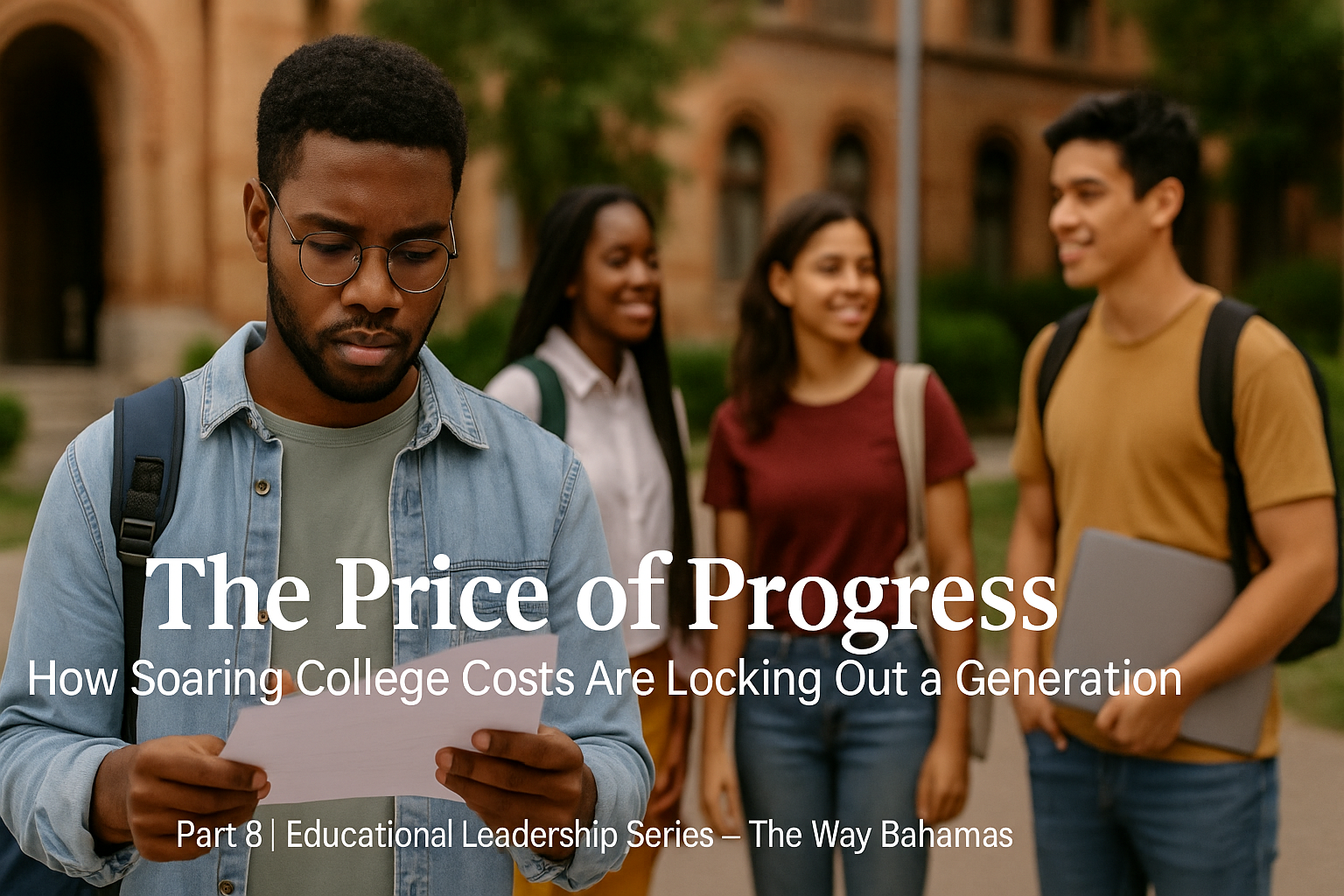
The Rising Cost of the College Dream
Over the past two decades, the cost of higher education in the United States has risen faster than inflation, healthcare, and even housing.
According to the Center on Budget and Policy Priorities (2019), public university tuition has increased by 141%, while private institutions have risen by 181%.
At the same time, state funding for higher education has fallen by 13% since 2008. Universities, forced to compensate for budget shortfalls, have shifted the burden to students.
The result? A generation saddled with record debt.
By 2024, total U.S. student loan debt surpassed $1.7 trillion, impacting nearly 44 million borrowers. Minority and first-generation students are the most affected.
- The average Black graduate leaves school with $53,000 in debt, compared to $46,000 for White students (Dawe, 2023).
- Latinx students are more likely to drop out before completion, often because of financial strain (EdTrust, 2022).
In short, access no longer guarantees opportunity.
The Inequality Loop
Education is supposed to be the great equalizer. But when access is stratified by income and race, it becomes the great divider.
Students from low-income families, particularly minorities, are more likely to work long hours to afford school. Many take on multiple jobs, extend their studies, or drop out entirely. Those who graduate carry debt that delays buying homes, starting families, or pursuing entrepreneurship.
The University of California San Diego (2024) found that for many working-class students, shorter certificate programs now appear more “practical” than bachelor’s degrees—an unintended shift in aspiration caused by cost anxiety.
This cycle doesn’t just affect individuals. It affects entire economies. When the young can’t afford education, nations lose innovation, creativity, and growth.
