


Parallels in the Caribbean
While the crisis feels American, its shadow stretches across the Caribbean.
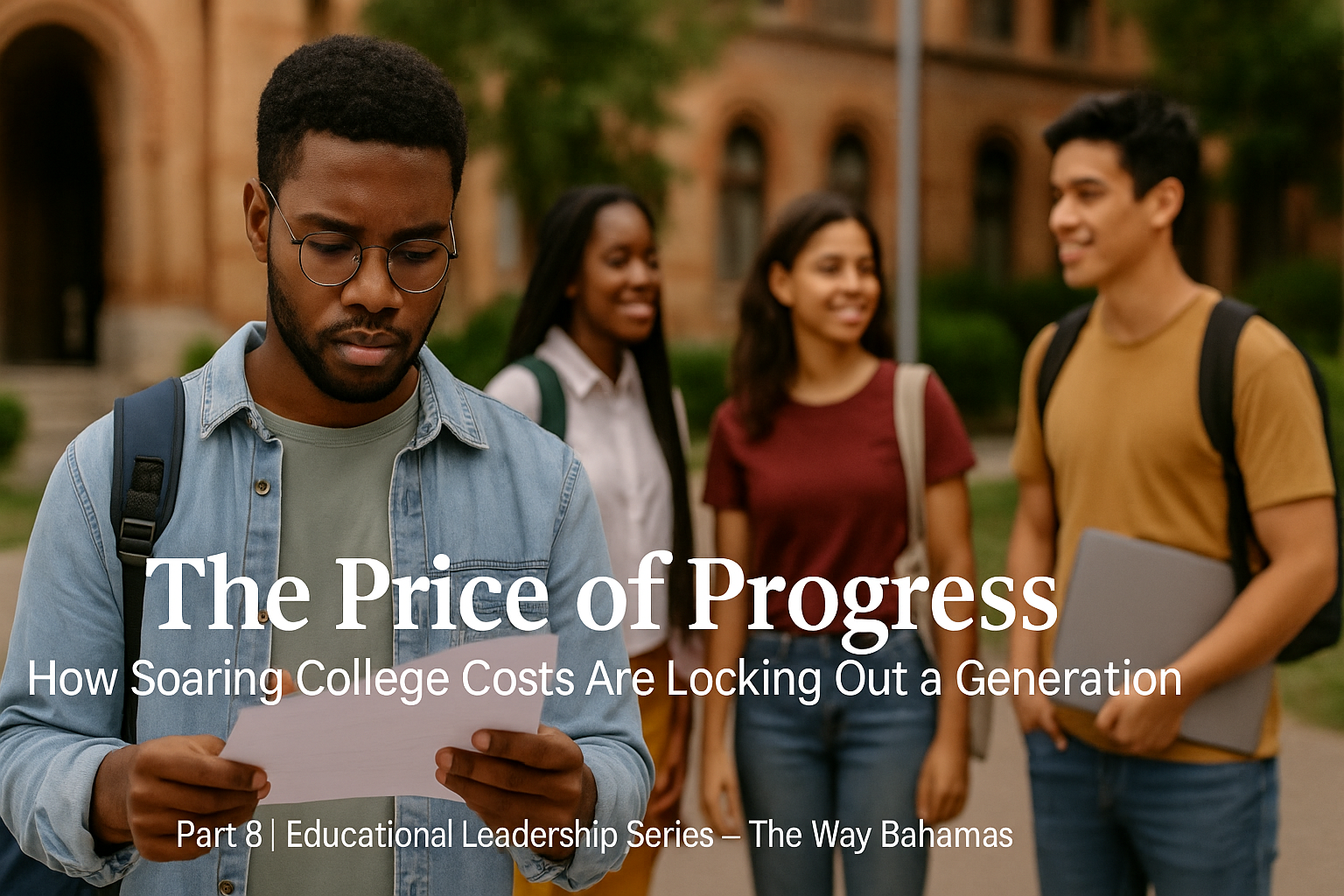
In The Bahamas, Jamaica, and Barbados, tertiary education remains largely state-supported—but funding is tightening. Rising inflation, limited scholarships, and economic instability have made tuition and living costs harder to sustain.
In 2024, the University of the West Indies announced budget adjustments to address falling enrollment, and the University of The Bahamas faced similar fiscal pressures after its transition to autonomy.
The difference, however, is scale. Where U.S. students face trillion-dollar debt, Caribbean students face limited access to loans altogether. Many simply cannot enroll.
Education, once seen as the region’s ladder out of poverty, is becoming a privilege for those who can pay.
Faith, Justice, and Leadership in Education
In the Hebrew scriptures, the prophet Micah reminds us what the Lord requires: “To act justly, to love mercy, and to walk humbly with your God” (Micah 6:8).
Justice, in the context of education, means designing systems that lift—not limit—the poor. Mercy means reimagining tuition, scholarships, and aid so that no student must choose between hunger and hope.
Educational leaders, from ministries to universities, must approach funding reform not as bureaucracy but as moral leadership.
- Governments must reinvest in tertiary education as a national security interest.
- Universities must cap tuition growth and expand need-based aid.
- Faith-based organizations must step into the gap—creating scholarship funds, mentorship pipelines, and alternative learning spaces.
It is time to see education as covenant, not commodity.
