


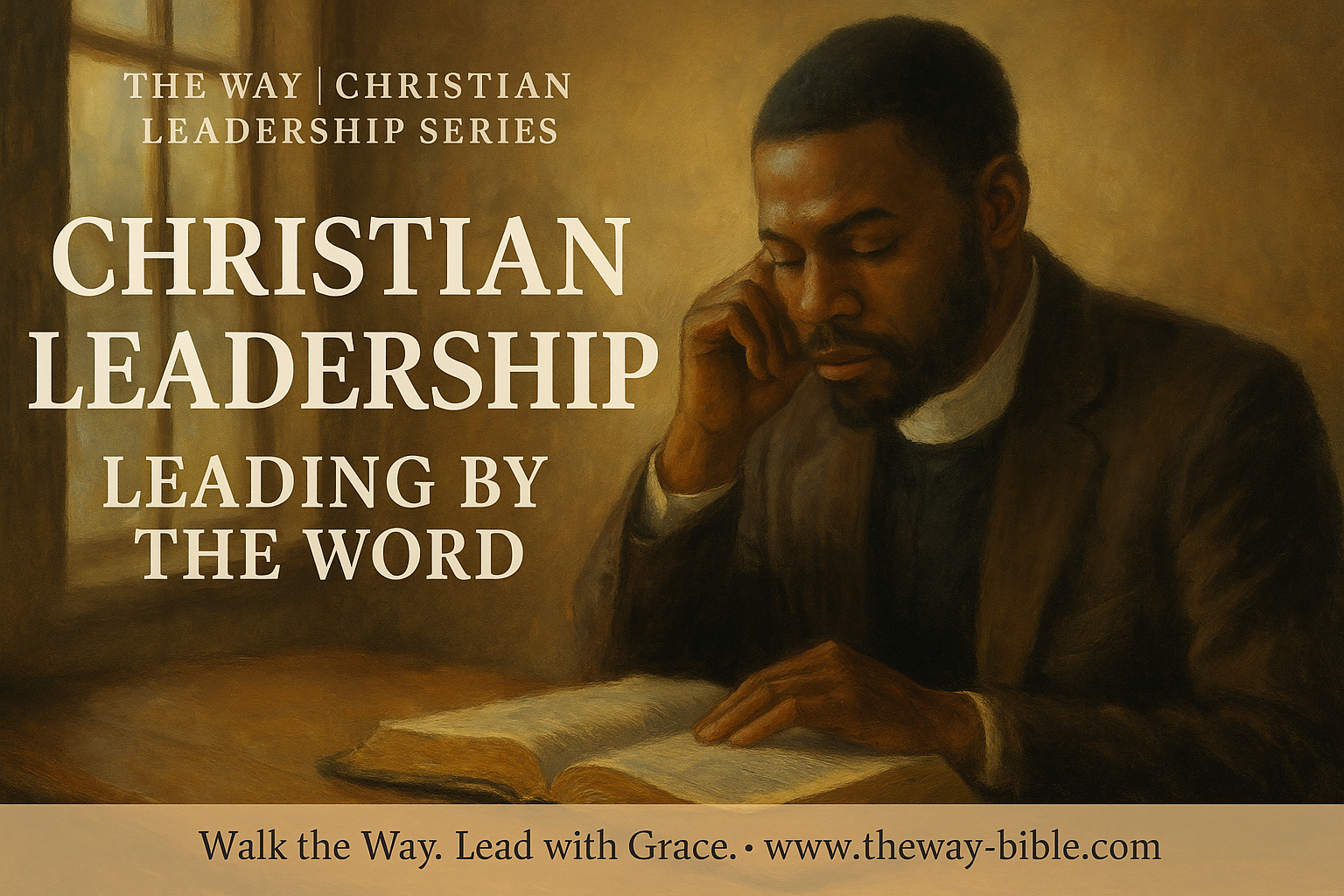
Scriptural Authority as the Normative Foundation
Scripture is the governing canon for all Christian leadership. It provides not merely ethical guidance but ontological grounding—revealing who God is and what His people are called to be. As Hall (2024) observes, “Leadership cannot be authentically Christian if it is not first scripturally defined.” The reformational principle of sola Scriptura demands that all leadership paradigms be measured against the written Word. Second Timothy 3:16-17 identifies Scripture as both source and standard for teaching and equipping; it is the charter document of the Church’s authority. When leaders elevate cultural pragmatism above biblical fidelity, they exchange revelation for relevance. Conversely, when the Bible governs policy, preaching, and pastoral care, the community flourishes under divine direction.
The Theological Nature of Christian Leadership
Christian leadership is first a theological vocation rather than a sociological role. The leader functions as imago Dei—a steward representing God’s moral order within creation. This understanding frames leadership as participatory in God’s redemptive mission, not as autonomous control. Hall (2024) affirms that Christian leadership “flows from God’s character and His self-revelation, not human ambition.” Ecclesiology further defines leadership as service within the body rather than dominance over it (Eph 4:11-13). Thus, Christian leaders act as interpreters of divine will, ensuring that doctrine and practice remain tethered to biblical truth.
