


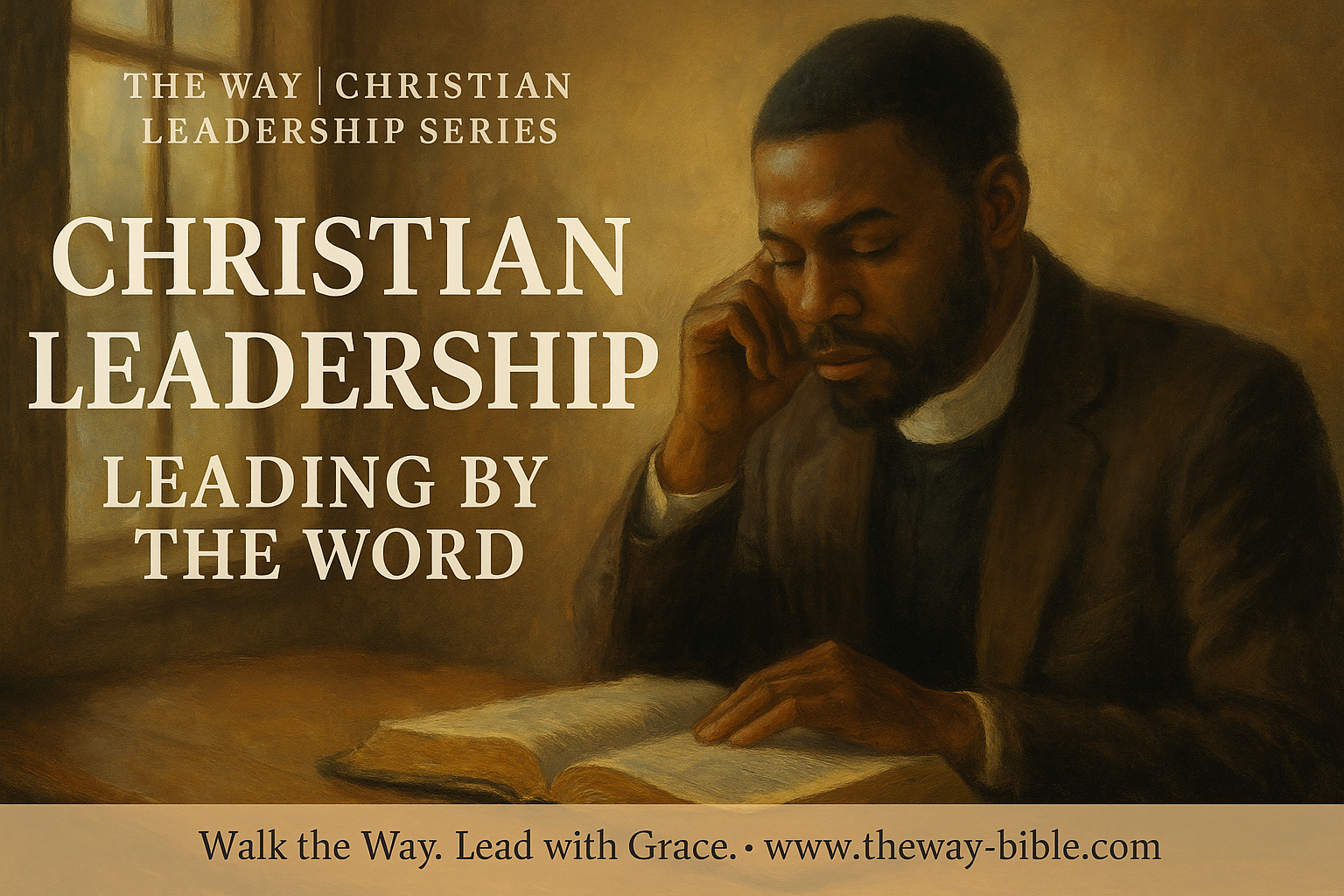
Ethical Integrity and Moral Formation
The credibility of Christian leadership rests on holiness of life. Biblical leaders are not judged by efficiency but by fidelity. Proverbs 11:3 declares, “The integrity of the upright guides them.” Integrity integrates belief and behavior so that public ministry mirrors private devotion. In an era preoccupied with influence, moral formation reasserts the primacy of virtue over image. Hall (2024) argues that “character is the hermeneutic through which followers read Scripture in the leader’s life.” Hence, ongoing disciplines of prayer, confession, and accountability are indispensable. Leadership unmoored from moral formation endangers both the messenger and the message.
Conclusion: Toward a Scriptural Model of Leadership
Christian leadership finds its coherence only when Scripture, Christology, and pneumatology converge. The Word establishes authority; the Son defines its posture; the Spirit provides its power. Hall (2024) concludes that effective leadership arises from “a lived theology of dependence”—a life continually shaped by revelation and sustained by grace. The Church’s renewal depends upon leaders who read the Word not as resource but as rule, who lead not from personal strength but from Spirit-empowered weakness. Such leaders embody the paradox of the cross: dying to self that others might live.
Select Bibliography
- Hall, Kevin A. (2024). The Authority of Scripture: A Theological Foundation for Christian Leadership. Liberty University, CLED 700.
- Blackaby, Henry & Blackaby, Richard. Spiritual Leadership: Moving People on to God’s Agenda. Nashville: B&H Publishing, 2011.
- Sanders, J. Oswald. Spiritual Leadership: Principles of Excellence for Every Believer. Chicago: Moody Publishers, 2007.
- Wright, N. T. Following Jesus: Biblical Reflections on Discipleship. Grand Rapids: Eerdmans, 2014.
- Greenleaf, Robert K. Servant Leadership. New York: Paulist Press, 1977.
✝️ Walk the Way. Lead with Grace.
🌐 www.theway-bible.com
