


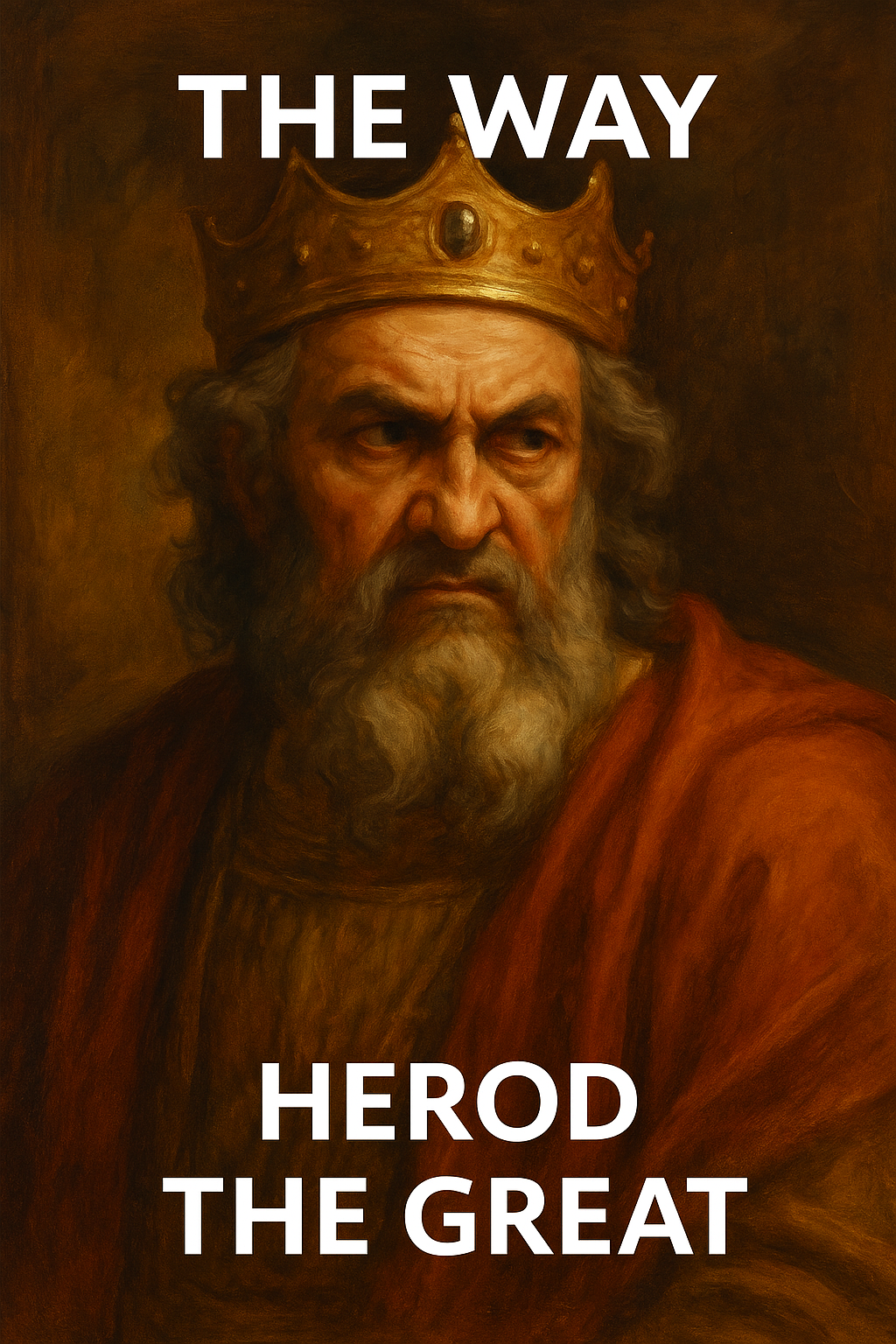
🕊️ The Way | Christian Leadership & Theology Series
Scripture Focus: Matthew 2:1–19; Luke 1:5; Josephus, Antiquities 15–17
Approximate Date: Reigned 37–4 B.C.
Historical Context: Roman client-kingship; transition between the Old and New Testament eras.
A King Obsessed with Control
Herod the Great ruled Judea under Roman appointment — a man of extraordinary vision and terrifying insecurity. Descended from Idumean converts to Judaism, he was technically an outsider, a non-Davidic ruler placed on the throne by Rome’s Senate with the backing of Mark Antony and later Augustus Caesar.
From the beginning, his crown came with suspicion. To the Jews, he was Rome’s puppet. To Rome, he was useful so long as he kept peace. To Herod, survival meant eliminating every threat — real or imagined.
He married Mariamne, a Hasmonean princess, to secure legitimacy, but paranoia drove him to eventually execute her, her two sons, and several other family members. Augustus is reported to have quipped, “It is better to be Herod’s pig than his son.”
Yet Herod was also a master builder, a visionary who transformed Judea’s landscape. He rebuilt the Temple of Jerusalem on a scale that stunned the ancient world, constructed Caesarea Maritima as a Roman-style port city, and fortified Masada and Herodium as symbols of royal power. His architecture rivaled that of emperors.
But the same hands that built the Temple also signed death warrants for infants (Matthew 2:16). The same mind that engineered beauty engineered bloodshed.
