


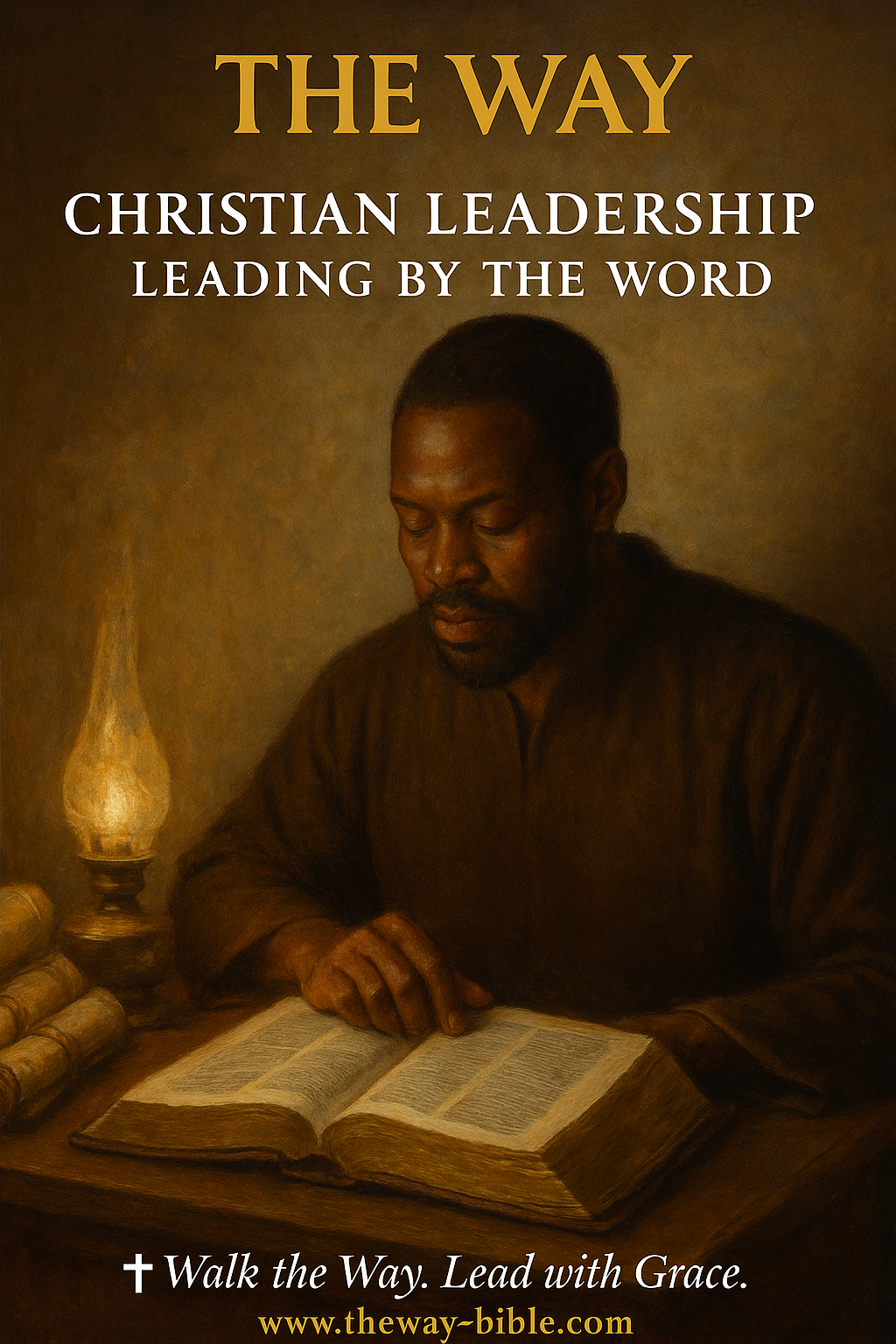
🕊️ THE WAY | CHRISTIAN LEADERSHIP
The Challenge of Leadership
Leadership in any age carries both opportunity and weight. Within the Christian context, the challenge is compounded by the call to represent the heart of God to a watching world. Many leaders enter ministry with zeal but soon find themselves facing fatigue, conflict, or discouragement. From Moses in the wilderness to Paul in the Roman prisons, God’s servants have wrestled with the same question: How do I lead God’s people when the burden feels too great?
True Christian leadership begins not in personal ambition but in divine calling. God does not call the equipped; He equips the called. Yet, to be equipped, the leader must remain rooted in Scripture, guided by the Spirit, and accountable to the community of faith. The crisis of leadership in today’s Church is often not one of skill, but of submission—submitting one’s methods, motives, and mind to the authority of God’s Word.
The Authority of Scripture
The Bible remains the leader’s primary compass. It defines not only what leadership is but also what it is not. In an age of competing worldviews, Scripture offers both anchor and direction. Christian leadership is therefore theological before it is managerial. It begins with the conviction that “all Scripture is God-breathed and is useful for teaching, rebuking, correcting and training in righteousness” (2 Tim. 3:16, NIV).
This conviction distinguishes Christian leadership from secular models. The leader who esteems the Bible as ultimate authority does not lead by charisma or consensus but by conviction. Scripture becomes the governing constitution for decision-making, integrity, and accountability. When leaders depart from the Word, they exchange revelation for opinion—and the mission of God for the maintenance of self.
To lead by the Word is to remain teachable under it. The best leaders are those who, like Ezra, have “set their hearts to study the Law of the Lord, and to do it, and to teach His statutes and rules in Israel” (Ezra 7:10).
