


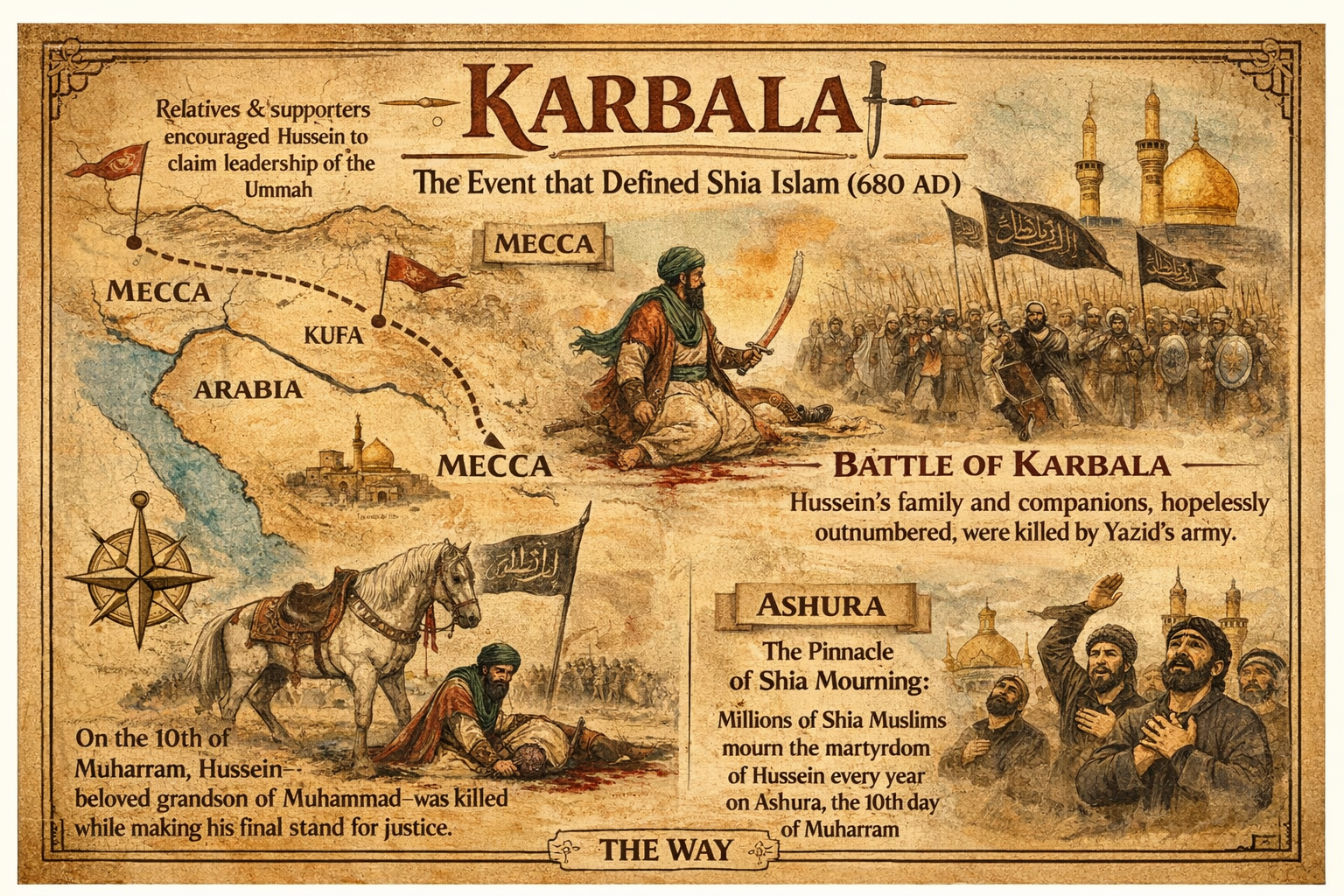
The division between Sunni and Shiite Muslims is one of the most consequential religious developments in world history. What began as a dispute over leadership in the seventh century eventually reshaped the political, cultural, and religious landscape of the Middle East. Today, more than fourteen centuries later, that divide continues to influence global politics and regional alliances.
To understand this story, we must travel back to the year 632 AD, the year the Prophet Muhammad died in the Arabian city of Medina.
Muhammad had united much of the Arabian Peninsula under the banner of Islam. Through his preaching and leadership, scattered tribes had been transformed into a religious and political community known as the Ummah, the community of believers. Yet Muhammad left behind no clear written instructions regarding who should lead this rapidly growing movement after his death.
The absence of a clear succession plan created an immediate crisis.
Some of Muhammad’s companions believed leadership should fall to the most capable and trusted leader among the early followers. They rallied around Abu Bakr, a close companion of the Prophet and one of the earliest converts to Islam. Abu Bakr was chosen as the first Caliph, meaning “successor” or “deputy,” responsible for leading the Muslim community both politically and spiritually.
Others believed leadership should remain within the Prophet’s own family. Their candidate was Ali ibn Abi Talib, Muhammad’s cousin and son-in-law, who had grown up in the Prophet’s household and was among the earliest believers in Islam. To these followers, Ali represented not merely a capable leader but the rightful heir to Muhammad’s spiritual authority.
For a time, the disagreement remained manageable. Abu Bakr ruled briefly, followed by two additional caliphs—Umar and Uthman. But tensions simmered beneath the surface. Political rivalries, tribal loyalties, and differing visions of leadership gradually intensified the conflict.
The situation erupted into crisis in 656 AD, when the third caliph, Uthman, was assassinated. In the aftermath, Ali was finally recognized as caliph by many within the Muslim community. Yet his rule was immediately challenged by rivals who questioned his authority and blamed him for failing to punish Uthman’s killers.
Civil war followed.
