


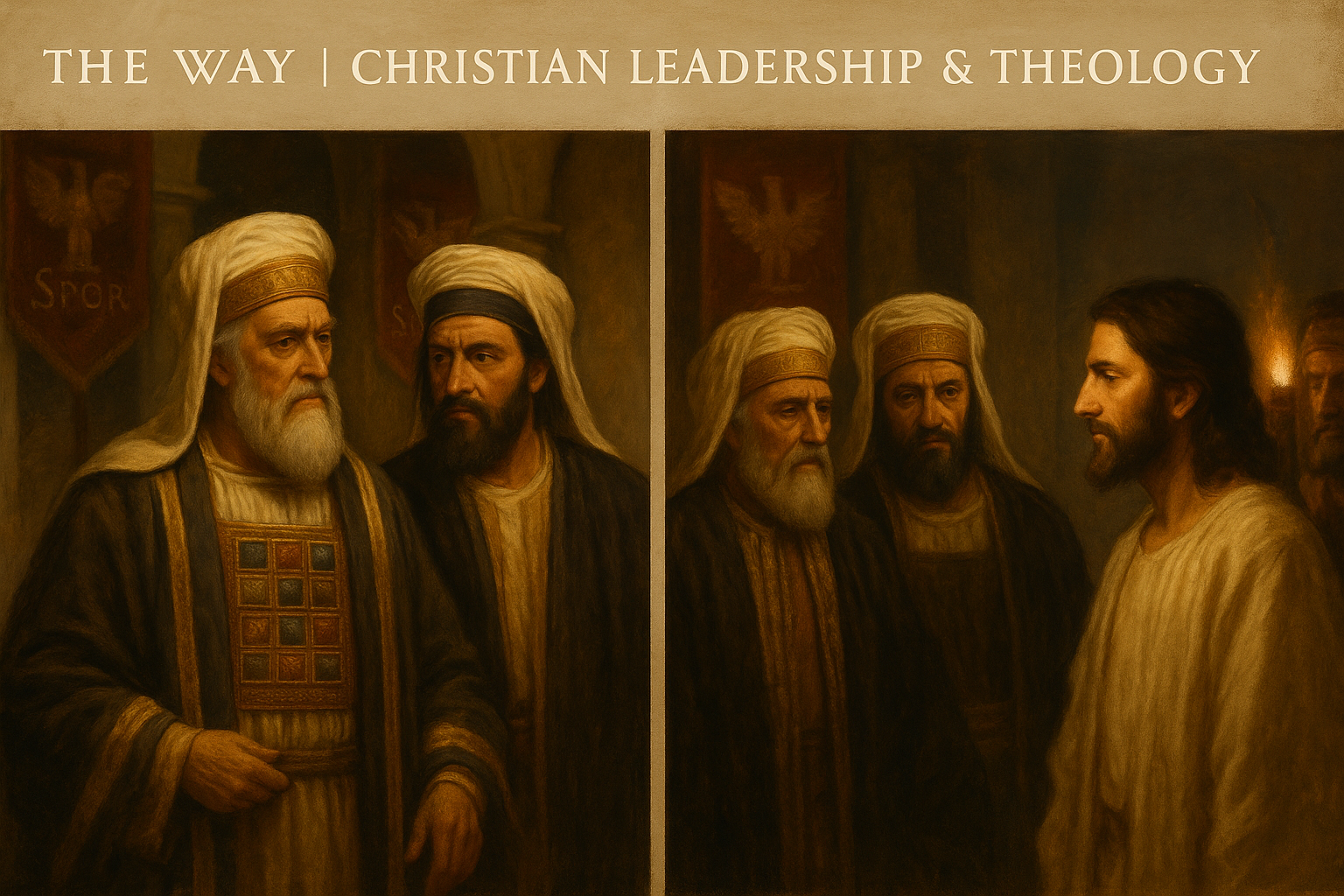
Religion Meets Empire
Annas and Caiaphas served under Roman supervision. The empire allowed Jewish religious practice but demanded political loyalty and taxation. The high priest, therefore, functioned as both religious leader and Roman collaborator — the voice of faith within the system of empire.
The high priesthood of Annas and Caiaphas had become a client institution — balancing devotion with diplomacy, theology with survival. Their challenge was delicate: preserve Jewish identity while keeping the peace with Rome.
The family of Annas effectively ran a temple-based aristocracy. The historian Josephus records that five of Annas’s sons also served as high priests — a dynasty of religious bureaucrats navigating Roman rule (Antiquities 20.198).
Caiaphas, the more pragmatic politician, secured stability during an era of volatility. He understood Rome’s unyielding power. His guiding philosophy was simple: “Better one man die for the people than the whole nation perish.” (John 11:50)
He intended it as political realism, but John’s Gospel reveals the irony — Caiaphas unwittingly prophesied the substitutionary death of Christ.
