


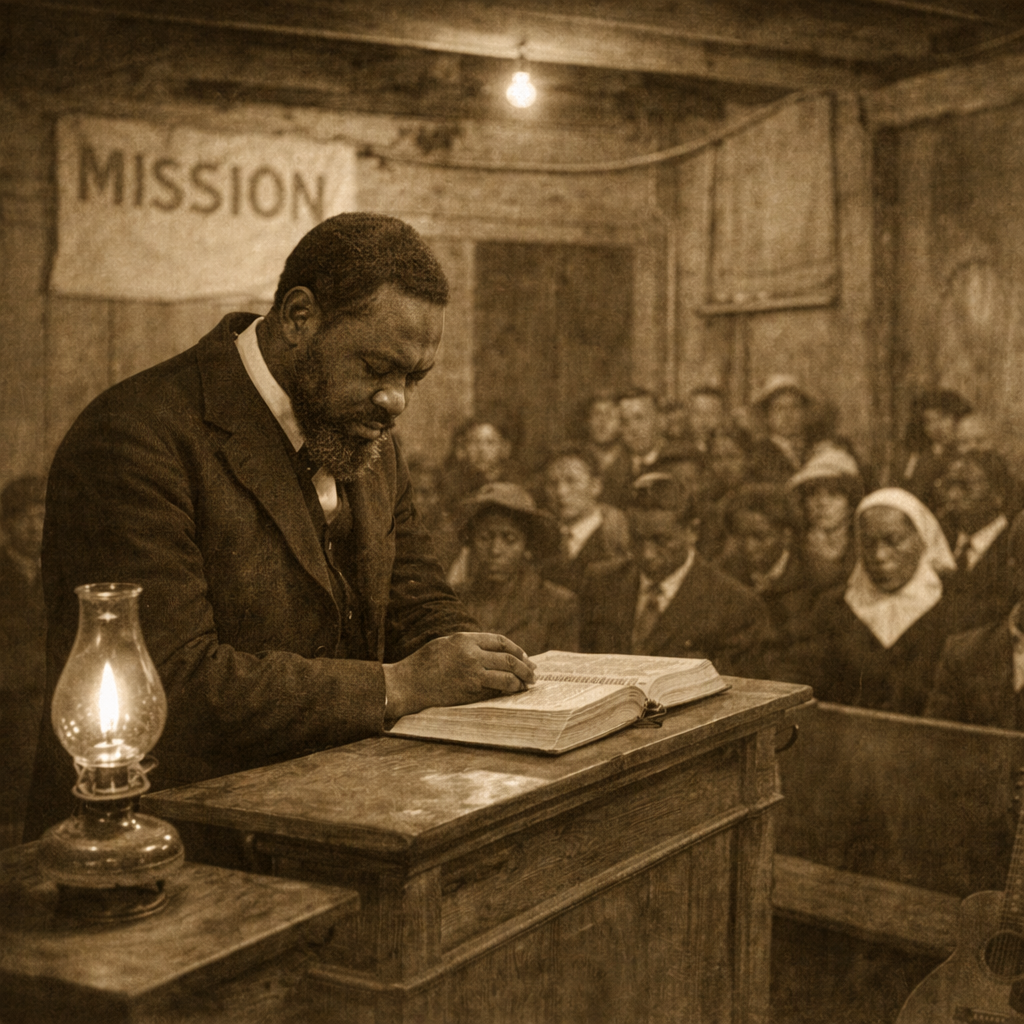
Azusa Street (1906): When the Spirit Fell
In 1906, Seymour was invited to Los Angeles to preach at a small Holiness church. His message on Spirit baptism initially caused controversy, and he was locked out of the church building.
So he began meeting in a home on Bonnie Brae Street.
Then something happened.
Prayer intensified.
Expectation deepened.
And what became known as the Azusa Street Revival began.
At a former warehouse located at 312 Azusa Street, a multiracial, multinational, multi-class congregation gathered. They prayed for hours. They sang without printed programs. They testified freely. And many reported receiving the baptism of the Holy Spirit with speaking in tongues.
What made Azusa remarkable was not only spiritual experience.
It was racial integration.
In an America governed by Jim Crow laws, Black and white believers worshiped side by side. Women preached. Immigrants participated. The poor and educated knelt together.
The revival ran from 1906 to roughly 1909 and sent missionaries across the globe.
Pentecostalism as a global movement traces its modern expansion back to this address.
