


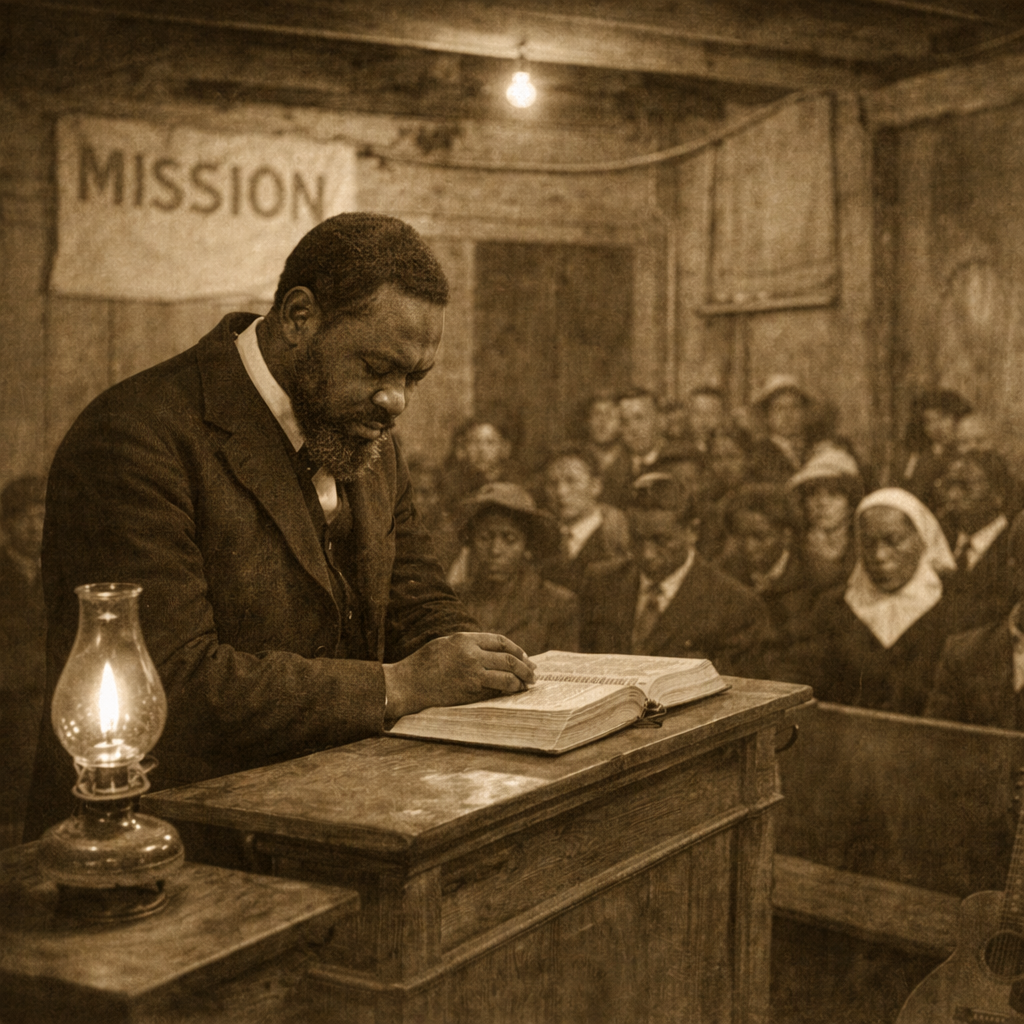
His Legacy
William J. Seymour’s influence is immeasurable.
From Azusa Street emerged:
• The global Pentecostal missionary movement
• Oneness and Trinitarian Pentecostal fellowships
• Denominations such as the Assemblies of God
• The Pentecostal Assemblies of the World
• And eventually movements that would spread throughout the Caribbean, including The Bahamas
If Seymour had not ignited revival in 1906, the structured leadership of Haywood within the PAW might not have found its catalytic environment.
Seymour lit the match.
Haywood built the framework.
Together, they shaped Pentecostal history.
Why Seymour Matters for Black History Month
Black History Month must include ecclesial architects.
Seymour was the son of formerly enslaved parents.
He was segregated in classrooms.
He was marked physically by illness.
He was marginalized socially.
And yet God used him to ignite one of the most significant global Christian movements of the 20th century.
He reminds us:
Spiritual authority does not require institutional privilege.
Revival can emerge from marginalized spaces.
Unity in the Spirit can challenge cultural division.
Humility often precedes global impact.
A Kingdom Reflection
The man who listened from the hallway opened a door for the world.
The one-eyed preacher helped the Church see.
And the revival that began in a modest warehouse on Azusa Street continues to echo in councils, conventions, sanctuaries, and prayer meetings across continents — including in The Bahamas today.
Black history in the church is not peripheral.
It is foundational.
And William J. Seymour stands at its fountainhead.
Dr. Kevin A. Hall @The Way Christian Educational Leadership Institute 2026
