


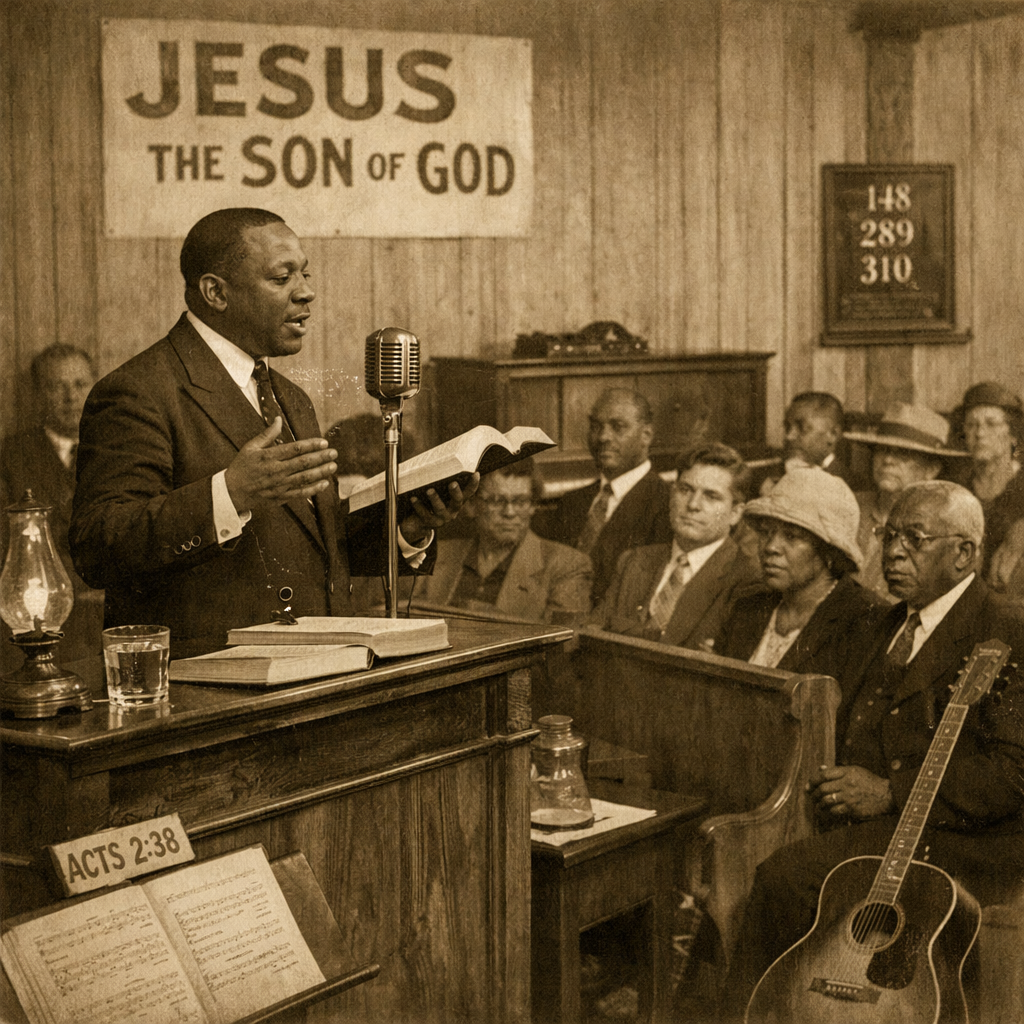
Racial tension, social pressure, and organizational strain eventually fractured the interracial fellowship. By the mid-1920s, white leaders separated. Over time, reorganizations among white Oneness groups would lead to the formation of the United Pentecostal Church International in 1945. The Pentecostal Assemblies of the World became predominantly African-American.
The split was not primarily theological.
It was cultural.
Haywood lived through both unity and division. He endured controversy, defended doctrine, mentored ministers, and structured institutions that would outlive him.
He was transformational not because of charisma alone, but because he articulated vision, elevated conviction, developed leaders, and built durable structure under pressure.
His leadership forged the framework through which Oneness Pentecostalism would expand globally.
And expand it did.
From Indianapolis, the apostolic witness crossed oceans.
Across the Caribbean, the Pentecostal Assemblies of the World took root, including in The Bahamas and Turks & Caicos Islands. What began as an early twentieth-century interracial revival movement became a structured global fellowship.
