


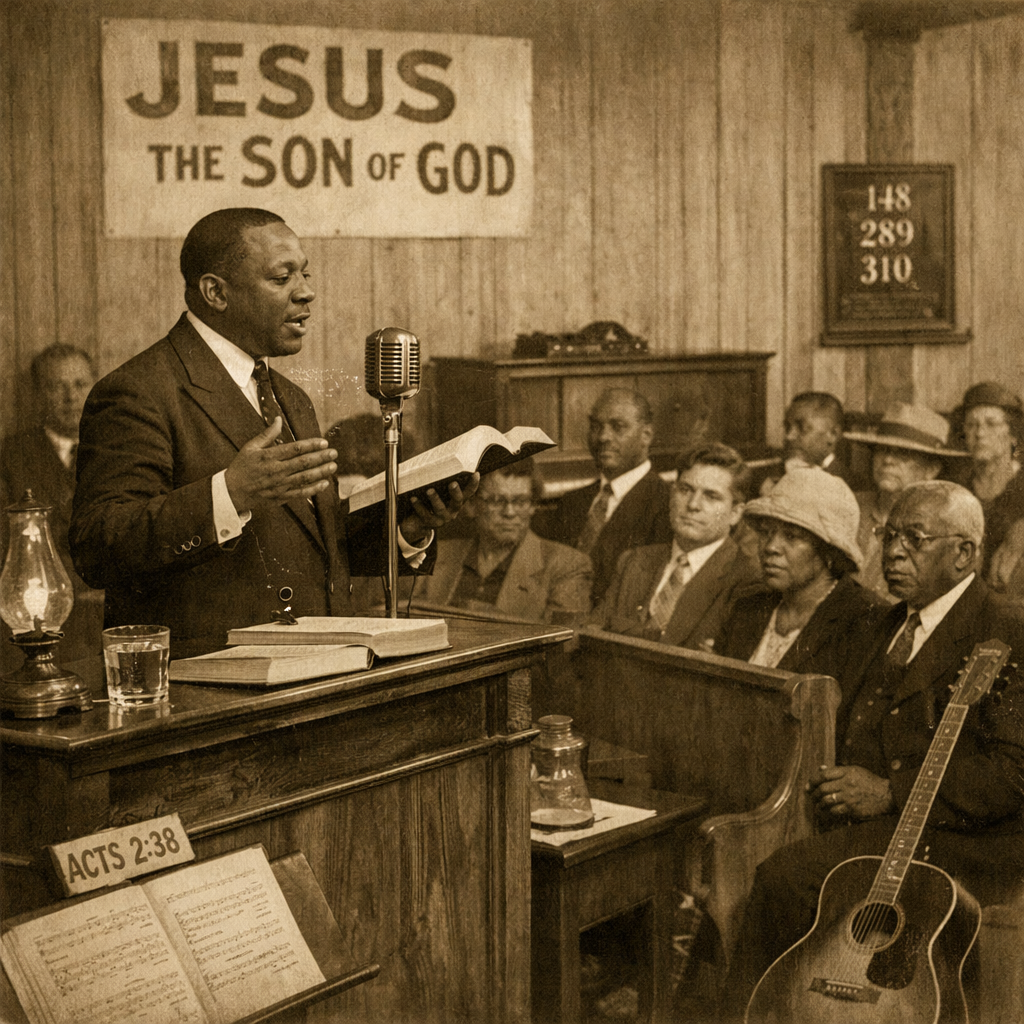
In The Bahamas, the Bahamas & Turks and Caicos Council of the Pentecostal Assemblies of the World (BTCC PAW) emerged through the labor of stalwarts and pioneers who carried the apostolic message island to island. Through decades of pastoral sacrifice, bishopric oversight, evangelistic expansion, and faithful membership, the council grew into a regional fellowship now encompassing more than twenty-one congregations.
This did not happen in isolation.
It happened through leadership continuity.
Through generations.
Through families.
Among those who shaped the council’s development was Diocesan Bishop Ellis Farrington Sr., whose leadership strengthened organizational structure and doctrinal clarity within the BTCC fellowship. Alongside him and before him were other leaders whose prayers and sacrifices stabilized the work in seasons of growth and challenge.
Today, that legacy continues under the diocesan leadership of Dr. Anthony Farrington, supported faithfully by Dr. Gezel Farrington. Bishop Ellis Farrington Jr. and Elder Nina Farrington continue to serve within the council family, reinforcing generational continuity.
Within that broader council structure stands Transformation Ministries International, under the oversight of Suffragan Bishop Dr. Sharon Rolle and alongside her husband, Bishop Paul Rolle, who pastors in Freeport.
Transformation Ministries International now serves as headquarters for the BTCC PAW — not as a replacement of history, but as a continuation of it.
Twenty-five years ago, when Bishop Sharon Rolle established Transformation Ministries International, she did so within covenant, within council alignment, and within apostolic conviction. Over time, the ministry expanded regionally and internationally, strengthening the broader BTCC fellowship.
Her historic ordination as the first female Suffragan Bishop within the council did not redefine the apostolic vision. It demonstrated the movement’s capacity to recognize calling while preserving doctrine.
The same doctrinal pillars Haywood defended remain central:
Baptism in the Name of Jesus Christ.
The infilling of the Holy Ghost.
Holiness of life.
Apostolic order.
The same structural principles he helped organize — episcopal oversight, credentialing systems, council governance — are visible in BTCC’s present framework.
From Azusa to Indianapolis.
From Indianapolis to Nassau.
From early interracial revival to Caribbean council structure.
This is not fragmented history.
It is continuous legacy.
Black History Month invites us to remember more than civil milestones. It invites us to remember ecclesial architects. Haywood was not peripheral to Pentecostal history — he was foundational. Black leadership was not incidental to Oneness Pentecostalism — it was formative.
And today, the Bahamas & Turks and Caicos Council of the Pentecostal Assemblies of the World stands as living evidence that apostolic vision, once structured faithfully, can cross generations and geography.
The story did not end in 1924.
It did not end in 1931.
It did not end in 1945.
It continues.
Through councils.
Through families.
Through churches.
Through leaders.
Black history in the church is not marginal history.
It is Kingdom history.
And in The Bahamas today, that history still breathes
Dr. Kevin A. Hall@The Way Christian Educational Institute
