


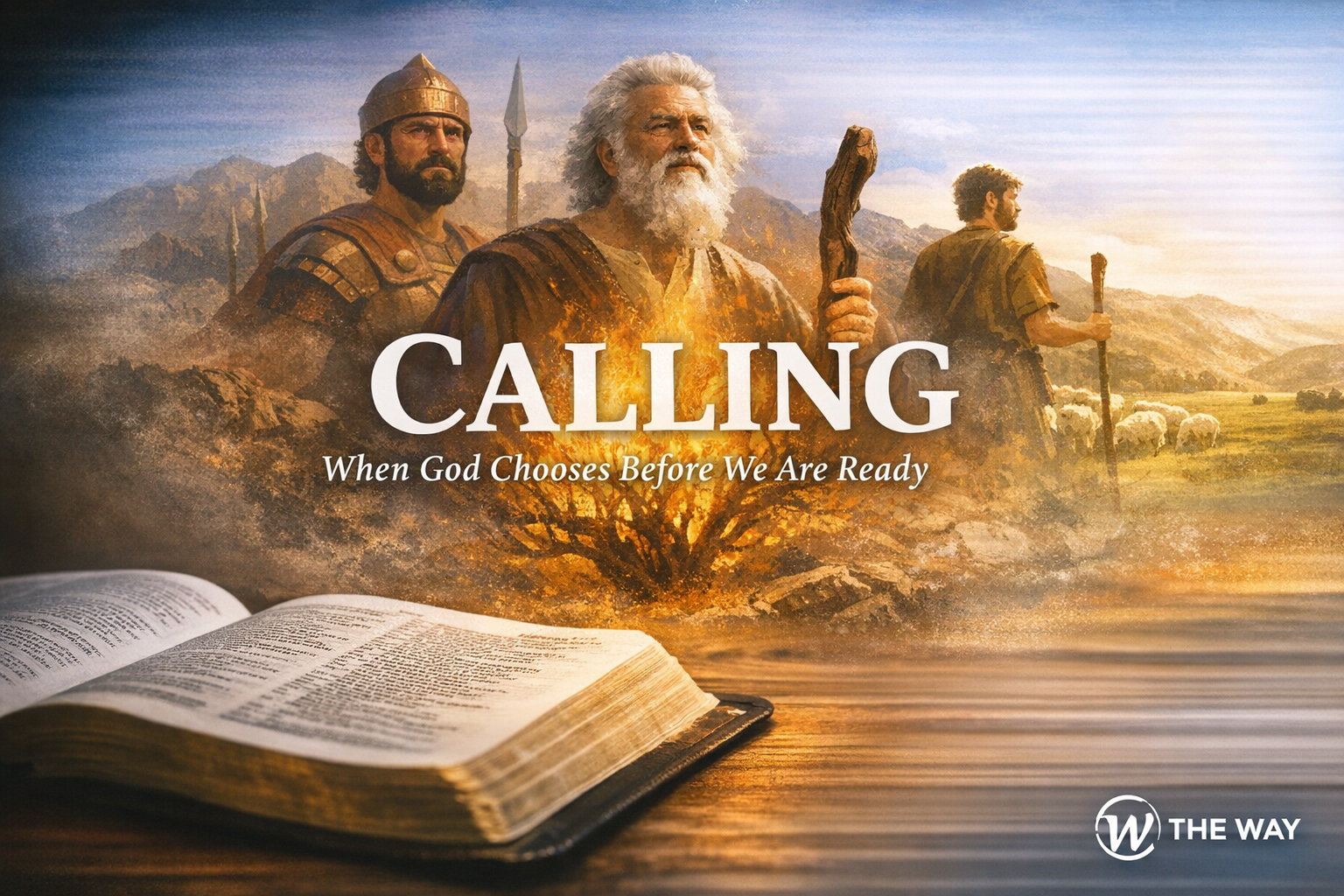
Moses was formed long before he was commissioned. Raised in Pharaoh’s court (Exod. 2:10; Acts 7:22), he possessed education and influence, yet when he attempted to act as deliverer in his own strength, he failed (Exod. 2:11–14). His exile in Midian was not wasted—it was formation. There, in obscurity, he learned dependence, patience, and shepherding. When God finally calls him at the burning bush (Exod. 3), Moses resists: “Who am I?” (3:11). God does not respond with reassurance about Moses’ ability. Instead, He gives a theological anchor: “I will be with you.” (3:12) Calling is grounded not in who the leader is, but in who God is.
Saul’s story offers a warning. In 1 Samuel 8, Israel asks for a king “like the nations,” prioritizing visible strength and cultural models of leadership. Saul fits the expectation—he is tall, capable, and publicly affirmed (1 Sam. 9:2; 10:24). Yet his leadership reveals a deeper fracture. Under pressure, he acts without waiting (1 Sam. 13) and obeys partially rather than fully (1 Sam. 15). Saul begins with calling, but he gradually reshapes leadership around his own judgment. His life demonstrates that calling cannot be sustained where obedience is compromised.
David represents a different trajectory. When Samuel is sent to Bethlehem (1 Sam. 16), he looks for outward qualification. God interrupts: “The LORD looks at the heart.” (16:7). David is not even present—he is in the field. Yet it is in that hidden place that his calling is recognized. His leadership is formed through shepherding, worship, and covenant awareness long before he holds a throne. Even after being anointed, he waits. Calling precedes visibility; formation sustains it.
