


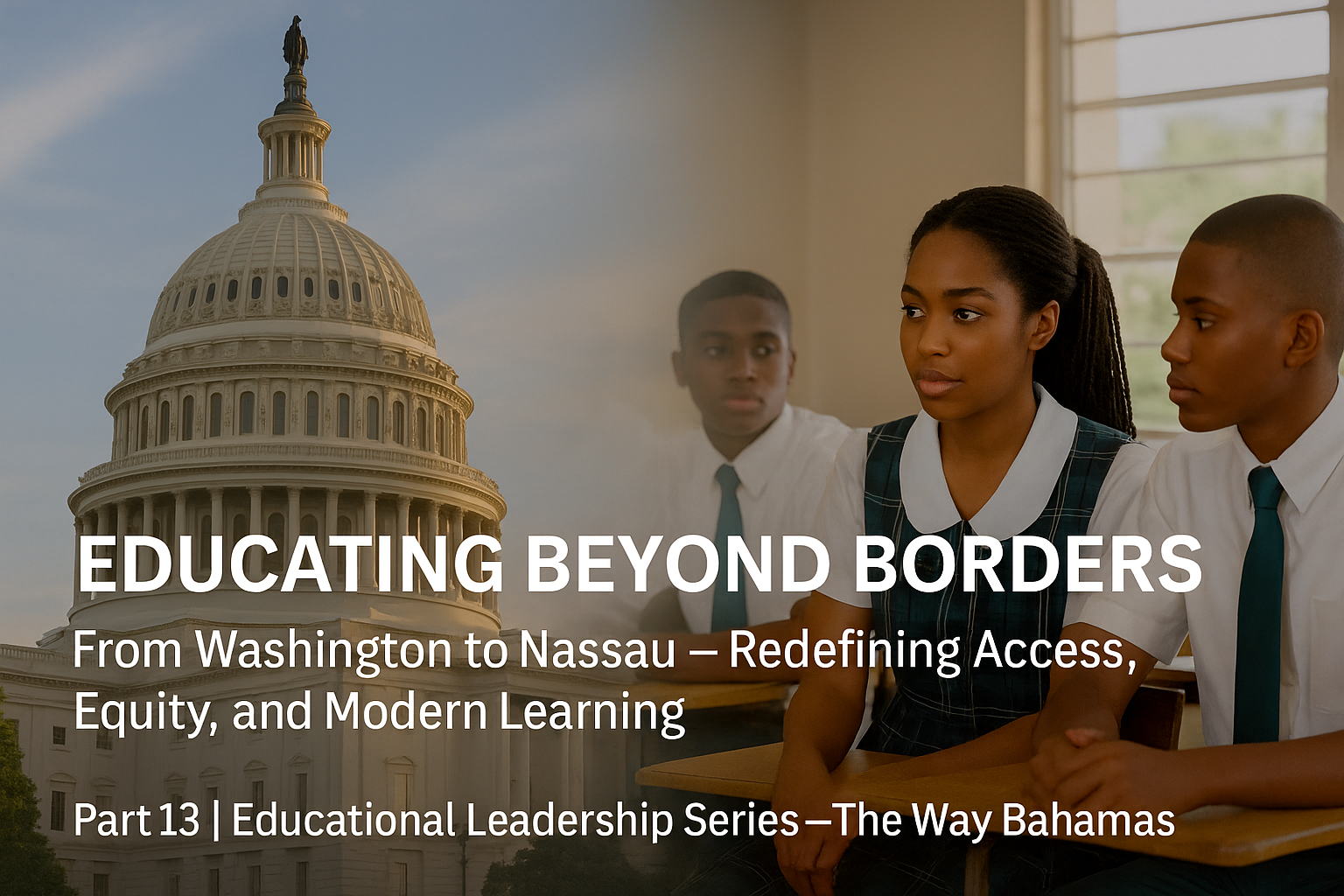
Caribbean Lessons from U.S. Decentralization
If Washington’s restructuring proceeds, states will tailor policy to local economies. Caribbean nations could parallel this by:
1️⃣ Decentralizing decision-making—empowering districts and islands to adapt curricula.
2️⃣ Creating agile credential systems—stackable micro-certificates linked to regional industries.
3️⃣ Strengthening migration policies—recognizing professional qualifications across CARICOM.
4️⃣ Embedding ethical leadership—ensuring reforms uplift the marginalized.
Such steps could move education from bureaucracy to belonging.
Faith in Action
As Micah 6:8 urges, “Do justly, love mercy, and walk humbly with your God.” Educational leadership is not about centralization or autonomy—it’s about stewardship.
When policy aligns with compassion, both systems and souls thrive.
Further Reading
- BBC (2024). Trump pledges to axe the Department of Education.
- Inskeep & Haney (2024). NPR Analysis: Impact of Department of Education Closure on Students.
- Education Dynamics (2024). The Era of the Modern Learner.
- Kreimer (2024). Credential Recognition and Skilled Migration. Migration Policy Institute.
- U.S. Department of Education (2024). College Assistance Migrant Program.
- Hanges et al. (2020). Culture, Climate, Leadership, and Ethical Behavior. Journal of Character and Leadership Development.
- Ewert, M. (2007). Christian Higher Education: Engaging Society and Culture. Direction Journal, 36(2).
Dr. Kevin A. Hall, Ed.D.
The Way – Bahamas Educational Leadership Series 2025
#TheWayBahamas #EducationalLeadership #CaribbeanEducation #FaithInLearning #EducationReform #ModernLearner
