


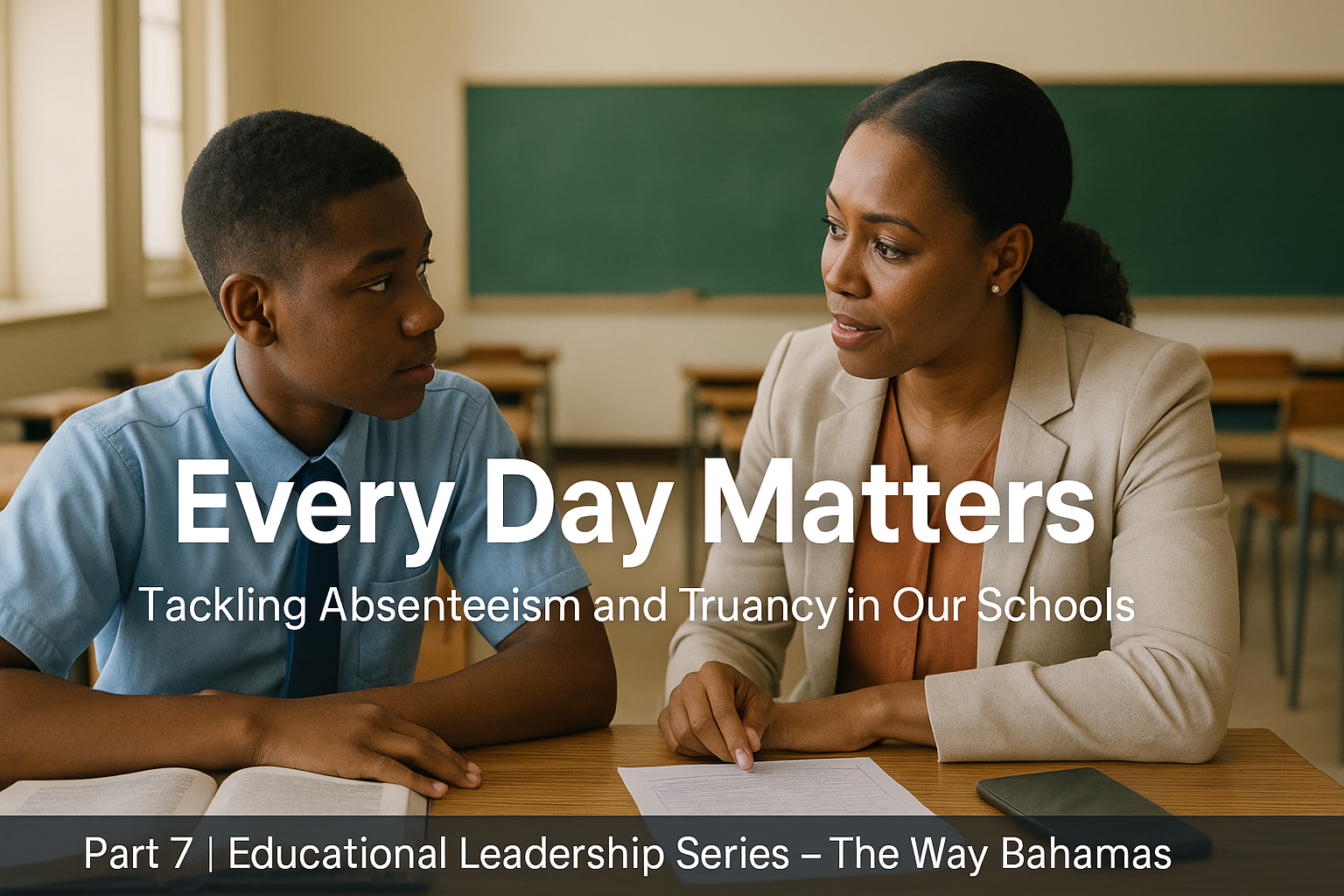
Part 7 | Educational Leadership Series – The Way Bahamas
A Bahamian educator’s encounter with a chronically absent student opens a national conversation about attendance, learning loss, and community responsibility across the Caribbean.
The Story: A Missing Student
Ms. Grant opened her attendance log on Monday morning and frowned. Three students had missed four days in a row. One name stood out — Trevor B. He had been in class the previous Friday, but Monday and Tuesday he was marked absent. Wednesday he was listed as “excused” but with no explanation. Thursday and Friday followed the same pattern.
After class, Ms. Grant asked a colleague, “Have you seen him? Did you hear from home?”
Her colleague shook her head. “Nope. Haven’t heard a peep.”
In that moment, Ms. Grant realized this wasn’t simply about missing a few classes — this could be the beginning of something much deeper. A home challenge, a lack of transportation, a quiet struggle with hunger or anxiety. Whatever the cause, it mattered.
The Global Picture: Absenteeism by the Numbers
Across the world, educators are facing a crisis that threatens learning recovery and student wellbeing: chronic absenteeism — missing 10% or more of school days in a year.
United States Trends
According to the U.S. Department of Education, nearly 28% of students were chronically absent during the 2022-23 school year — an all-time high. That means more than one in four children missed at least three weeks of learning. Research from Attendance Works shows that when 20% or more of students in a class are chronically absent, everyone’s learning suffers.
The causes are multifaceted — health issues, unreliable transportation, family instability, lack of engagement, or economic hardship. The pandemic only widened these gaps, normalizing absentee patterns that persist years later.
