


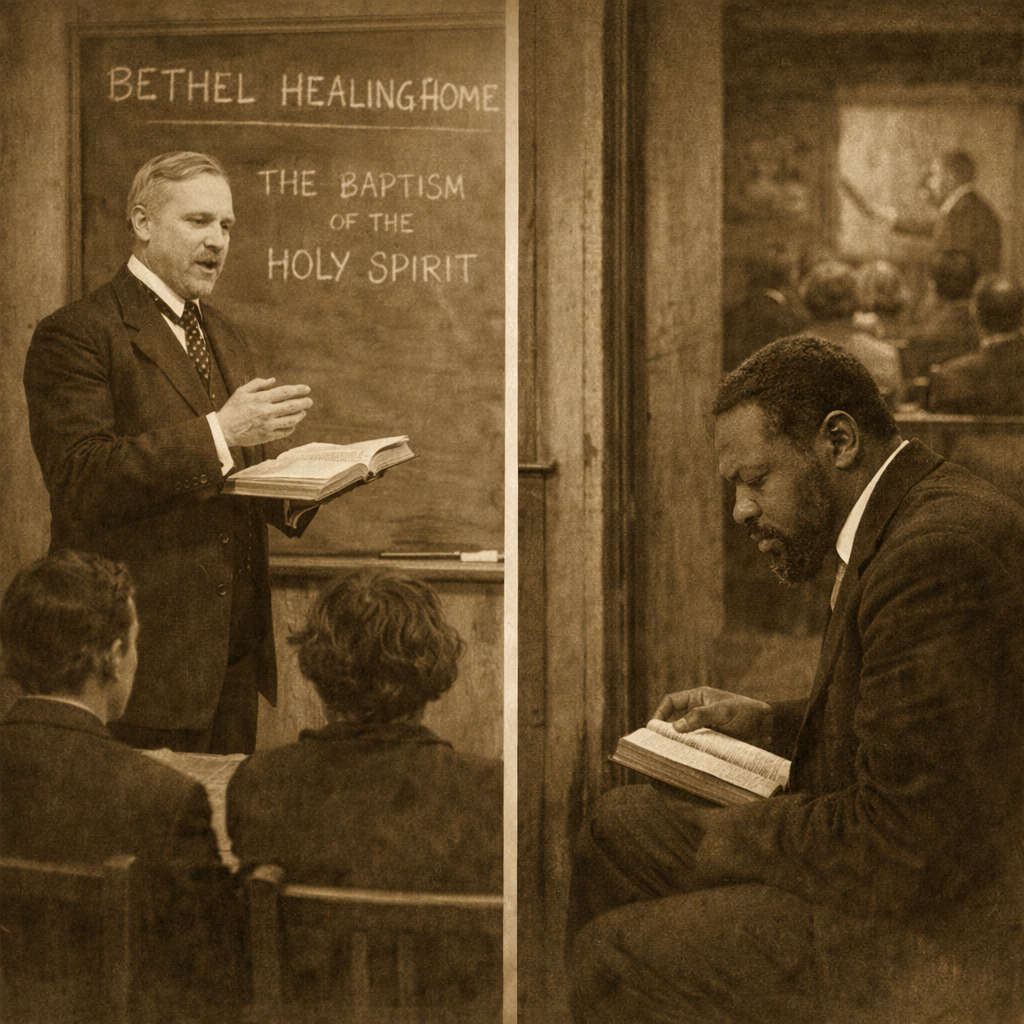
Theology Shared, Vision Divided
It is critical for Pentecostals to understand this tension honestly.
Parham contributed doctrinal formulation.
Seymour embodied spiritual democratization.
Parham framed tongues as initial evidence.
Seymour allowed the Spirit to move across racial, social, and gender lines.
Parham wanted restoration.
Seymour experienced eruption.
Both were part of the story.
But they represented different instincts within Pentecostalism:
• Structured restorationism
• Radical revivalism
And the tension between those two impulses still exists in Pentecostal circles today.
Oneness and Apostolic Continuity
Parham himself did not formally establish Oneness Pentecostalism in the way later leaders would articulate it. However, his emphasis on apostolic restoration and the Book of Acts created theological space for later developments.
The revival environment birthed at Azusa influenced leaders like Garfield Thomas Haywood, who would later help organize and defend Oneness doctrine within the Pentecostal Assemblies of the World.
Without Parham’s doctrinal inquiry, the “initial evidence” formulation may not have crystallized.
Without Seymour’s revival leadership, the doctrine may never have spread globally.
Without Haywood’s structural leadership, the movement may not have stabilized institutionally.
It is a chain.
Question.
Fire.
Structure.
