


Speaking in Tongues and Pentecostal Identity
For many Pentecostals, especially those shaped by classical Pentecostal theology, speaking in tongues as the initial evidence of Spirit baptism remains central.
That emphasis traces back to:
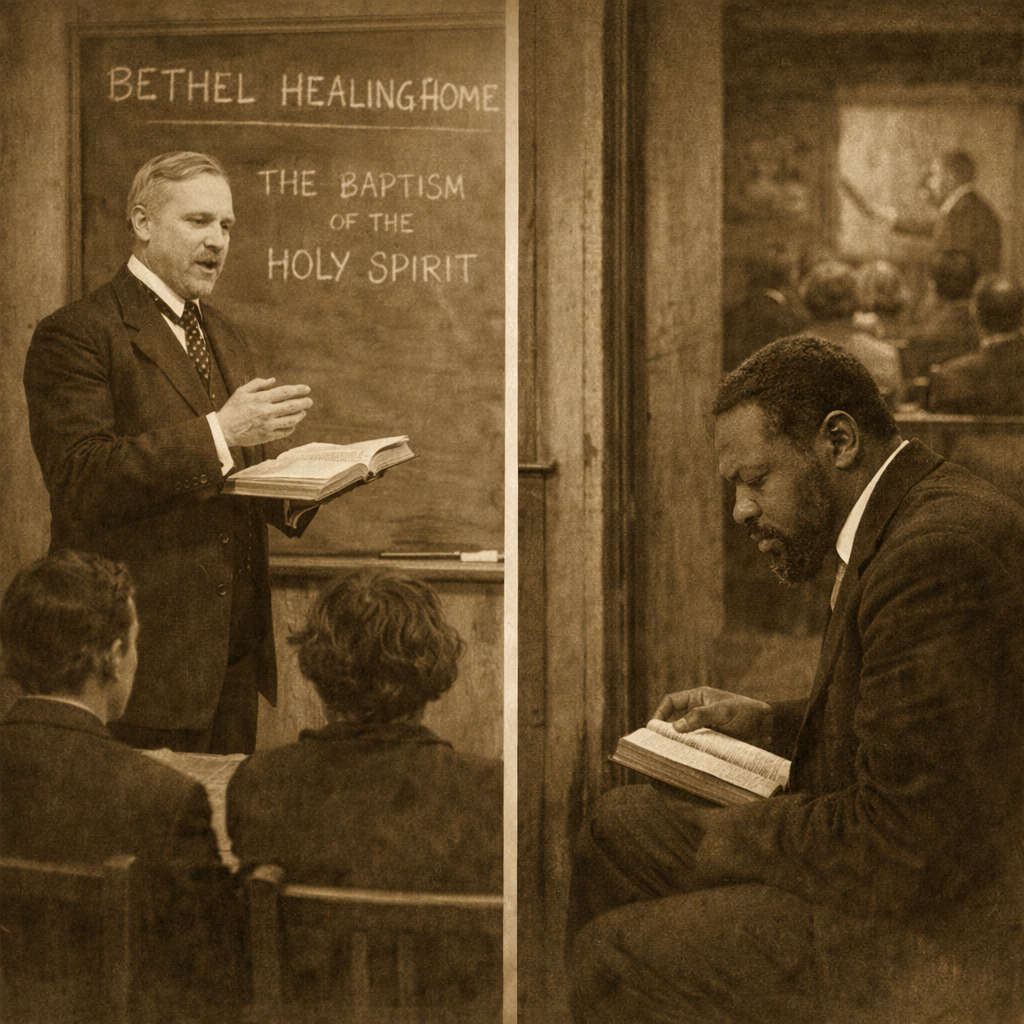
• Parham’s Bible school inquiry
• Ozman’s testimony in Topeka
• Seymour’s revival in Los Angeles
The doctrine was not invented casually.
It was forged in prayer, tested in revival, debated in controversy, and carried globally by missionaries who left Azusa Street with fire in their bones.
Even today, Pentecostal worship services around the world echo with that same conviction:
The Spirit still fills.
The Spirit still empowers.
The Spirit still gives utterance.
A Complicated but Sacred History
The Seymour–Parham relationship reminds us that movements are rarely tidy.
Teachers can shape students who outgrow them.
Revival can disrupt structure.
Culture can fracture unity.
Doctrine can both unify and divide.
Parham asked the question.
Seymour lived the answer.
And history unfolded in between.
