


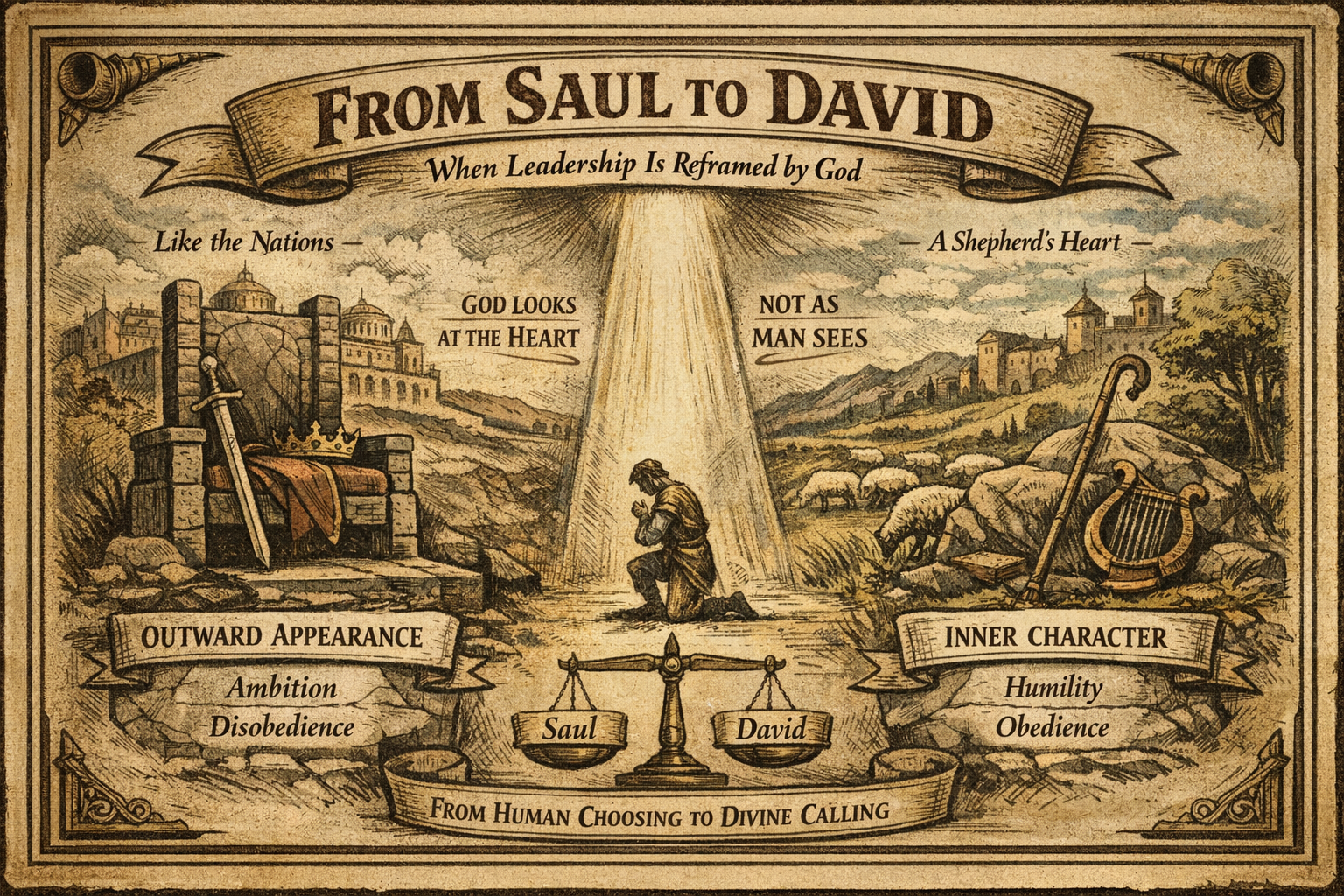
When Leadership Is Reframed by God
Israel’s transition from Saul to David is not merely a change in kings—it is a theological correction in leadership. In 1 Samuel 8, the people ask for a king “like the nations,” prioritizing visibility, strength, and external leadership models. Saul represents this choice: he is impressive, capable, and publicly affirmed, yet his leadership gradually reveals a deeper issue—authority exercised without sustained obedience to God.
By 1 Samuel 16, God pivots. He does not search for another outwardly qualified leader. Instead, He sends Samuel to an unlikely place—to a shepherd in the fields. David is not chosen for visibility, but for heart alignment. This moment reframes leadership entirely: God is not looking for the most impressive leader, but the most responsive one.
This transition reminds us of a central truth in Strand 1:
Leadership is not sustained by appearance or ability—it is sustained by obedience and formation.
