


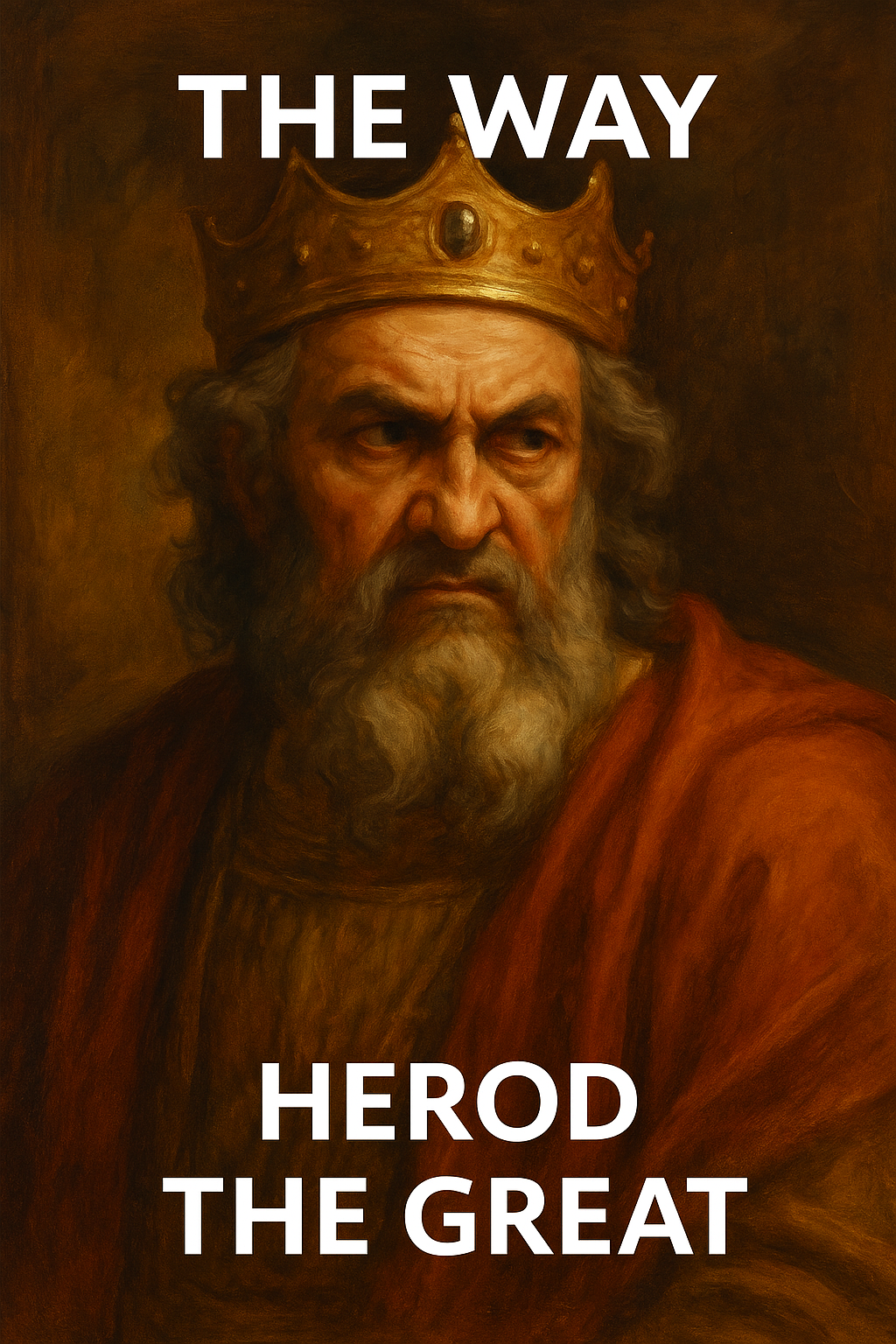
Politics, Propaganda, and Power
Herod’s rule embodied the tension between Roman order and Jewish expectation. Rome allowed autonomy to its client kings so long as they maintained peace and paid tribute. Herod did this exceptionally well — his diplomacy earned him favor with Caesar Augustus and kept Judea relatively stable.
Yet his devotion to power eclipsed his devotion to God. He built temples to Roman deities in Gentile cities, violated Jewish law to fund projects, and taxed heavily to support his grandeur. His reign was marked by paranoia: a sprawling network of spies, secret prisons, and assassinations of potential rivals — including priests and nobles.
When Magi from the East arrived asking, “Where is He who has been born King of the Jews?” Herod’s paranoia erupted into cruelty. The “massacre of the innocents” in Bethlehem (Matt. 2:16–18) revealed the ultimate failure of leadership — the fear of losing control even to the divine.
By the time of his death in 4 B.C., Herod was hated by his subjects, mourned by few, and succeeded by sons who inherited his instability but not his intelligence.
