


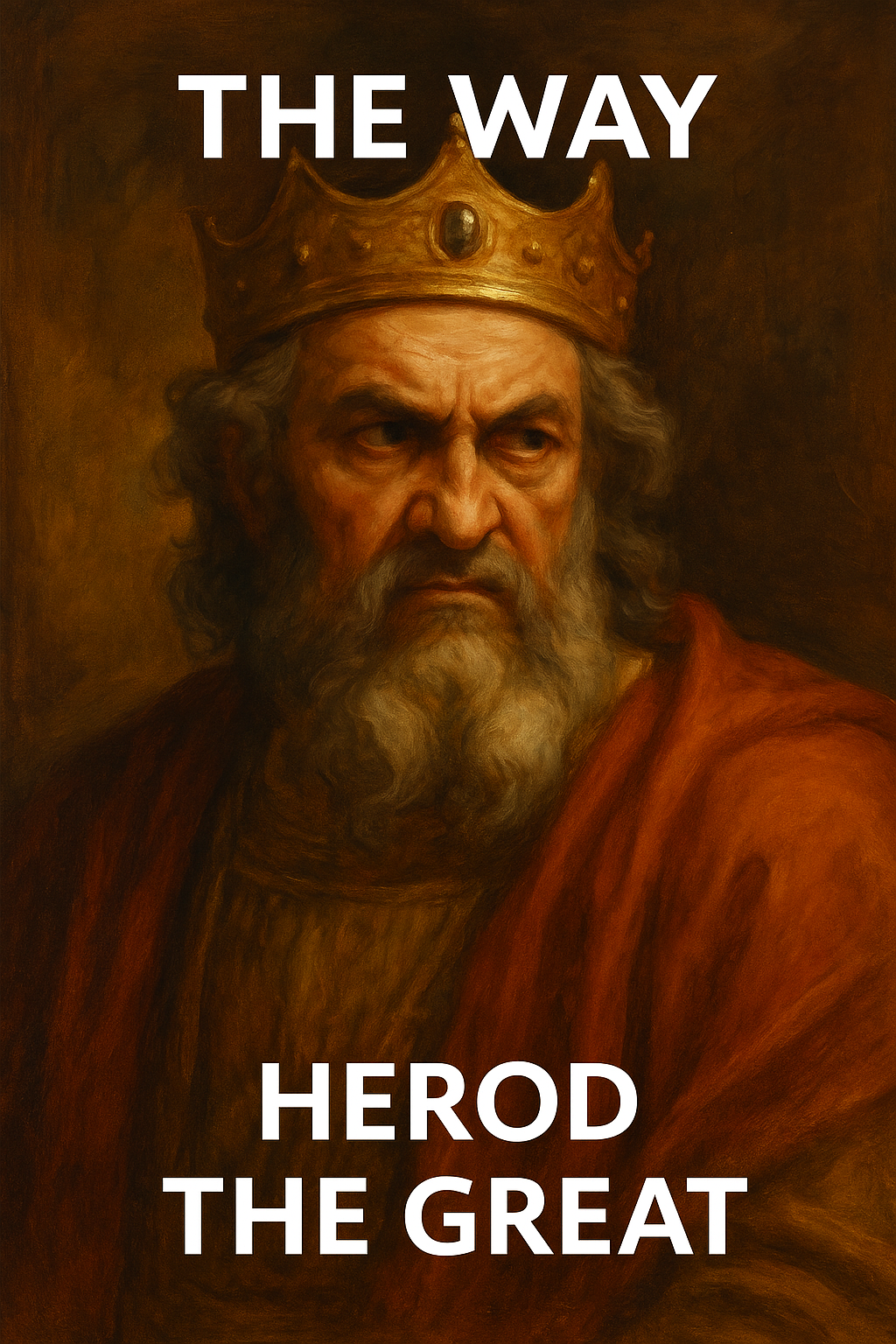
The King Who Missed the Kingdom
Herod’s story stands as a tragic counterpoint to the Gospel. He ruled the land where the true King was born, rebuilt the Temple whose Lord he failed to worship, and tried to destroy the Messiah whose coming fulfilled Israel’s hope.
Theologically, Herod’s reign fulfilled prophecy:
“Out of Egypt I called My Son.” (Matt. 2:15; Hos. 11:1)
His violence drove the holy family’s flight to Egypt, turning tyranny into the backdrop for redemption. Even his political maneuvers served the unfolding of God’s plan — Rome’s roads, laws, and stability (the Pax Romana Herod helped secure) later became the highways for the spread of the Gospel.
Thus, though Herod worked against God’s purposes, God worked through history to accomplish His own.
Leadership Reflection: Power Without Peace
Herod’s leadership warns of brilliance without balance — vision without virtue.
He teaches that:
- Achievement cannot substitute for integrity. You can build empires and still lose your soul.
- Fear destroys legacy. The leader who leads by paranoia rules an empty kingdom.
- God’s sovereignty outlasts human schemes. The child Herod sought to kill became the King Herod could never dethrone.
Herod’s greatness was architectural, not moral. He could rebuild cities but not his conscience. He reminds modern leaders that success without surrender leads to spiritual collapse.
Modern Reflection: The Builder and the Baby
Herod represents every generation’s temptation — to build monuments instead of submitting to the Messiah. His story asks every leader: Are you building something for God, or instead of God?
Even the grandest achievements crumble, but the Kingdom born in Bethlehem still stands. The man who sought to kill the King of kings became a footnote in the story of the One who reigns forever.
Dr. Kevin A. Hall
The Way | Christian Leadership & Theology Series
📖 #HerodTheGreat #Leadership #Power #Fear #TheWay #KingdomLeadership
