


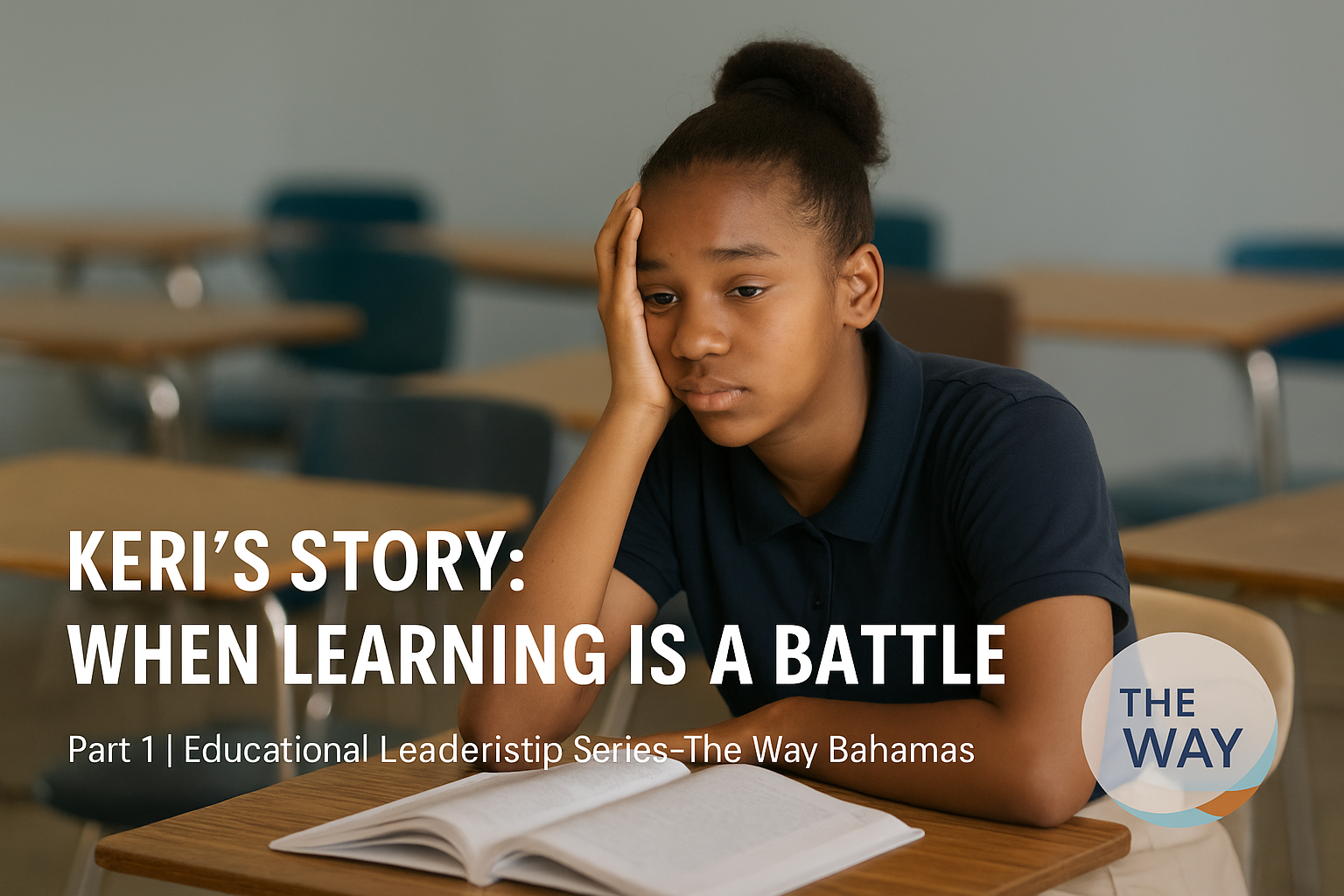
Part 1 | Educational Leadership Series – The Way Bahamas
Meet Keri, an 11th‑grade student at a government high school in Nassau. Every morning she wakes up hoping today will be different—hoping she can stay with the roll call, keep up with the lesson, maybe even understand the new material the teacher puts on the board. She’s trying. She really is.
But the reality she walks into is a heavy one. Her mother works long hours—sometimes two part‑time jobs—to make ends meet. Many nights, Keri goes to bed without knowing if tomorrow’s breakfast will be more than cereal. Some mornings she slips into class hungry, stomach rumbling, mind distracted, trying to hold on until the free breakfast at school kicks in.
When the teacher begins the lesson, Keri stares. Not because she doesn’t care. She does. But hunger doesn’t care about Algebra or Literature—it hijacks her attention. By second period, her head is half‑in the lesson, half‑on the cafeteria queue. A moment later the bell rings, and the teacher moves on. She missed it. The next concept builds on what she missed. The ones that follow… she misses them too.
At home, after the dinner chores—washing dishes, helping with younger siblings—she tries to do homework. But the house is noisy; there’s no quiet corner, and sometimes the lights go off. Sometimes the Wi‑Fi is down because they’re squeezing the bill this month. When she opens her workbook, the words swim. She squints and forces herself through. She knows she should ask for help—but who? Her mother is exhausted when she gets home. There’s no one to sit with her and re‑teach what she missed.
