


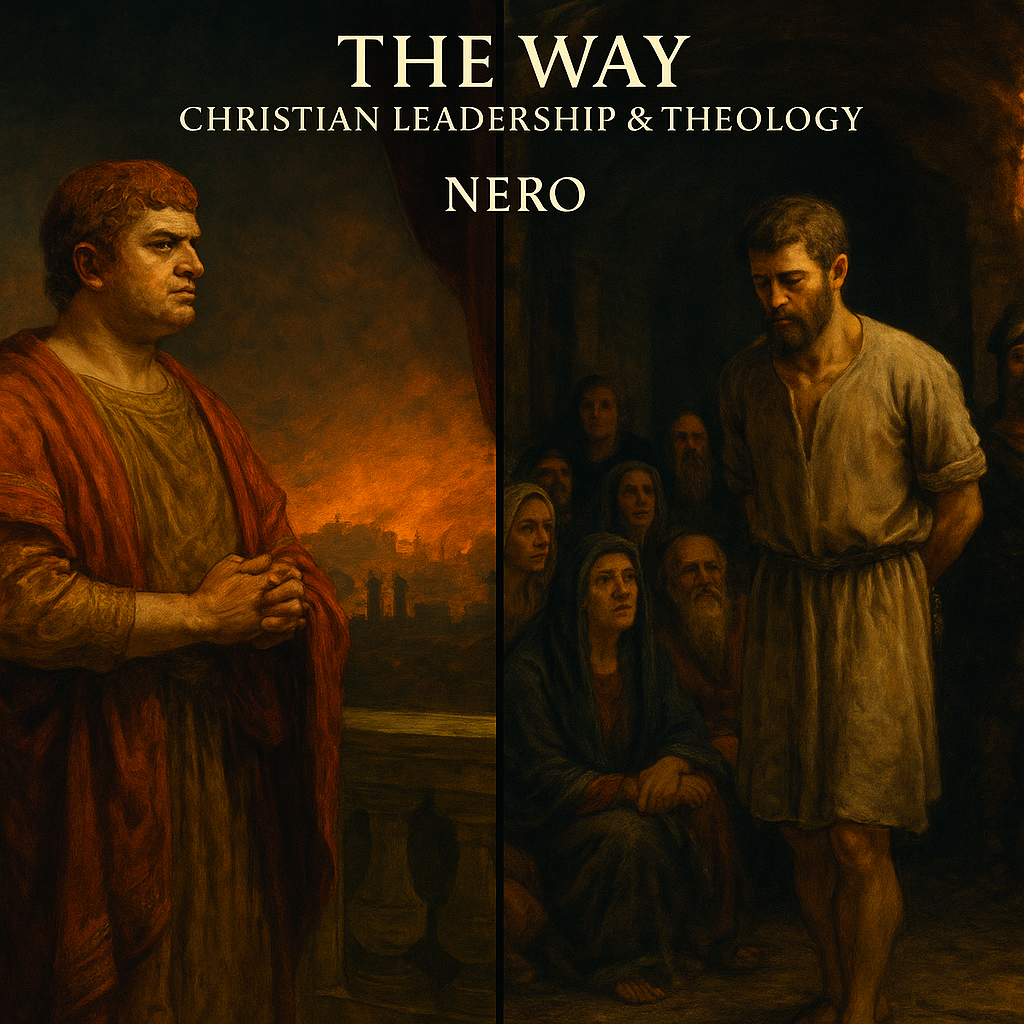
Empire Meets Eternity
Though Nero sought to extinguish Christianity, his persecution instead fueled its flame. The blood of the martyrs became the seed of the Church. While Nero’s Rome burned in judgment, Christ’s kingdom grew in grace.
The Apostle Paul, imprisoned under Nero’s rule, wrote to the Philippians, “What has happened to me has really served to advance the gospel” (Phil. 1:12). Even in chains, he saw purpose beyond politics. The empire wielded swords; the saints wielded faith.
Romans 13 — written early in Nero’s reign — urged believers to submit to governing authorities. Yet by the time Paul faced death, the tone had changed: “The Lord will rescue me from every evil attack and will bring me safely to His heavenly kingdom” (2 Tim. 4:18). Earthly power had met eternal sovereignty.
In the divine story, Nero’s reign proved that no emperor can imprison the gospel. His fire illuminated faith’s endurance. His tyranny unveiled the triumph of truth.
Leadership Reflection: The Collapse of Character
Nero is a mirror of unrestrained ego — leadership that serves self rather than stewardship. He reminds us that charisma without conscience leads to collapse.
Leadership lessons from Nero’s ruin:
- Vision without virtue is vanity. Nero built palaces but left no peace.
- Power without accountability breeds cruelty. When no one can say “no,” a leader loses sight of “right.”
- God’s kingdom outlasts man’s empires. Rome’s glory turned to dust; the Church he persecuted still stands.
Nero’s story is the inverse of Christ’s: the emperor who made himself a god versus the God who made Himself a servant. One sought immortality through fear; the other gained it through sacrifice.
