


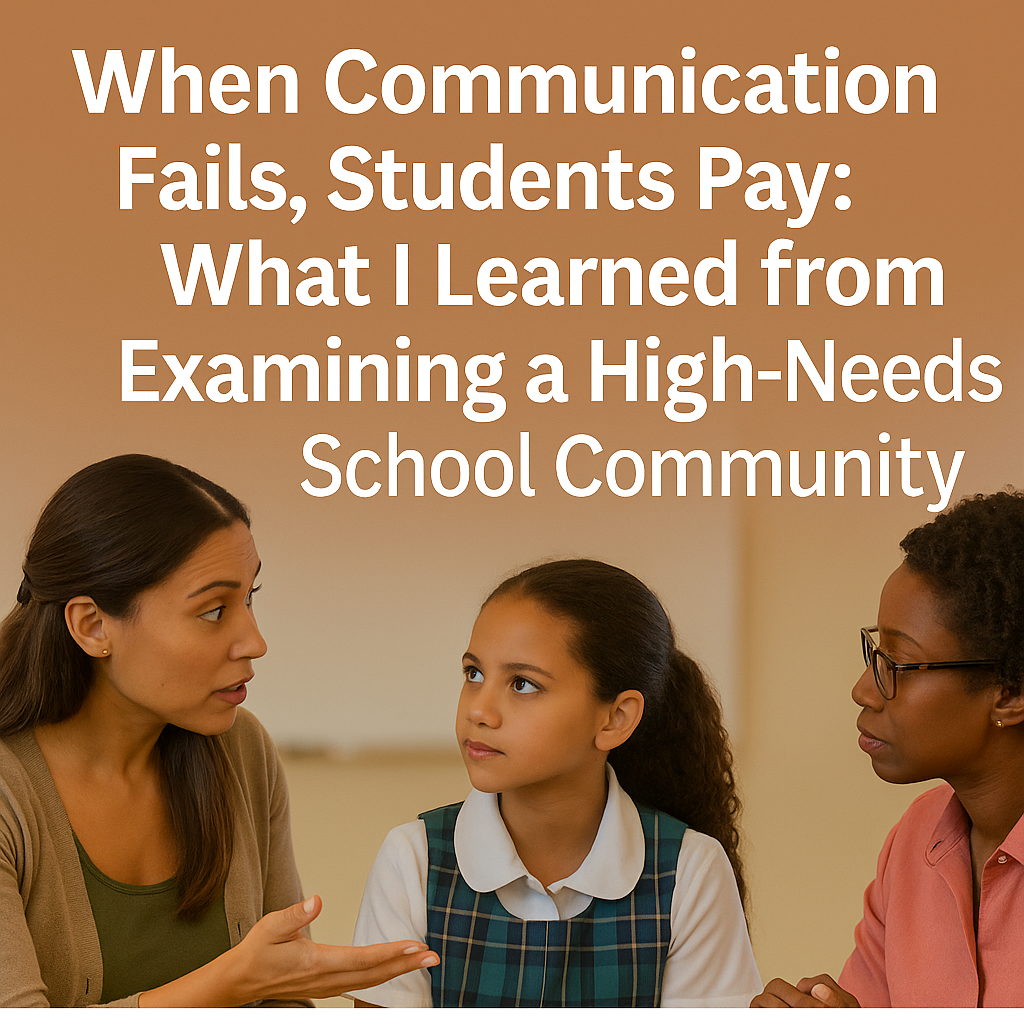
Understanding the Issue — What I Discovered in the Case Study
As I analyzed the parent’s comments, I identified the central issue as parental expectation of stereotype threat.
Put simply, the mother was not only sharing a story from her past; she was signaling a fear that her child, too, might be misjudged or limited based on race, accent, nationality, skin tone, or socioeconomic standing.
In my evaluation of the literature, I noted several theories that support this interpretation:
- Pittman (2020) describes how racial stigma is embedded in public spaces and becomes internalized across generations.
- Tutwiler (2005) explains that such memories often become acculturation mechanisms—the specific ways parents coach their children to navigate a biased world.
Through this lens, I recognized her narrative not as a confrontation, but as a protective gesture—a plea for fairness, dignity, and understanding.
The deeper message was unmistakable:
“Please do not allow my child to experience what I did.”
Recognizing this intention reframes the interaction. It becomes an opportunity for collaboration, not conflict.
The Teacher’s Opportunity — What Educators Can Do With This Insight
As I examined the implications of the mother’s story, I realized that the teacher in the scenario is given a rare and valuable insight: a window into the child’s identity, emotional world, and the cultural framework shaping her behavior.
From my analysis, several opportunities emerged:
✔ Build a bias-free classroom culture
Educators can establish predictable routines, clear expectations, and respectful communication—features that help reduce anxiety associated with stereotype threat.
✔ Preempt misinterpretations of student behavior
Understanding a child’s cultural and emotional background helps teachers avoid misreading behaviors as defiance or disengagement.
✔ Personalize learning and emotional support
The mother’s story offers clues about how her daughter might navigate conflict, criticism, or authority.
✔ Strengthen teacher–parent trust
By acknowledging and validating the parent’s lived experience, educators lay the groundwork for strong and consistent communication.
✔ Foster belonging and identity safety
Creating culturally responsive classrooms—where students see themselves in curriculum, examples, and leadership—helps break cycles of fear and mistrust.
What I found most compelling is that the parent’s vulnerability becomes a gift: she provides the teacher with the very context needed to support her child effectively.
