


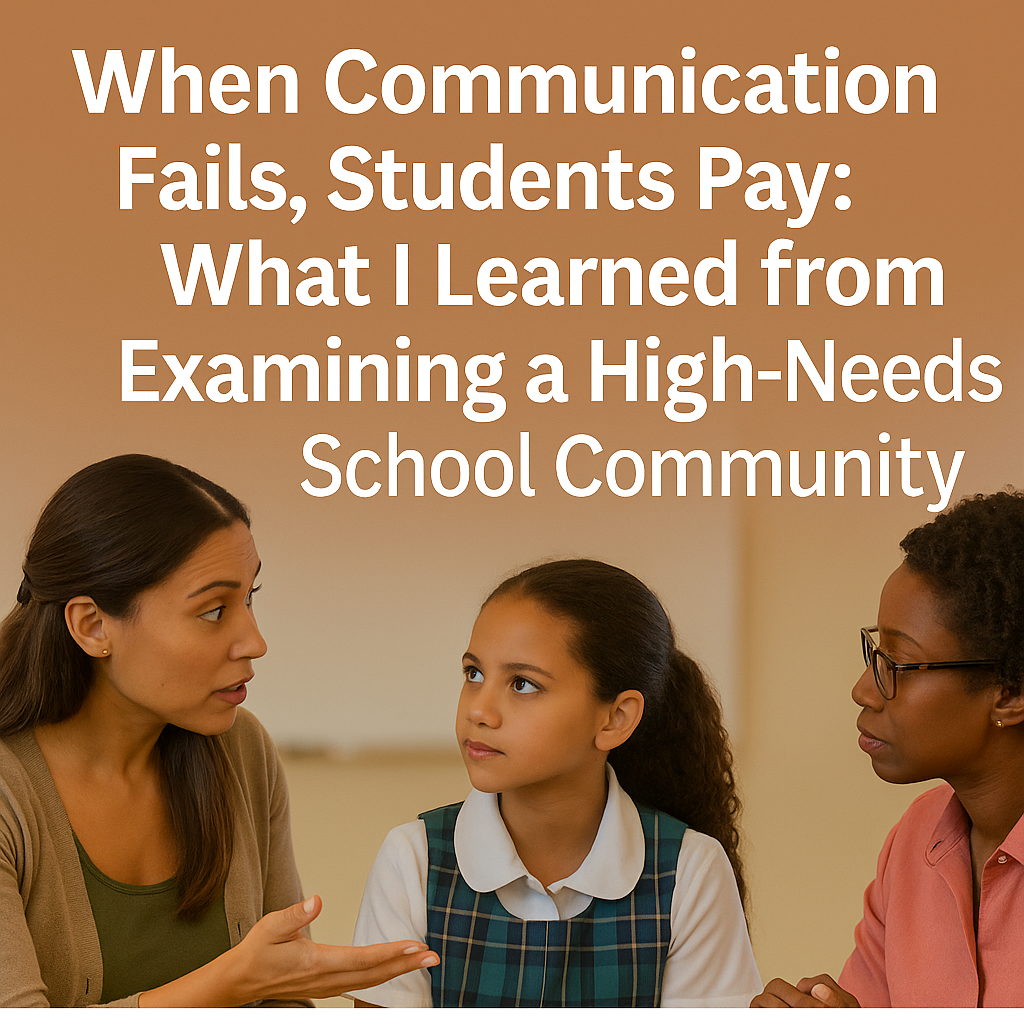
Faith & Leadership Reflection
Proverbs 31:8 urges believers to:
“Speak up for those who cannot speak for themselves.”
As I reflected on this passage and the case study, I realized that the mother’s story is a form of advocacy—an act of speaking up on behalf of her child.
Educators, especially those serving in faith-based environments, must respond with a Christ-like posture: humility, listening, fairness, and courage.
Teaching, I discovered, is not merely academic work.
It is identity work.
It is spiritual work.
Call to Action — What We Must Do As Educators
1. Seek student stories early.
Ask parents:
“What should I know to help your child succeed?”
2. Record cultural insights respectfully.
Not as labels, but as relational tools.
3. Build communication systems that reduce parental fear.
Weekly updates or quick check-ins build trust.
4. Examine your own biases.
Becoming culturally responsive begins with self-reflection.
5. Create identity-safe classrooms.
Representation matters—curriculum, examples, posters, discipline approaches.
6. Address bias with integrity.
If something happens, confront it honestly and fairly.
7. Advocate for fair policies at school and system levels.
Identity safety must be structural, not accidental.
Further Reading
- Pittman, C. (2020). Shopping While Black: Black consumers’ management of racial stigma and racial profiling.
- Tradewind Australia (2020). Four ways to prevent stereotyping in your classroom.
- Park, Y. & Johnson, S. K. (2023). A theoretical framework of the role of racism in adolescent personal identity development.
- Tutwiler, S. J. (2005). Teachers as Collaborative Partners.
Author
Dr. Kevin A. Hall, Ed.D.
The Way — Bahamas Educational Leadership Series 2025
#TheWayBahamas #EducationalLeadership #CaribbeanEducation #IdentitySafety
#CulturalCompetence #ParentalPartnership #FaithInLearning #TeachWithWisdom
