


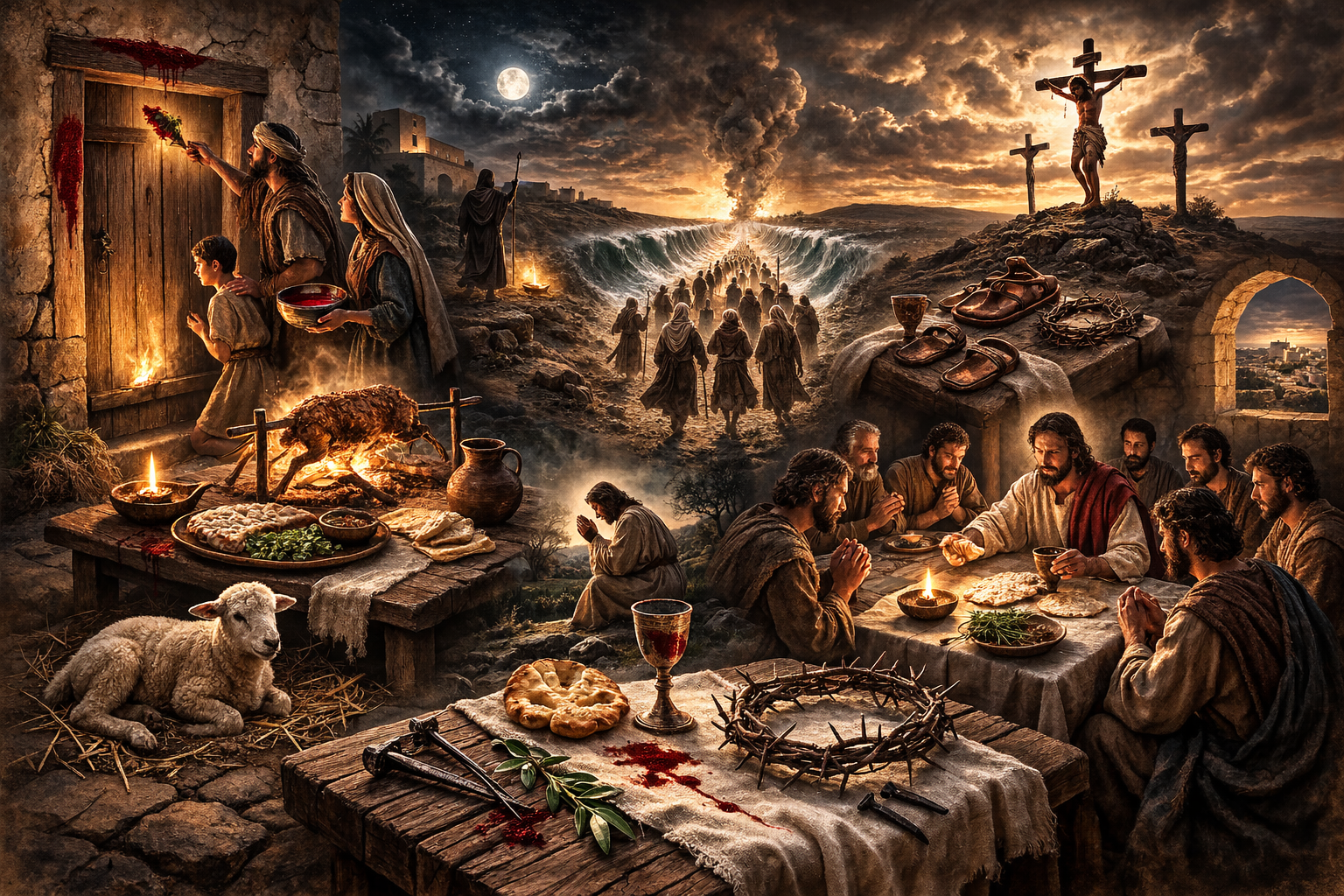
Every household was commanded to take an unblemished lamb. It was to be kept, examined, then slaughtered at twilight. Its blood—life poured out—was brushed across wooden doorposts with hyssop. Inside, families stood dressed for travel: belts fastened, sandals on feet, staff in hand. They ate roasted lamb, unleavened bread, and bitter herbs. No leftovers. No delay. Salvation would come swiftly.
Outside, Egypt trembled.
At midnight the judgment fell. The firstborn of Egypt died, from palace to prison. Yet in homes marked by blood, there was silence. Protection. Mercy. “When I see the blood, I will pass over you.” Deliverance did not come through Israel’s strength. It came through substitution.
By morning, slavery was shattered. The people who had labored for generations walked out free. Not because Pharaoh relented—but because God intervened. Passover became more than an event; it became memory shaped into ritual. Each year the question would be asked: “What does this rite mean to you?” And the answer would always return to the same truth—“The Lord brought us out.”
Centuries later, in Jerusalem, another Passover approached. Pilgrims filled the city. Lambs were led to sacrifice. And a Galilean teacher sent two disciples ahead with precise instructions: “Follow the man carrying water; prepare the upper room” (Mark 14; Luke 22). Everything unfolded exactly as He said.
That evening, as unleavened bread lay on the table and cups of wine were shared, Jesus spoke words that startled the room. He did not abolish Passover. He interpreted it.
“This is My body.”
“This cup is the new covenant in My blood.”
