


Balancing Discipline, Safety, and Digital Literacy in The Bahamas and Beyond
Part 14 | Educational Leadership Series – The Way Bahamas
As more schools debate banning smartphones, Bahamian educators confront a unique challenge — balancing communication needs, safety, and learning engagement. What does the research say, and how can Caribbean schools find a policy that fits their context?
The Bahamian Reality
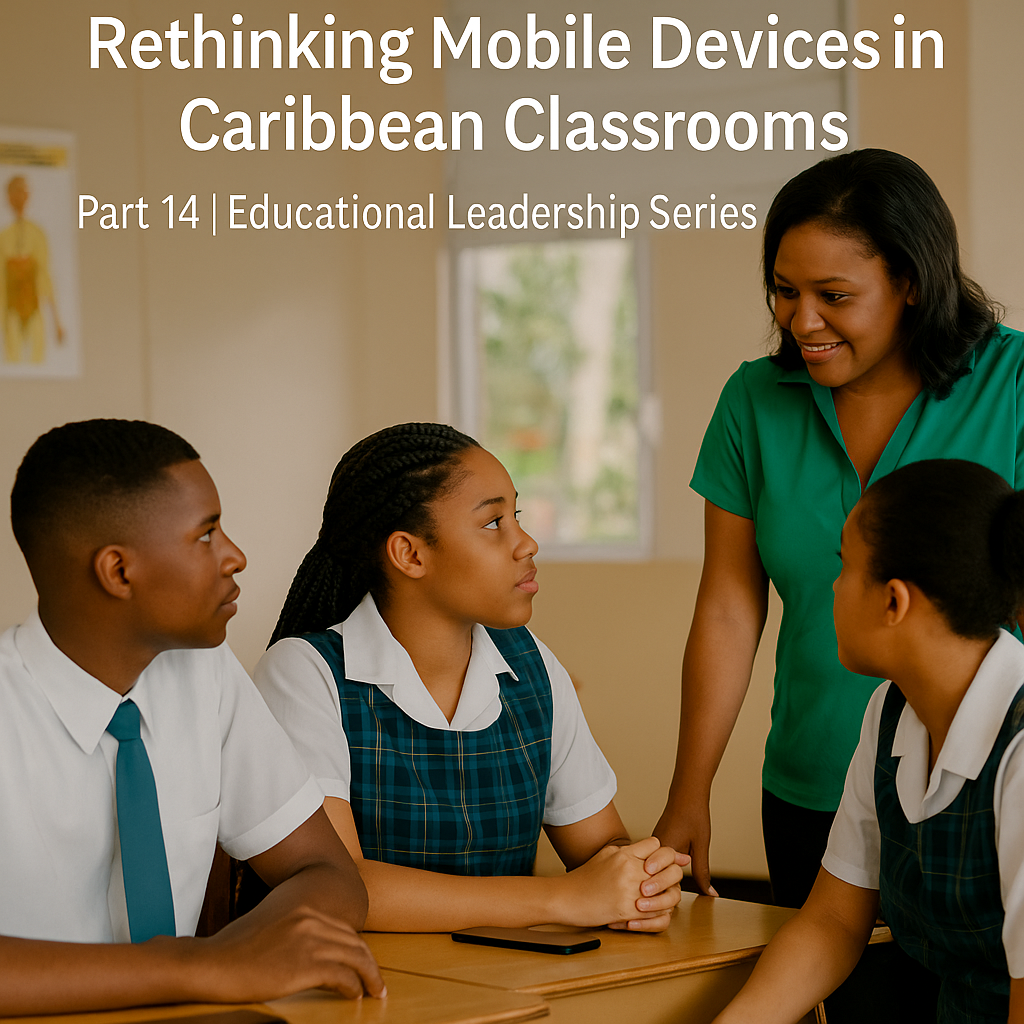
Each morning at a government high school in Nassau, Ms. Brown greets her Grade 10 students with a practiced smile — and an unspoken understanding: phones stay out of sight.
Across The Bahamas, similar expectations shape the rhythm of the school day. Parents insist their children must keep phones handy to arrange pickups or reach them in emergencies. Some schools require students to check in their devices at the front office, while others impose strict bans, confiscating phones and applying a fee before retrieval.
Yet, a quiet middle ground exists. Teachers in some schools invite students to bring devices intentionally — for project work, digital presentations, or research sessions. “They function fine without them,” Ms. Brown explains, “but when we use technology purposefully, their eyes light up.”
In many Bahamian classrooms, phones rarely appear when the teacher is present. They surface during breaks, lunch, or moments of boredom — not rebellion, but restlessness. The question is not whether students can survive without phones, but whether schools can thrive with technology meaningfully integrated into lesson delivery.
