


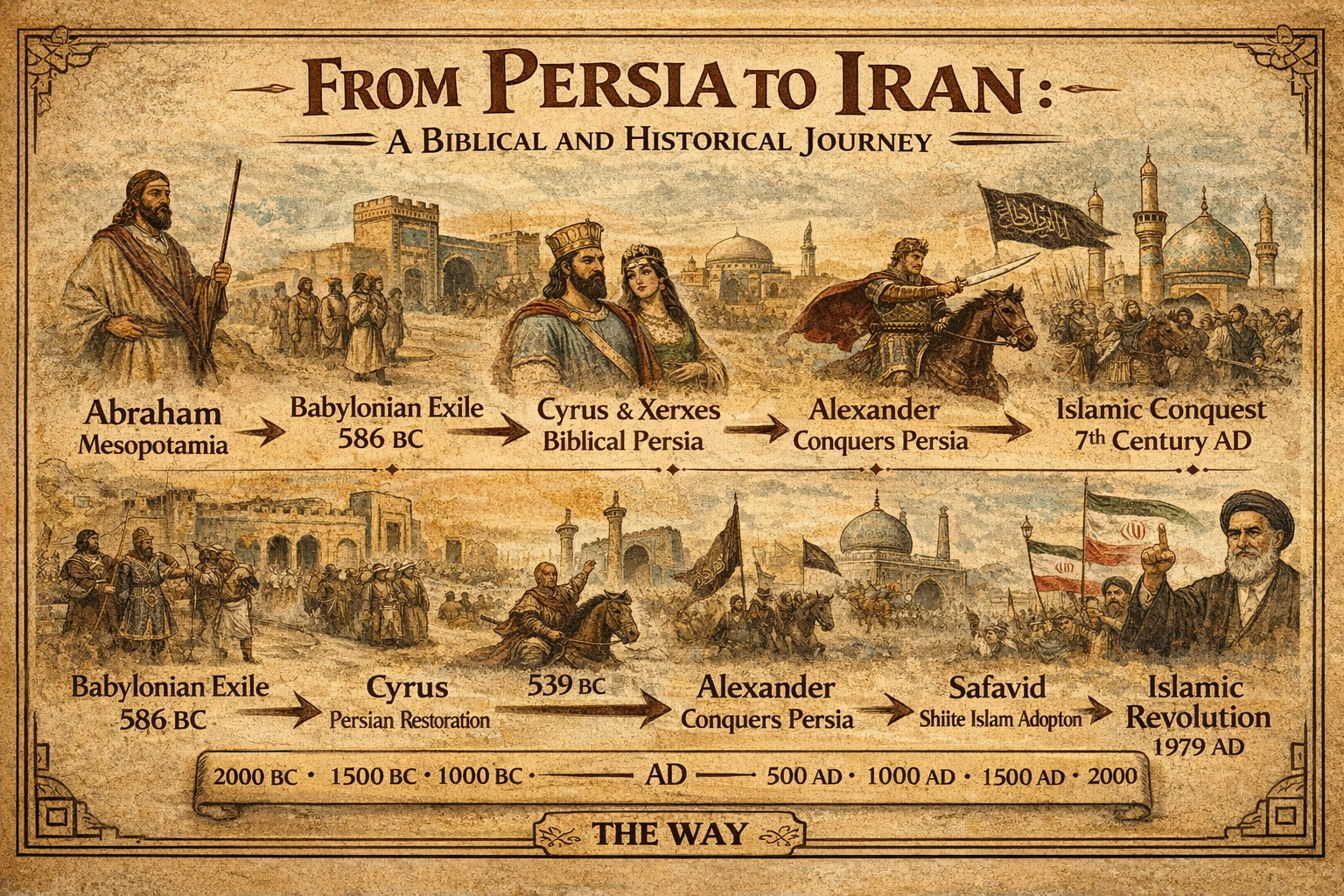
Under the leadership of Cyrus the Great, the Persian Empire expanded rapidly across the ancient Near East. Cyrus conquered Babylon in 539 BC, bringing an end to the Babylonian Empire and establishing Persian authority across much of the known world. Yet unlike many conquerors of antiquity, Cyrus ruled with an unusual degree of tolerance toward the peoples he governed.
For readers of the Bible, Cyrus occupies a remarkable place in history. The Hebrew Scriptures describe him as the king who allowed the Jewish people to return to their homeland after decades of Babylonian exile. In the opening chapter of the book of Ezra, Cyrus issues a decree permitting the rebuilding of the temple in Jerusalem. In fact, the prophet Isaiah—writing generations earlier—had astonishingly referred to Cyrus by name, describing him as a ruler whom God would use to accomplish His purposes.
Thus Persia entered the biblical story not as Israel’s enemy but as an instrument in Israel’s restoration.
The Persian Empire continued to play a central role in the biblical world. The drama of the book of Esther unfolds within the Persian royal court, during the reign of King Xerxes. The prophet Daniel served under Persian rulers after the fall of Babylon. Jewish communities flourished throughout the Persian territories, and Persian kings supported the rebuilding of Jerusalem’s walls during the time of Nehemiah.
In many ways, Persia functioned as the great stabilizing power of the ancient Near East during the centuries that followed the Babylonian captivity.
The empire’s influence extended beyond politics. Persian culture produced advances in administration, engineering, architecture, and trade. The famous Royal Road, stretching nearly 1,700 miles across the empire, allowed messages and goods to travel with unprecedented speed. Imperial systems of governance developed by the Persians would influence later empires, including those of Greece and Rome.
Yet history seldom stands still.
