


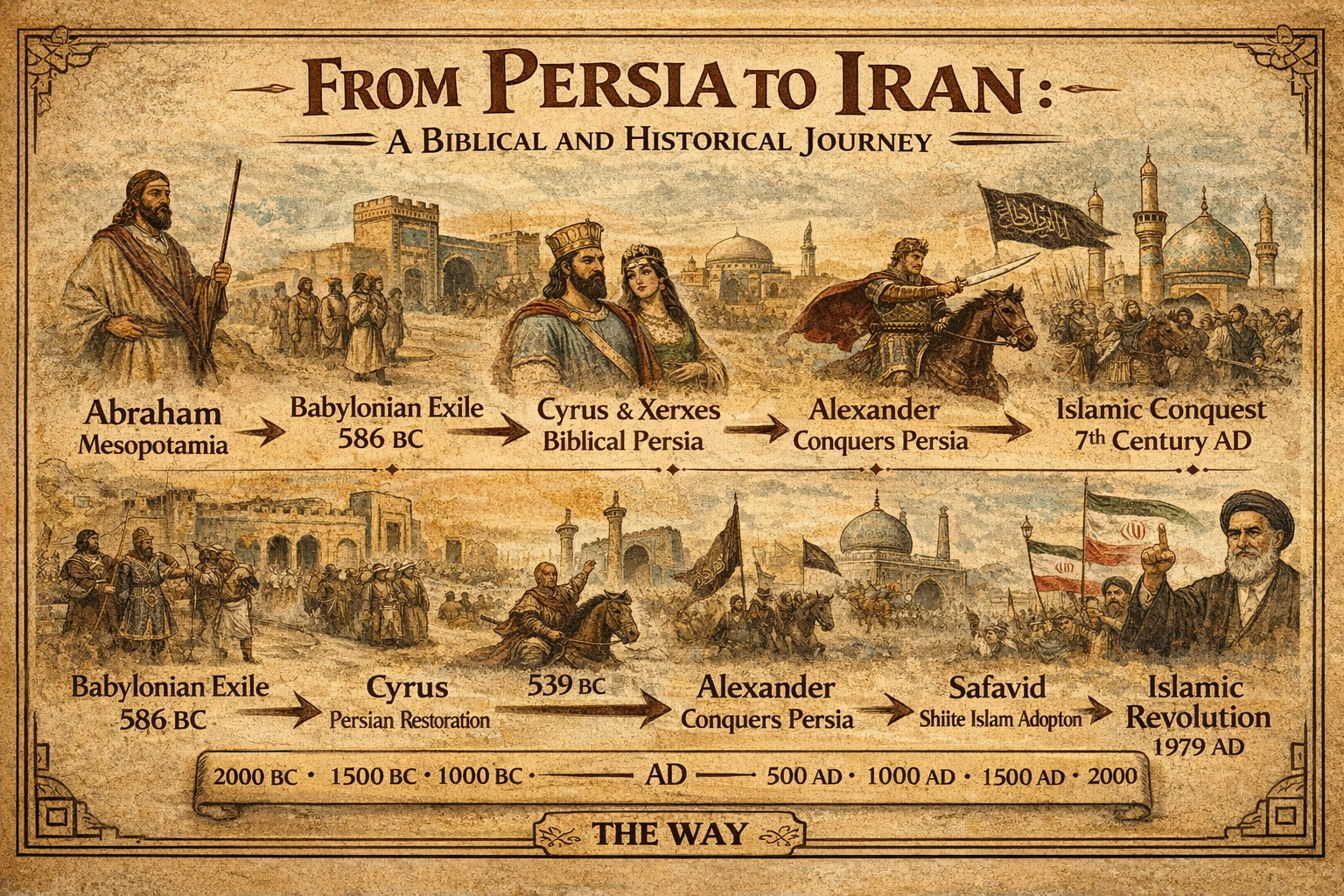
In 330 BC the Persian Empire fell to the armies of Alexander the Great, whose conquests brought Greek language and culture across much of the region. After Alexander’s death, the land passed through a succession of empires—Greek, Parthian, and eventually Roman influence. Persia later reemerged under the Sassanian dynasty, once again becoming a major power in the ancient world.
The next great transformation came in the seventh century AD, when Arab armies carrying the message of Islam swept across the Middle East. Persia gradually adopted the Islamic faith, though Persian culture retained many distinctive traditions that predated Islam.
Over time, the Persian people would develop a unique religious identity within the Islamic world. By the sixteenth century, under the Safavid dynasty, Persia adopted Shiite Islam as the official religion of the state. This decision permanently shaped the religious character of the country and distinguished Persia from many of its Sunni Muslim neighbors.
Centuries later, the nation would adopt the name Iran, meaning “Land of the Aryans,” though the older name Persia remained widely recognized abroad until the twentieth century.
For much of the modern era, Iran was governed by monarchs known as Shahs. The last of these rulers, Mohammad Reza Pahlavi, sought to modernize the country and strengthen its ties with Western nations. His government promoted economic development, expanded education, and encouraged Western cultural influence.
Yet these changes also produced deep tensions within Iranian society.
