


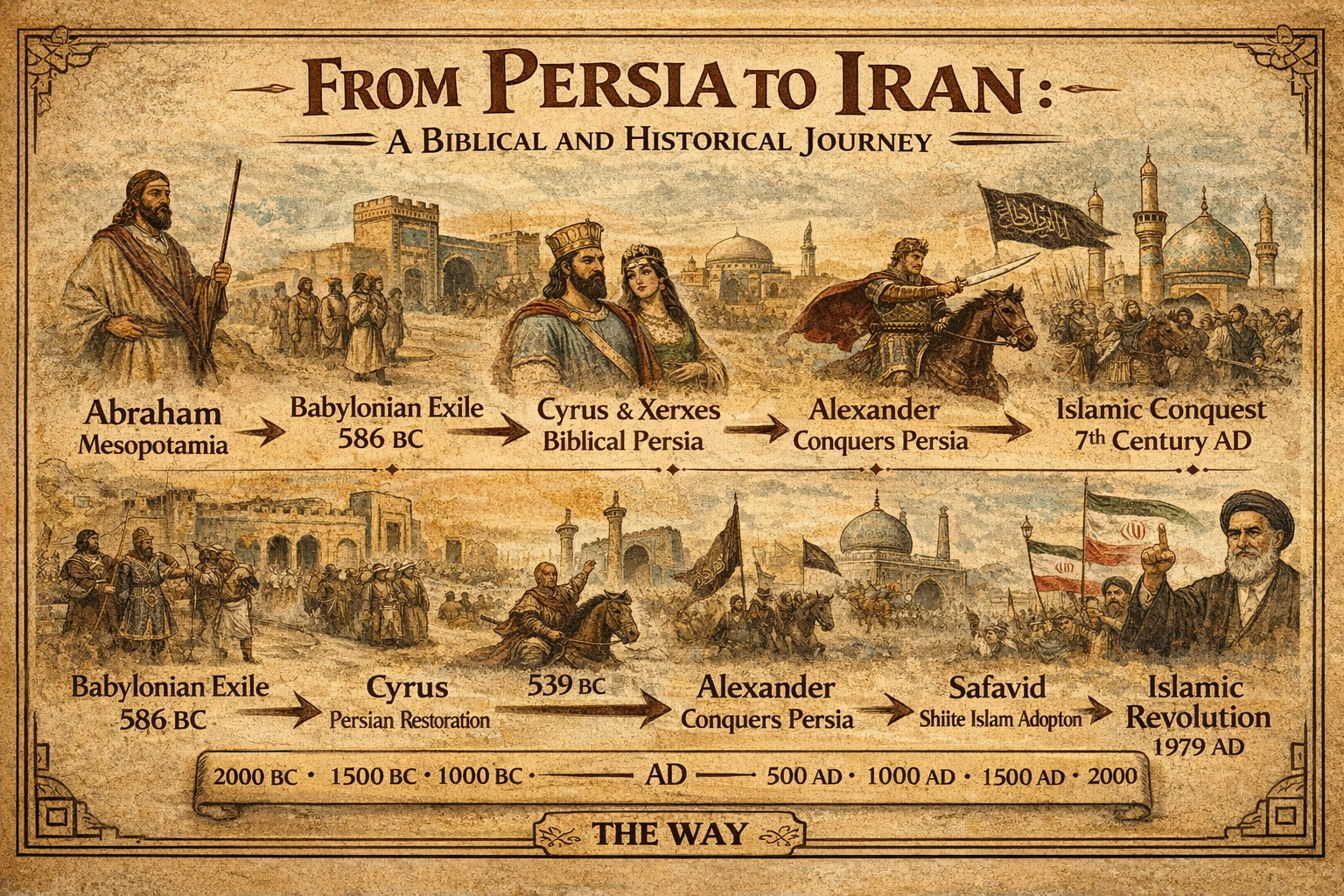
Many religious leaders believed the country was abandoning its spiritual heritage. Others criticized the monarchy for political repression and economic inequality. These grievances eventually erupted into the Iranian Revolution of 1979, one of the most dramatic political upheavals of the twentieth century.
The revolution replaced the monarchy with a new form of government known as the Islamic Republic of Iran. Unlike most modern states, the Iranian system placed religious authority at the center of political power. Senior Islamic scholars—known as Ayatollahs—became guardians of the nation’s political and moral direction.
At the top of this system stands the Supreme Leader, a religious authority who exercises ultimate influence over the military, judiciary, and major policies of the state. This structure reflects a distinctive interpretation of Shiite Islamic theology, in which religious scholars guide society until the return of a messianic figure known as the Hidden Imam.
To many observers in the West, this political structure can seem unfamiliar or even perplexing. Yet it emerges from a long historical story that stretches back through centuries of Persian culture, Islamic tradition, and revolutionary change.
Understanding Iran therefore requires more than watching modern political events. It requires recognizing that the nation stands at the intersection of ancient empire, biblical history, and religious tradition.
The land once known as Persia helped restore the people of Israel after exile. It shaped the political world of the Old Testament prophets and kings. It carried ideas and cultures across continents and centuries.
Today, Iran remains part of that long story.
History reminds us that nations are not merely products of the present moment. They are the living outcome of civilizations, beliefs, and events that stretch across generations.
And to understand the present, we must first learn the past.
#TheWay #HistoryMatters #BibleAndHistory #Persia #MiddleEast
Written by Dr. Kevin A. Hall@The Way2026
