


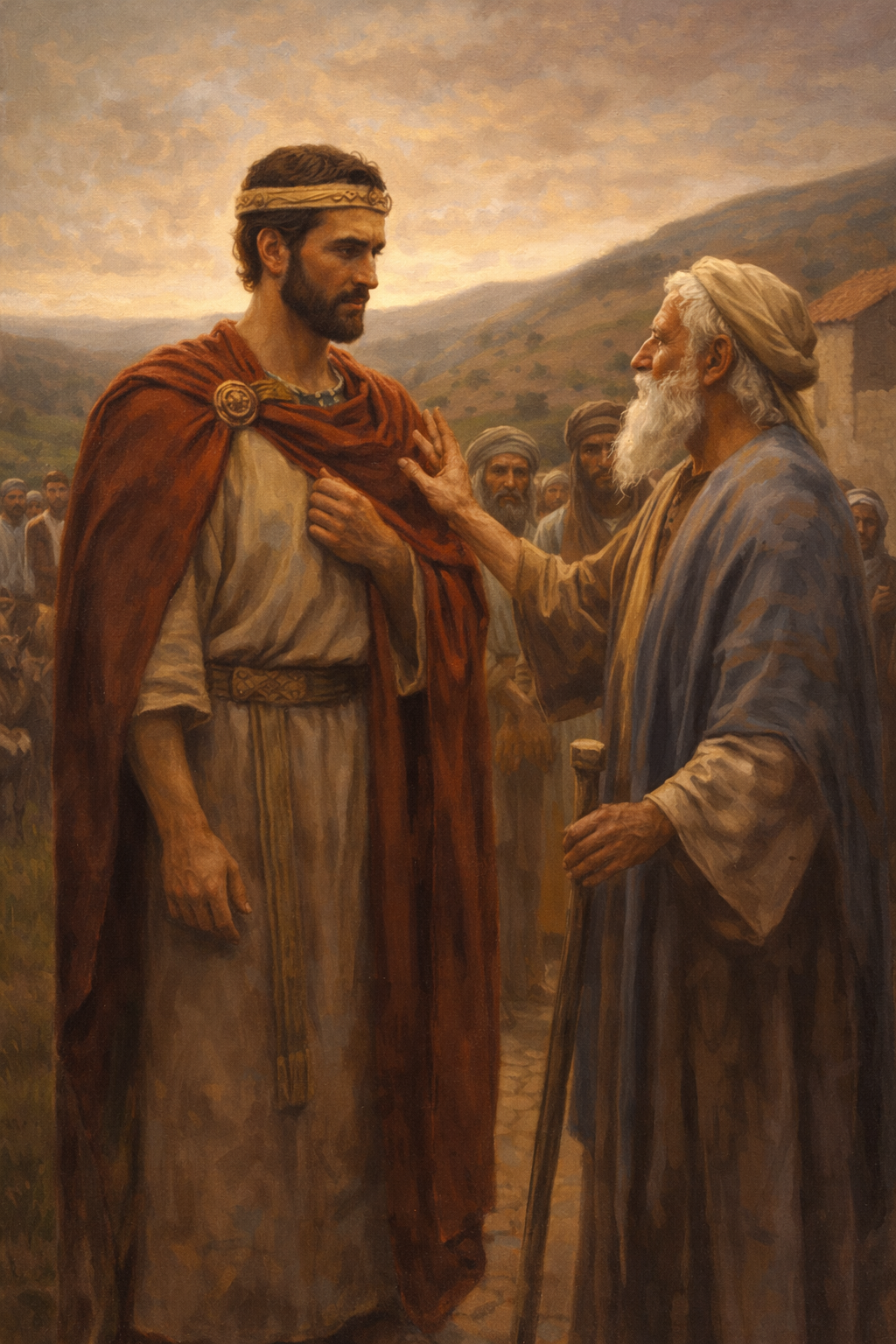
Into this climate, God raised Samuel—faithful, prayerful, but aging. Samuel judged Israel, taught the Word, and called the people to repentance, yet the nation demanded something faster, stronger, more visible.
They demanded a king.
Not because God had failed—but because waiting had become unbearable.
Saul grew up breathing that air.
A King Who Learned to Almost Obey
At first, Saul seemed promising. He was tall, impressive, even humble—hiding among the baggage when first presented as king. But humility without formation is fragile. Saul had never learned how to wait on God when pressure mounted.
And pressure came quickly.
At Gilgal (1 Samuel 13), Saul was told to wait for Samuel. The enemy gathered. The people scattered. Time felt like an enemy. So Saul acted. He offered the sacrifice himself—religious, sincere, and completely disobedient.
That moment set the pattern.
Saul would obey almost.
He would listen partly.
He would follow God—until obedience threatened control.
