


Culture & Politics Series — The Way | Bahamas
The fluorescent lights hum quietly in the cafeteria of a federal building in Maryland.
But the cash register sits idle.
Maria, a single mother of two and a federal security officer, hasn’t worked in two weeks—another government shutdown. Her bills pile up on the counter while she waits for Congress to strike a deal that seems forever just “a few votes away.”
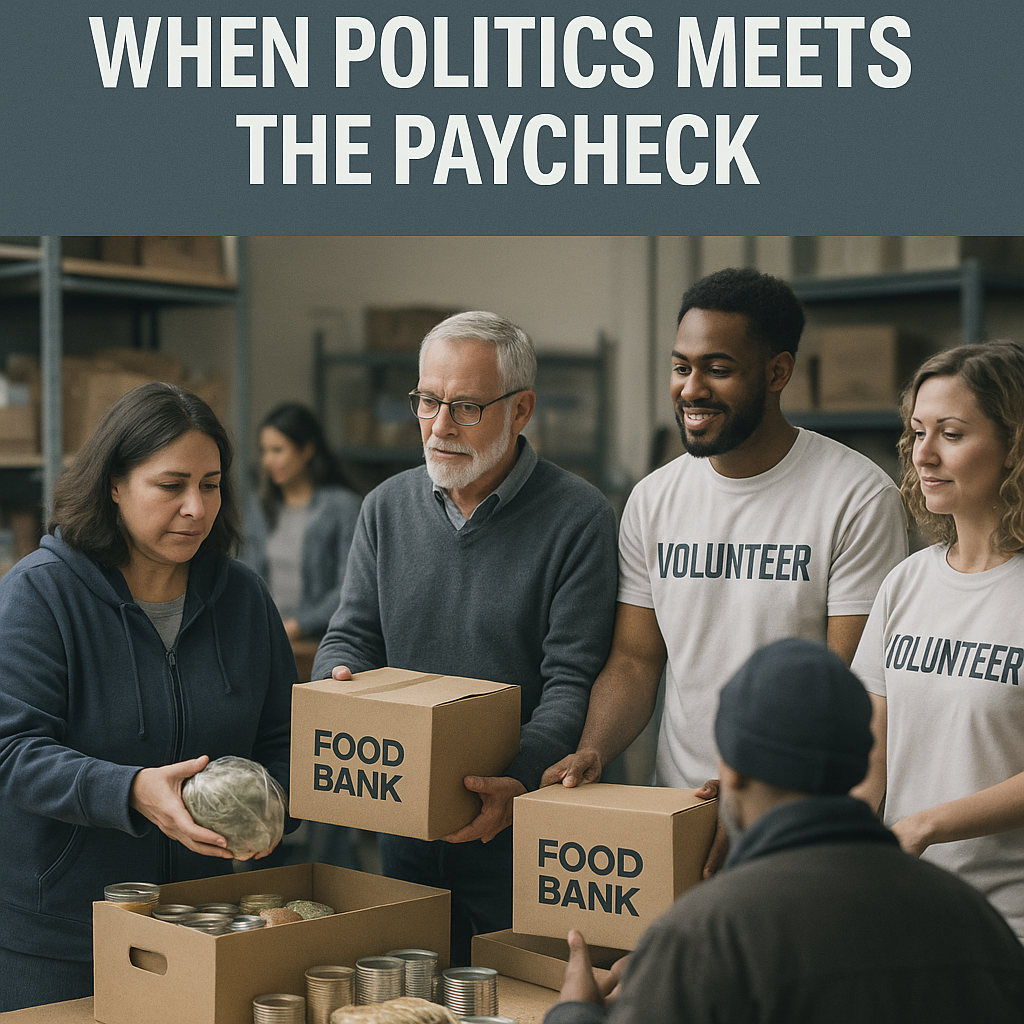
By the second week, she’s standing in line at a food pantry—one of many pop-up centers organized by churches and volunteer networks to feed thousands of unpaid government workers. She isn’t alone. The “world’s richest nation” has thousands of its own public servants relying on donated groceries.
What Is a Government Shutdown?
A government shutdown occurs when the U.S. Congress fails to pass, or the President refuses to sign, spending legislation needed to fund federal agencies. Without an approved budget, most non-essential federal operations must cease—national parks close, research labs suspend projects, paychecks stop.
Workers classified as “essential,” like air-traffic controllers or border patrol agents, continue working—without pay—until funding resumes.
The mechanism itself was never intended as a political weapon. It originated in 1980 after a reinterpretation of the Antideficiency Act, which made it illegal for federal agencies to spend money not authorized by Congress. Since then, the shutdown threat has become a bargaining chip in budget negotiations—used by both political parties to force policy concessions.
