


Why Does It Keep Happening?
Unlike many parliamentary systems (for example, The Bahamas, Jamaica, or the U.K.), the United States separates executive and legislative powers. That means Congress—not the President—controls federal spending.
When political polarization deepens, parties use the budget deadline as leverage, gambling with government operations to achieve ideological goals—immigration policy, defense cuts, or social program reforms.
Because the federal budget is not a single annual law but a dozen separate appropriations bills, gridlock in even one area can shut down the entire government. Hence, every few months, the same ritual unfolds: short-term “continuing resolutions,” late-night votes, and last-minute deals that buy time but not stability.
The Human Cost
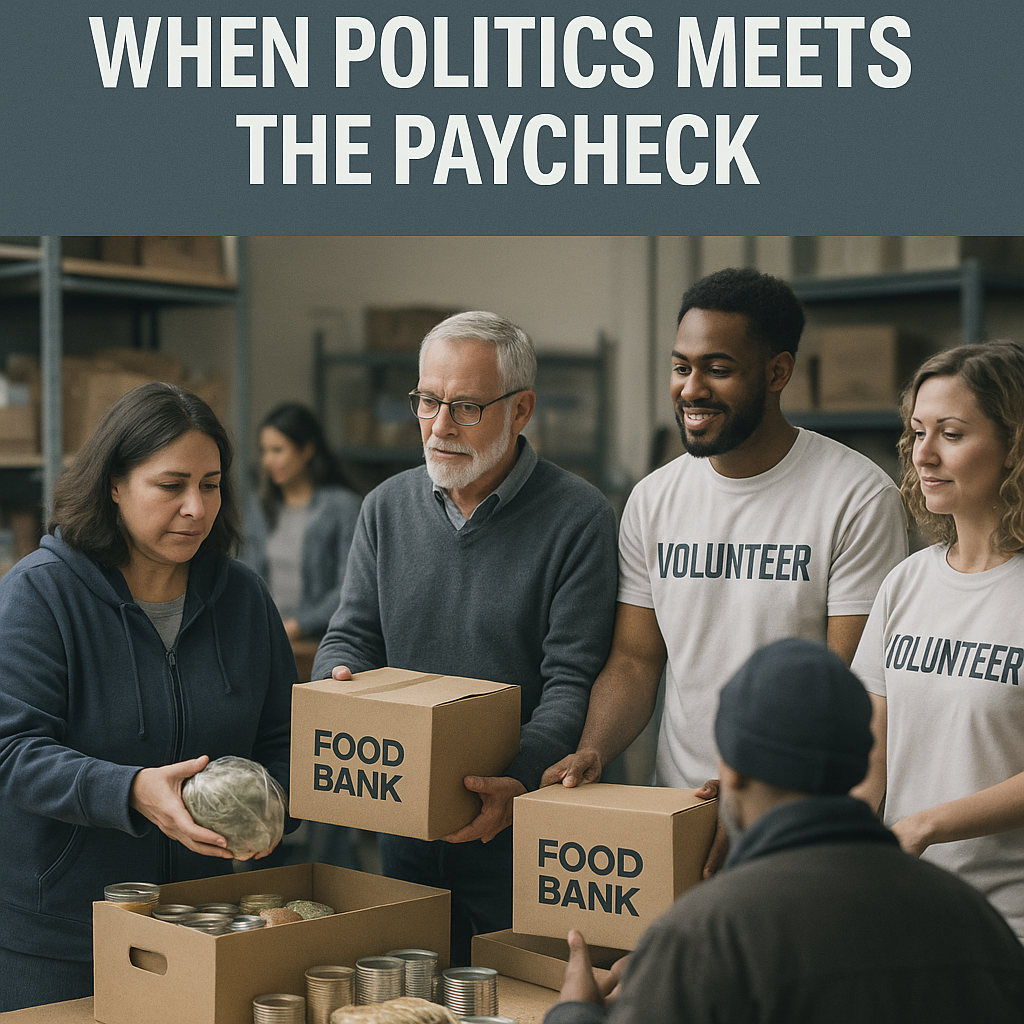
For millions of Americans living paycheck to paycheck, even a two-week delay in pay can mean choosing between rent and groceries. During the 2019 shutdown—the longest in U.S. history—more than 800,000 workers went unpaid for over a month. Local food banks reported record demand.
This year, some senators and civic leaders are urging emergency funding for food pantries near federal installations. “We can’t leave our workers starving while politicians posture,” one senator said during a recent hearing.
The feeding lines tell a story no political slogan can hide: economic fragility runs deep, even in government employment.
