


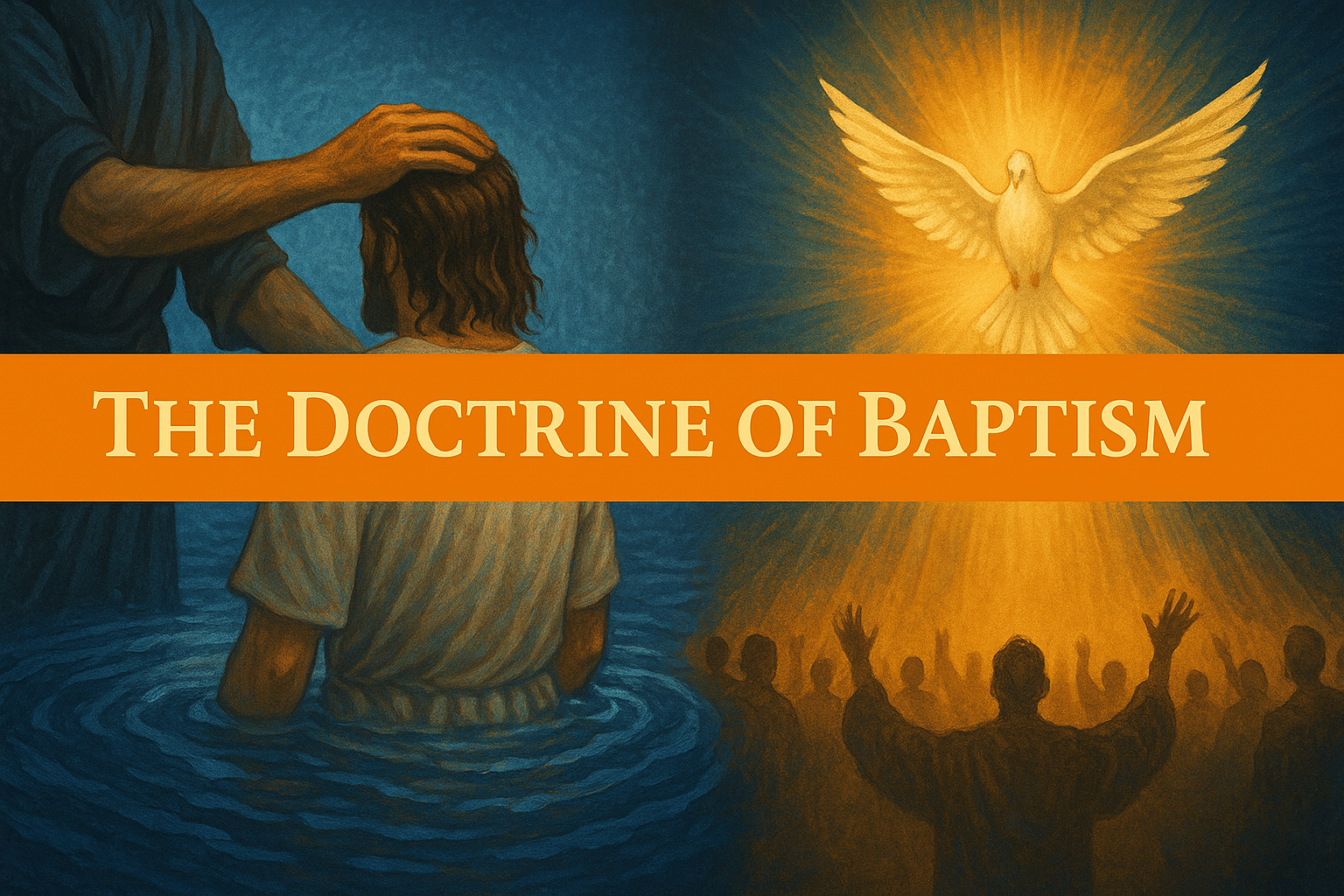
In Whose Name? The Baptismal Formula
The New Testament offers two principal baptismal expressions:
• Matthew 28:19 — “baptizing them in the name of the Father and the Son and the Holy Spirit.”
• Acts 2:38 — “be baptized in the name of Jesus Christ for the forgiveness of your sins.” At first glance, these appear different, but the early church understood them as complementary.
The Trinitarian view, held by most of the historic church, teaches that Jesus’ command in Matthew 28:19 establishes the standard formula — baptism into the triune Godhead. “In the name of Jesus” (Acts 2:38) is understood as shorthand for this full confession, recognizing Jesus’ authority as the Son in whom the fullness of deity dwells.
The Oneness Apostolic (or Jesus-Name) movement, however, interprets these texts differently. They argue that the singular “name” in Matthew 28:19 refers specifically to Jesus Himself — the revealed name of the one God (Isaiah 9:6; John 14:9). Thus, baptism is valid only when performed in Jesus’ name, as modeled in Acts 8:16, 10:48, and 19:5.
The difference is theological as well as linguistic: Trinitarians emphasize three Persons in one essence, while Oneness believers emphasize one Person revealed through different manifestations — Father in creation, Son in redemption, Spirit in regeneration.
Jack Cottrell notes: “To baptize in Jesus’ name is to immerse into all that He is — His authority, His death, and His resurrection.” Gareth Reese adds that baptism “into the name” expresses ownership and allegiance, whether one stresses the triune formula or the singular name, the act unites the believer with the Lordship of Christ.
The Controversy of Infant Baptism
The practice of infant baptism arose from early church efforts to link baptism with covenant inclusion, influenced by Augustine’s teachings on original sin. Reformed traditions, such as John Piper’s, view it as a sign of inclusion within the covenant community, though not a guarantee of regeneration. However, scholars like Cottrell and Reese argue that this practice diverges from apostolic precedent, where faith and repentance always preceded baptism (Mark 16:16). In the New Testament, baptism was consistently reserved for confessing believers.
