


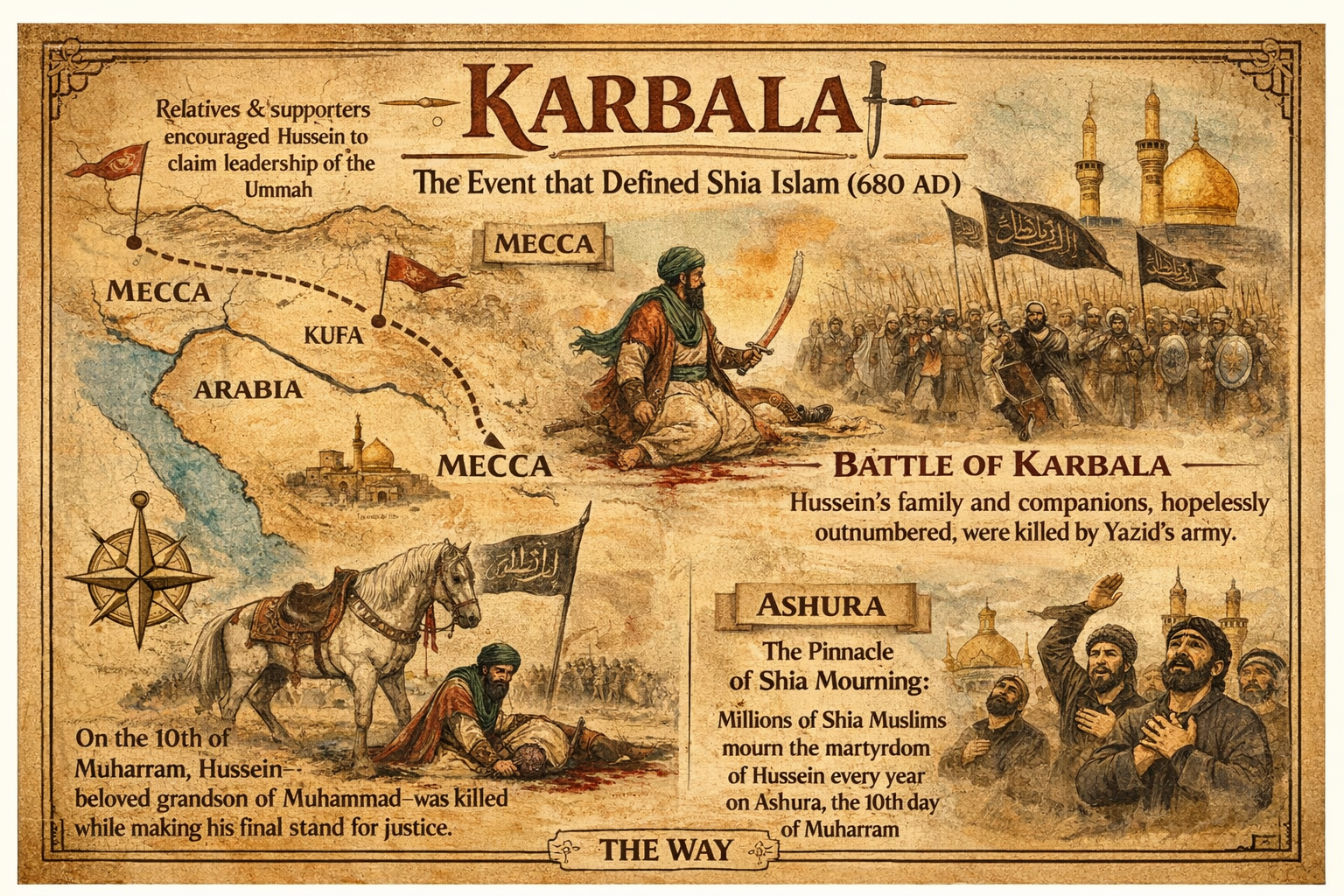
Sunni Muslims, by contrast, followed a different path. The word Sunni comes from the Arabic term Sunna, meaning “the tradition” or “example” of the Prophet. Sunnis emphasize the authority of the broader Muslim community and the preservation of Muhammad’s teachings through scholarly tradition rather than hereditary leadership.
Over centuries, Sunni Islam developed legal schools, scholarly institutions, and political systems that spread across vast territories—from North Africa to Southeast Asia.
Today, approximately 85–90 percent of the world’s Muslims are Sunni, while 10–15 percent are Shiite.
The geographic distribution of these communities has shaped the political landscape of the modern Middle East. Sunni populations dominate countries such as Saudi Arabia, Egypt, Jordan, and Turkey, while Shiite majorities exist in Iran, Iraq, and Bahrain.
Iran occupies a unique place in this story. Though Persia was historically part of the broader Islamic world, the country gradually adopted Shiite Islam as its official religion in the sixteenth century under the Safavid dynasty. This decision permanently altered the religious identity of the Persian state and set Iran apart from many of its Sunni neighbors.
When the Islamic Revolution of 1979 established the modern Iranian government, Shiite theology became embedded within the political structure of the state. The revolution’s leader, Ayatollah Ruhollah Khomeini, argued that in the absence of the Hidden Imam, senior religious scholars should guide society.
This doctrine, known as “Guardianship of the Jurist,” placed religious authority at the center of political power and created the system that still governs Iran today.
Thus a dispute that began fourteen centuries ago in the deserts of Arabia continues to influence the geopolitics of the modern world.
The Sunni–Shiite divide reminds us that disagreements over leadership can ripple across centuries, shaping identities, alliances, and conflicts long after the original dispute has passed into history.
For students of history—and for readers seeking to understand today’s headlines—the story of Sunnis and Shiites is not simply a theological debate. It is a reminder that ideas, loyalties, and memories can shape civilizations for generations.
#TheWay #HistoryMatters #FaithAndCulture #MiddleEastHistory
