


When the Numbers Stop Adding Up
Two decades ago, college promised upward mobility. Today it often delivers lifelong debt.
According to the Education Data Initiative (2024), average tuition and fees at U.S. universities have risen by more than 141 percent at public institutions and 181 percent at private ones since 2000—while median household income has grown only 17 percent. The Center on Budget and Policy Priorities (2019) found that every state in America spent less per student in 2019 than before the 2008 recession, shifting the cost of education squarely onto students.
That shift has turned what was once an affordable public good into a private financial gamble. Parents co-sign loans that rival home mortgages; graduates begin careers under the weight of five-figure debt. “Access without affordability,” as one analyst put it, “is an illusion of opportunity.”
The Weight on Minority Students
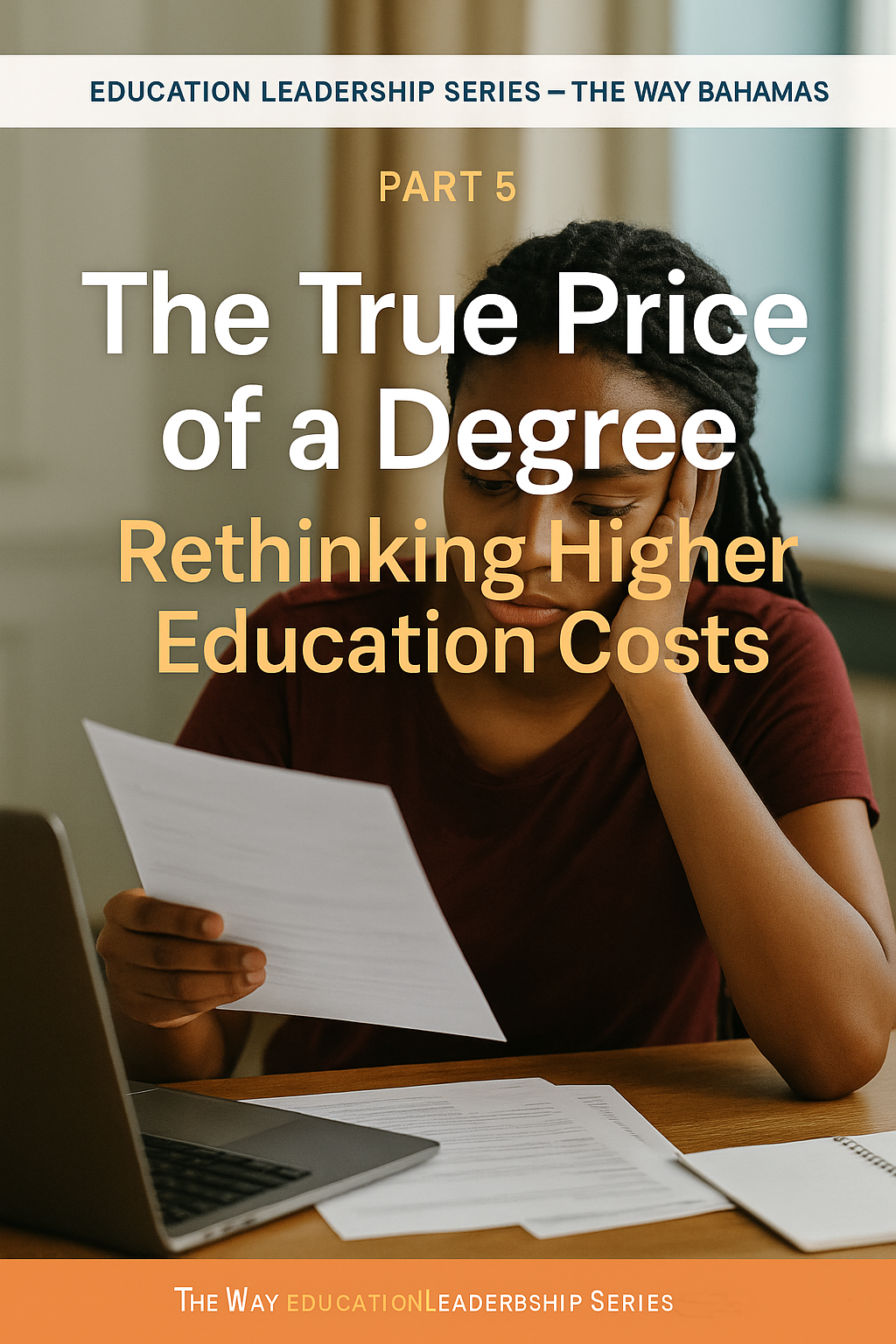
For first-generation and minority students like Jordan, the dream of a degree often collides with generational inequity. Research from the Urban Institute (2017) shows that Black college graduates owe, on average, $7,400 more in student debt than their White peers at graduation—and the gap triples within four years. Students of color are more likely to attend under-resourced public colleges, work longer hours while studying, and experience higher dropout rates when unexpected expenses arise.
Dr. Danielle Dawe (2023) describes it bluntly: “When financial strain enters the classroom, it becomes the fourth subject no one teaches—survival.”
The human toll shows up quietly: in missing textbooks, skipped meals, canceled semesters, and the haunting feeling of falling behind in a race that was supposed to level the playing field.
