


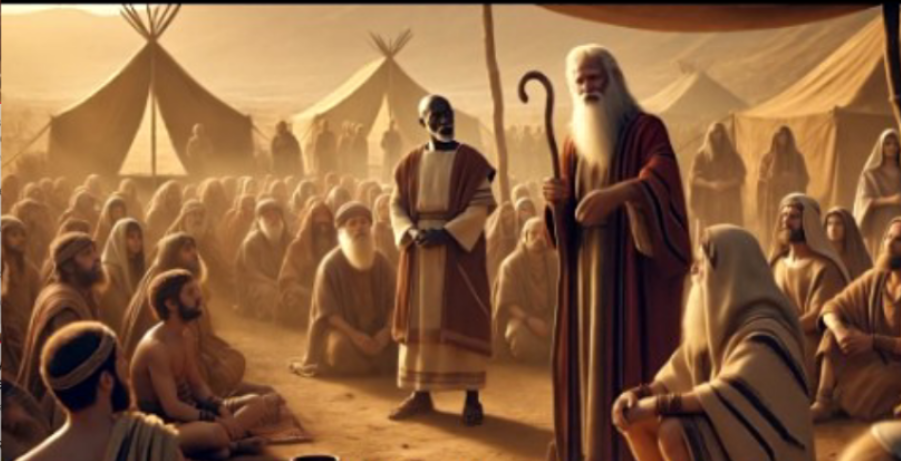
Moses was challenged, and relief was provided in the form of wisdom from an observer. Walvoord and Zuck (1989) posit that Jethro urged a delegation of responsibilities, but Moses was not to abdicate his responsibility to teach the people. Relief would be achieved through a collaborative effort where Moses would “appoint spiritually and morally qualified men as judges to implement the keeping of the Law (Exod. 18:16, 20-21; Walvoord and Zuck, p. 136). Foundry (2018) further describes how collaborative ministry greatly benefited the people of God: Jethro recognized that the current system would fail, as the workload was too heavy for Moses; the result was “the implementation of a multi-tier judicial system of capable leaders with indispensable qualifications” (p. 202).
This historical recount of Moses’ leadership challenge would foreshadow God’s plan for His church. Foundry (2018) refers to this unfolding of God’s divine plan as a “process of leadership diversification or democratization” (p. 203). How is this related to the research problem? In visits and during fellowship with the Bahamian churches, this author observed that many pastors try to do the work themselves despite appointing supporting leaders (often ordained elders and ministers). How does this impact ministry effectiveness? Does the pastoral leadership team feel ill-equipped for the task?
Keep in mind, Moses was a great leader. Unfortunately, he wore many hats – mediator, miracle worker, warrior, prophet, priest, lawgiver, and architect (Foundry, 2018, p. 203). As Moses’ leadership journey progressed, the opportunity for further assessment of the health of his organization (the people of Israel) manifested in a complaint to his leader (God):
Why have You been so hard on Your servant? And why have I not found favor in Your sight, that You have put the burden of all this people on me? I am not able to carry all this people by myself, because it is too burdensome for me (Num. 11: 11, 14; NASB).
