


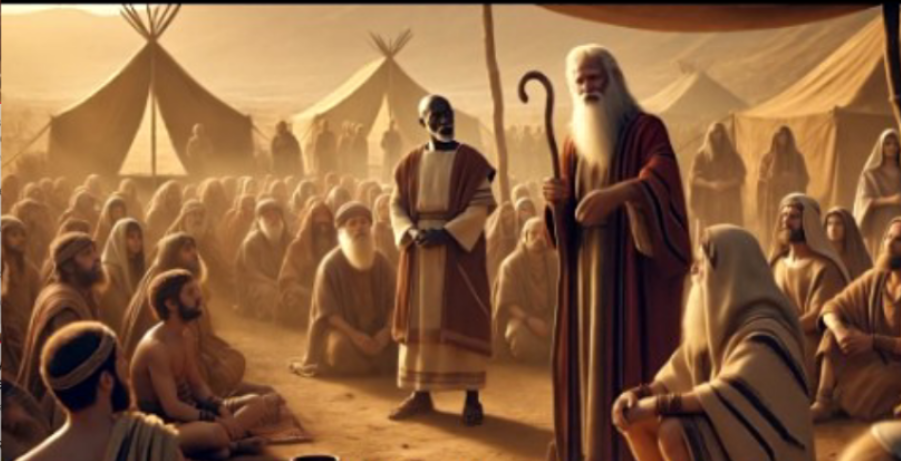
God’s response:
Gather for Me seventy men from the elders of Israel, whom you know to be the elders of the people and their officers, and bring them to the tent of meeting, and have them take their stand there with you. Then I will come down and speak with you there, and I will take away some of the Spirit who is upon you and put Him upon them; and they shall bear the burden of the people with you, so that you will not bear it by yourself (Num. 11:16-17; NASB).
The reader should note that God explicitly acknowledges His Spirit working in and through Moses. Allen et al. (2017) contends that the elders who would be appointed to share Moses’ burden “would share the same Holy Spirit who animated and empowered Moses” (p. 219). God’s intention, from the beginning, then, was for shared/participative leadership (“and they shall bear the burden of the people with you, so that you will not bear it by yourself,” Num. 11: 17b, NASB). This serves the best interests of the church, and facilitates healthy risk-taking, trust (allowance of feedback and innovative ministry ideas), and healthy conflict (encouraging the extraction and exploiting of team members’ ideas) [Lencioni, 2002, p. 197-204].
This practice of shared leadership and the use of diverse spiritual gifts would become the hallmark of the Christian church. Foundry (2018) contends that Jesus was engaged in the practice of ministry gifts delegation and leadership diversification (Mat. 10; Lk. 9-10), and a distinct reality in the Book of Acts (6:1-6, 8:4-8; p. 204). The Apostle Paul would expound on this leadership paradigm in his epistolary practice (Eph. 4; Rom. 12; 1 Cor. 12). Both historical and current literature point to the principle of shared/participative leadership (1 Cor. 12: 12-26) as the impetus for growth.
Dr. Andrew Hall (2025)
