


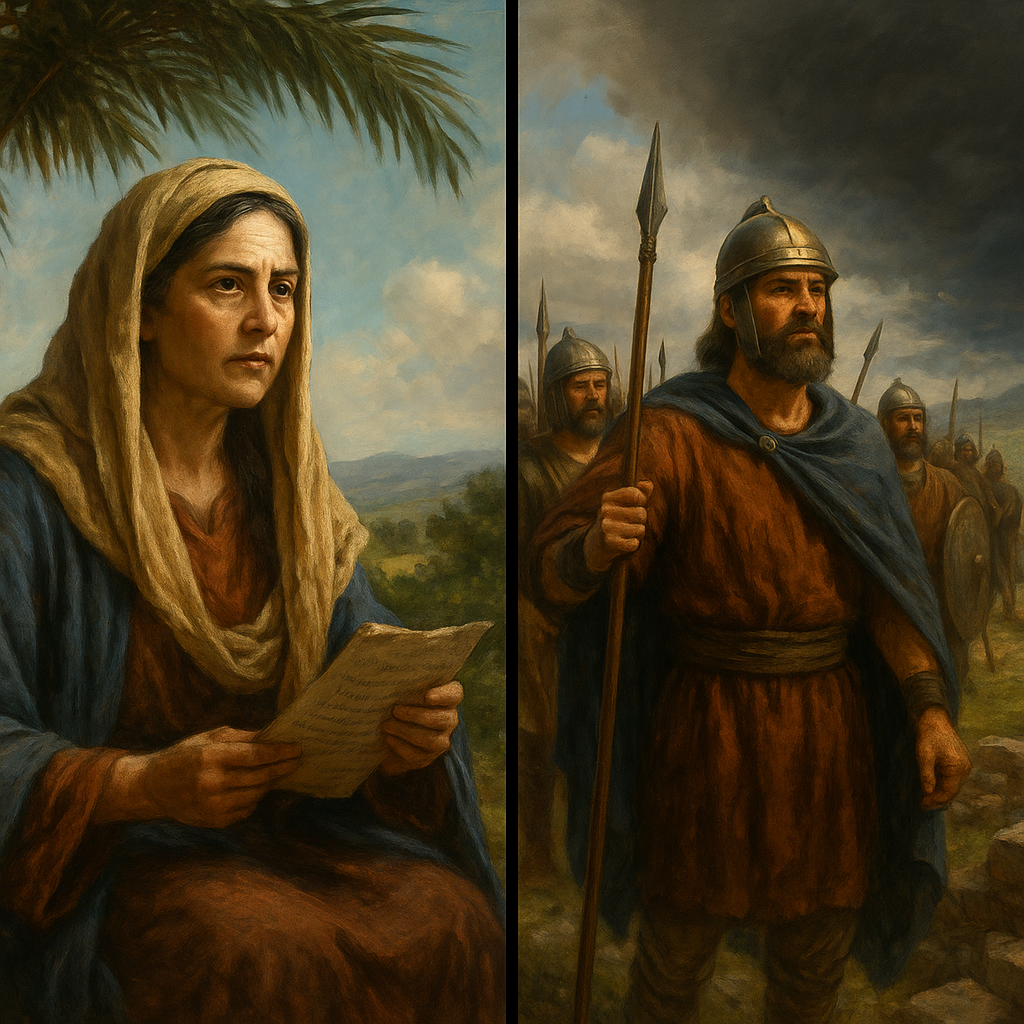
One day, she summoned Barak from Naphtali with a message: God had already appointed him to lead an army against Sisera. The command was clear, but Barak wavered. “If you go with me, I’ll go,” he said. “But if you don’t, I won’t.” (Judg. 4:8)
It was a revealing moment. Courage was scarce, conviction scarcer. But Deborah stood firm. “Very well,” she replied, “I’ll go with you—but the honor will not be yours, for the Lord will deliver Sisera into the hands of a woman.” (v. 9)
What follows is a story of divine irony and human faithfulness. At Deborah’s command, Barak gathered ten thousand men, and the Lord routed Sisera’s army. The oppressor fell, not by the sword of a warrior, but by the quiet courage of another woman—Jael, who struck the final blow while the nation’s men had hesitated.
When the dust settled, Deborah didn’t claim the glory. She lifted her voice in a song of praise:
“My heart is with the rulers of Israel, who offered themselves willingly among the people. Bless the Lord!” (Judg. 5:9)
Her song names the tribes who answered the call—and those who did not. Some stayed in comfort while others risked everything. Deborah celebrated faithfulness wherever it was found and lamented indifference wherever it hid.
