


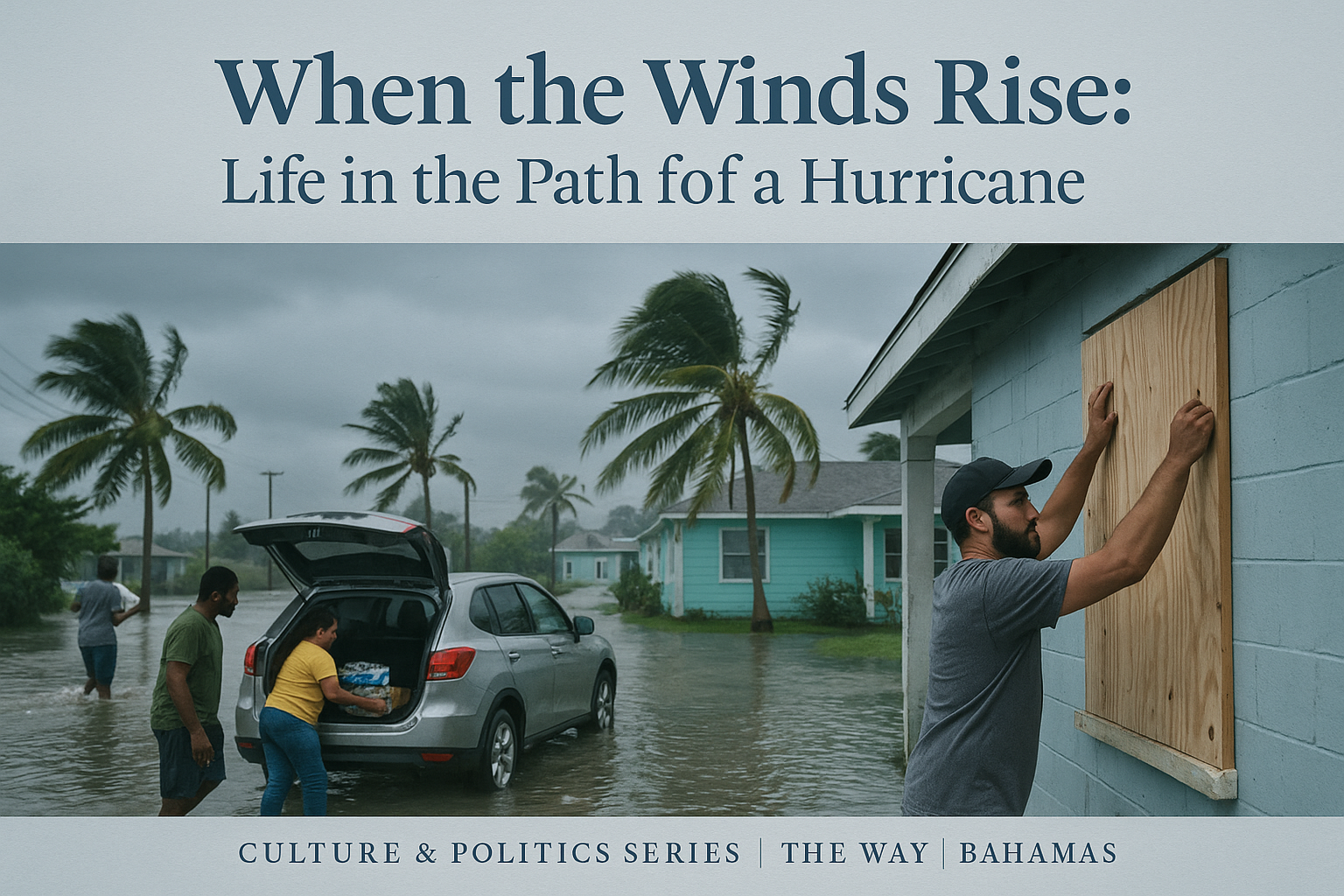
Everyday Heroes
At gas stations, long lines stretch into the streets. One woman, a teacher from Clarendon, smiles as she loads cases of water into her small car. “You can’t take chances. We saw what Gilbert did, what Dorian did,” she says. “You learn to be ready.”
In Andros, fishermen haul their boats inland, securing them with ropes and prayer.
In Freeport, volunteers at churches are checking on the elderly. Social media groups light up with updates about free sandbags and food drives. It’s a choreography that speaks to both trauma and resilience.
Lessons from the Past
Every storm carries memory.
Bahamians still recall the horror of Hurricane Dorian (2019)—the stillness before the surge, the days without power, the silence of loss. That tragedy reshaped how the region views disaster response. Both countries have since adopted stronger building codes, improved early-warning systems, and trained rapid-response teams to get aid where it’s needed faster.
Yet, for many, preparation goes beyond policy—it’s spiritual. Churches hold prayer meetings; communities join hands. Hurricanes test infrastructure, but they also reveal the strength of hearts.
