


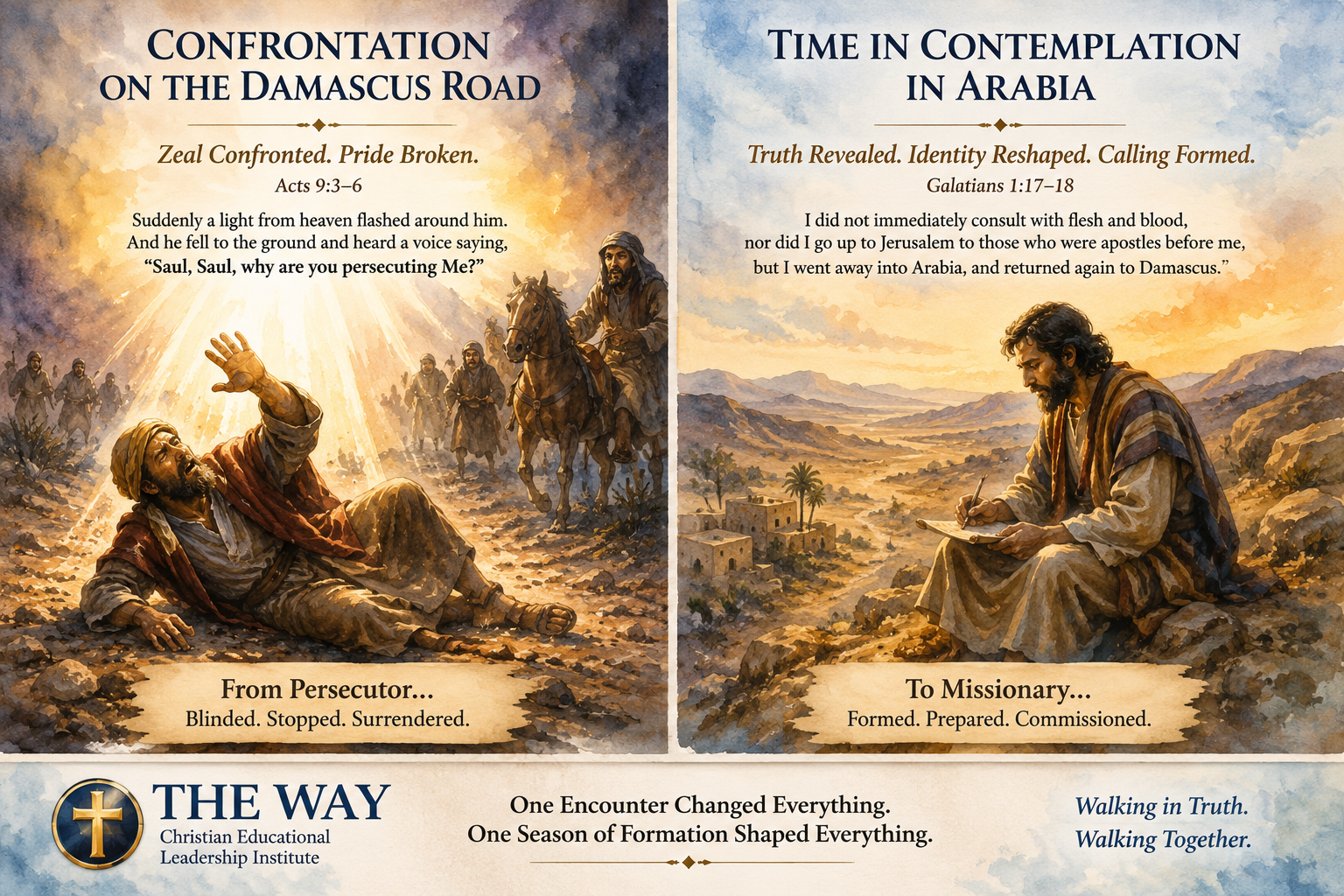
Paul: Before and After Damascus — Zeal Confronted, Pride Broken, Calling Awakened
THE WAY
Walking in Truth • Walking Together
Few transformations in Scripture are as dramatic—or as instructive—as the conversion of Saul of Tarsus. Before becoming the Apostle Paul, Saul was not merely indifferent to Christianity; he was one of its fiercest enemies. Yet the same man who once sought to destroy the Church would later become one of its greatest missionaries, theologians, and leaders. His story reminds us that God is not only interested in changing our actions. He is committed to transforming our hearts.
In Strand 1: Christian Leadership Formation, we explored Saul’s life as a powerful example of the truth that character formation often begins when our self-confidence is shattered and replaced with dependence upon Christ.
A Zealous Man Without Understanding
Saul first appears in Scripture during the martyrdom of Stephen. As Stephen was stoned, witnesses laid their garments at Saul’s feet, and Luke records that Saul approved of the execution (Acts 7:58–8:1). His hostility toward believers intensified rapidly.
Luke writes:
“Saul began ravaging the church, entering house after house, and dragging off men and women, he would put them in prison” (Acts 8:3, NASB).
From a human perspective, Saul appeared impressive. He was educated, disciplined, and deeply committed to his beliefs. Later he described himself as a Pharisee trained under Gamaliel and advancing beyond many of his contemporaries in Jewish zeal (Acts 22:3; Galatians 1:14).
Yet Saul’s story teaches an important leadership lesson: competence without spiritual formation can become dangerous.
He possessed conviction, influence, and ability, but these strengths were not yet surrendered to God. His zeal was real, but it was misdirected.
