


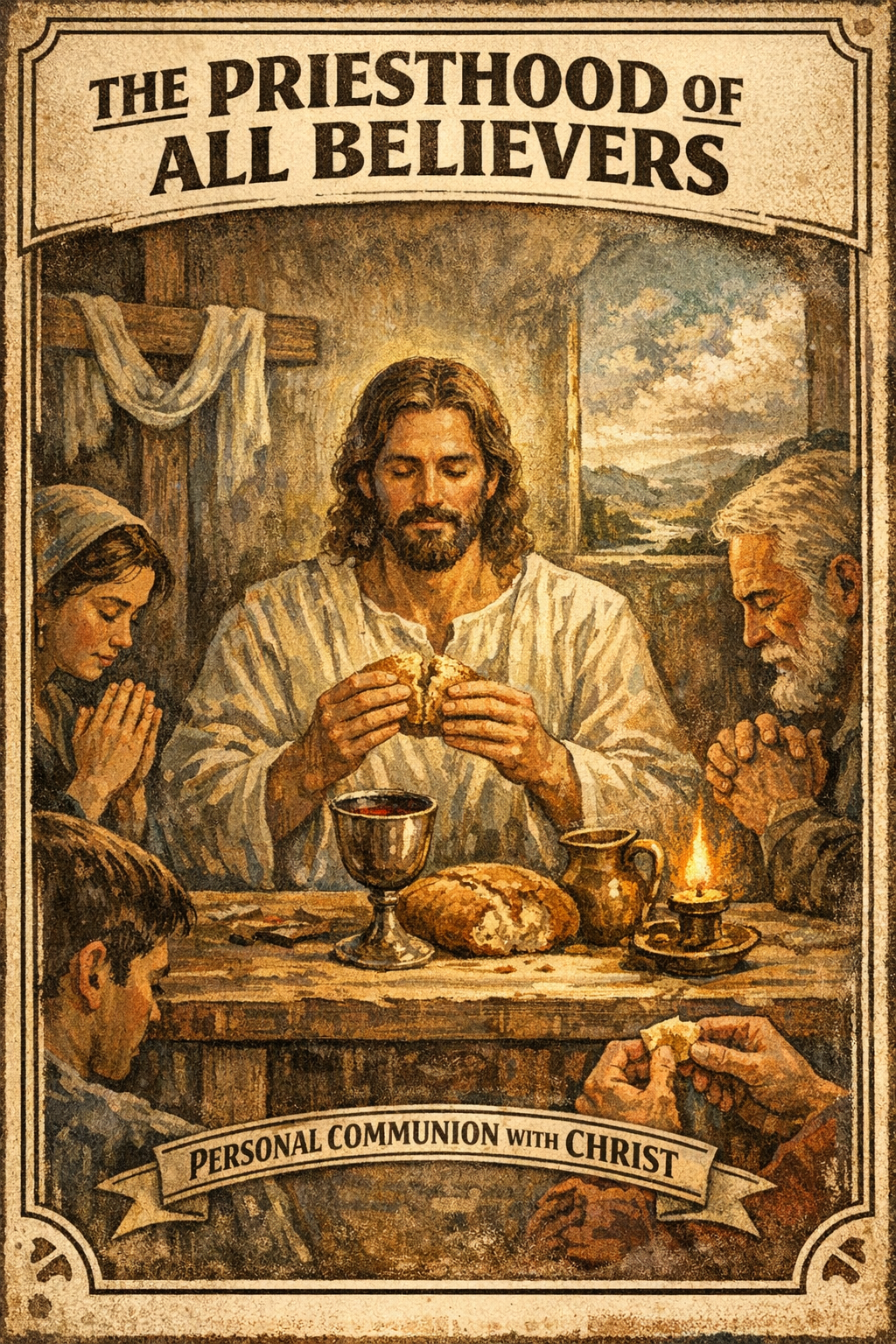
A THEOLOGICAL CONCLUSION
Based on Scripture, we can form this conclusion:
A believer may participate in Communion personally because:
- Christ is the only mediator (1 Tim. 2:5)
- All believers are priests (1 Peter 2:9)
- Communion is commanded to disciples (Luke 22:19)
- The early church practiced it in homes (Acts 2:46)
- Self-examination is personal (1 Cor. 11:28)
While Scripture supports personal participation, it also emphasizes:
Community and Order
“When you come together…” — 1 Corinthians 11
Communion is not:
- Casual
- Individualistic only
- Detached from the body of Christ
It is meant to be:
- Reverent
- Meaningful
- Connected to the Church
A believer can take Communion personally BUT it should be done:
- With reverence
- With understanding
- With self-examination
- In connection with the wider body of Christ
Because Jesus Christ is the final High Priest and all believers are part of a royal priesthood, Christians have direct access to God and may participate in Communion as an act of remembrance, faith, and obedience. While the Church often administers Communion in gathered worship, Scripture places responsibility on the individual believer to approach the table with reverence, self-examination, and understanding
The Way — Biblical Truth for Everyday Life
Dr. Kevin A. Hall
Founder & Director, The Way Christian Educational Leadership Institute
