


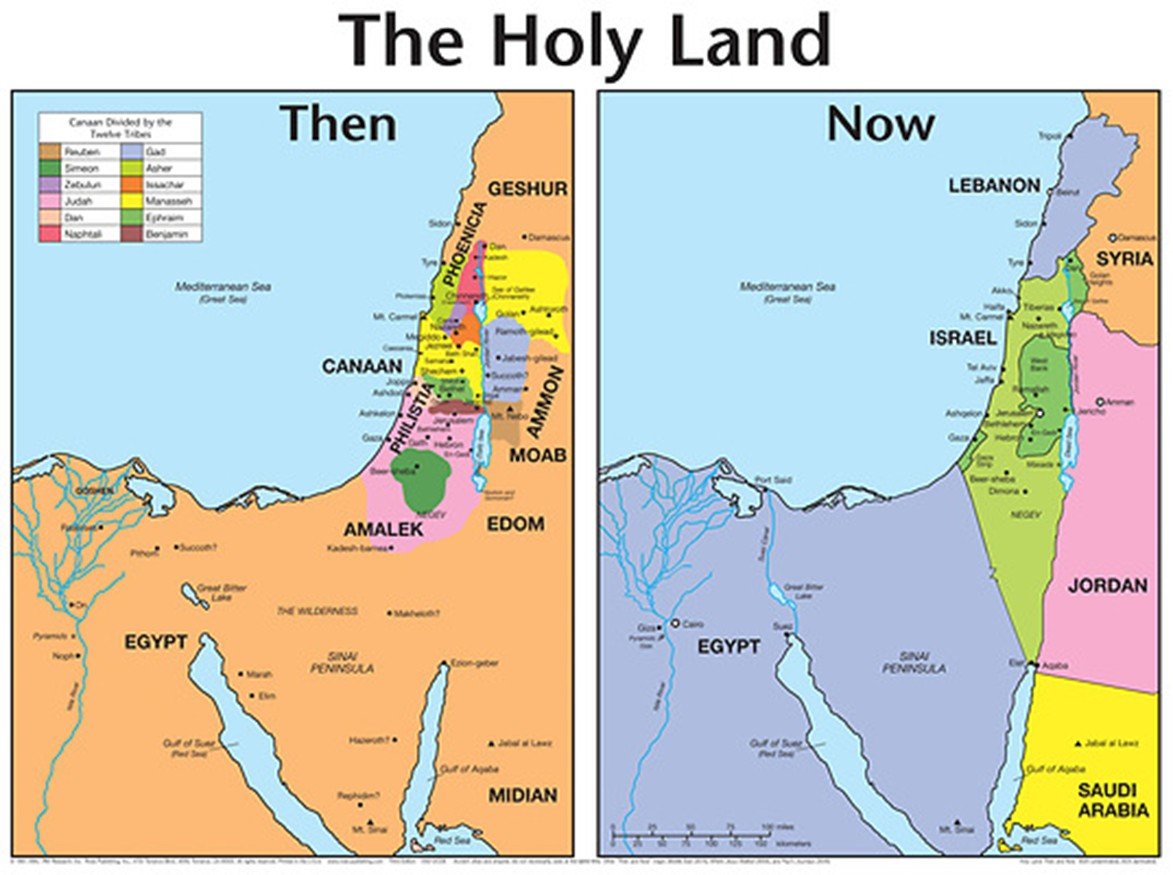
Over time, Abraham’s descendants became a nation, entered the land under Joshua, and rose to prominence under David and Solomon, with Jerusalem at its center.
But the story did not remain stable.
Loss, Exile, and Survival
Israel’s history is marked not only by promise, but by disruption.
Empires rose, and Israel fell under their power:
- 722 BC — Assyria conquers the northern kingdom
- 586 BC — Babylon destroys Jerusalem and the Temple
- AD 70 — Rome destroys Jerusalem again
- AD 135 — Jews are widely dispersed after rebellion
What followed was one of the most remarkable developments in human history:
For nearly 2,000 years, the Jewish people lived scattered across the world—and yet did not disappear.
They preserved:
- their faith
- their identity
- their language traditions
- their longing for Jerusalem
Few nations in history have survived without a homeland for so long.
The Unexpected Return
In the late 19th century, something began to shift.
A movement known as Zionism emerged, led by figures like Theodor Herzl, arguing that the Jewish people should return to their ancestral land.
This was not merely emotional—it became political.
Key developments followed:
- 1917 — Balfour Declaration
Britain supports a Jewish homeland in Palestine - 1947 — United Nations Partition Plan
A proposal to divide the land into Jewish and Arab states
Then came the defining moment.
1948 — A Nation Reborn
On May 14, 1948, David Ben-Gurion declared the establishment of the State of Israel.
Within hours, neighboring nations invaded.
Yet Israel survived.
Since then, the region has remained one of the most contested areas in the world, shaped by major conflicts:
- 1948 Arab-Israeli War
- 1967 Six-Day War
- 1973 Yom Kippur War
Today, Israel stands as:
- a modern democratic state
- a Jewish-majority nation
- a country where Hebrew—once largely dormant—is now spoken daily
- a nation that identifies Jerusalem as its capital
