


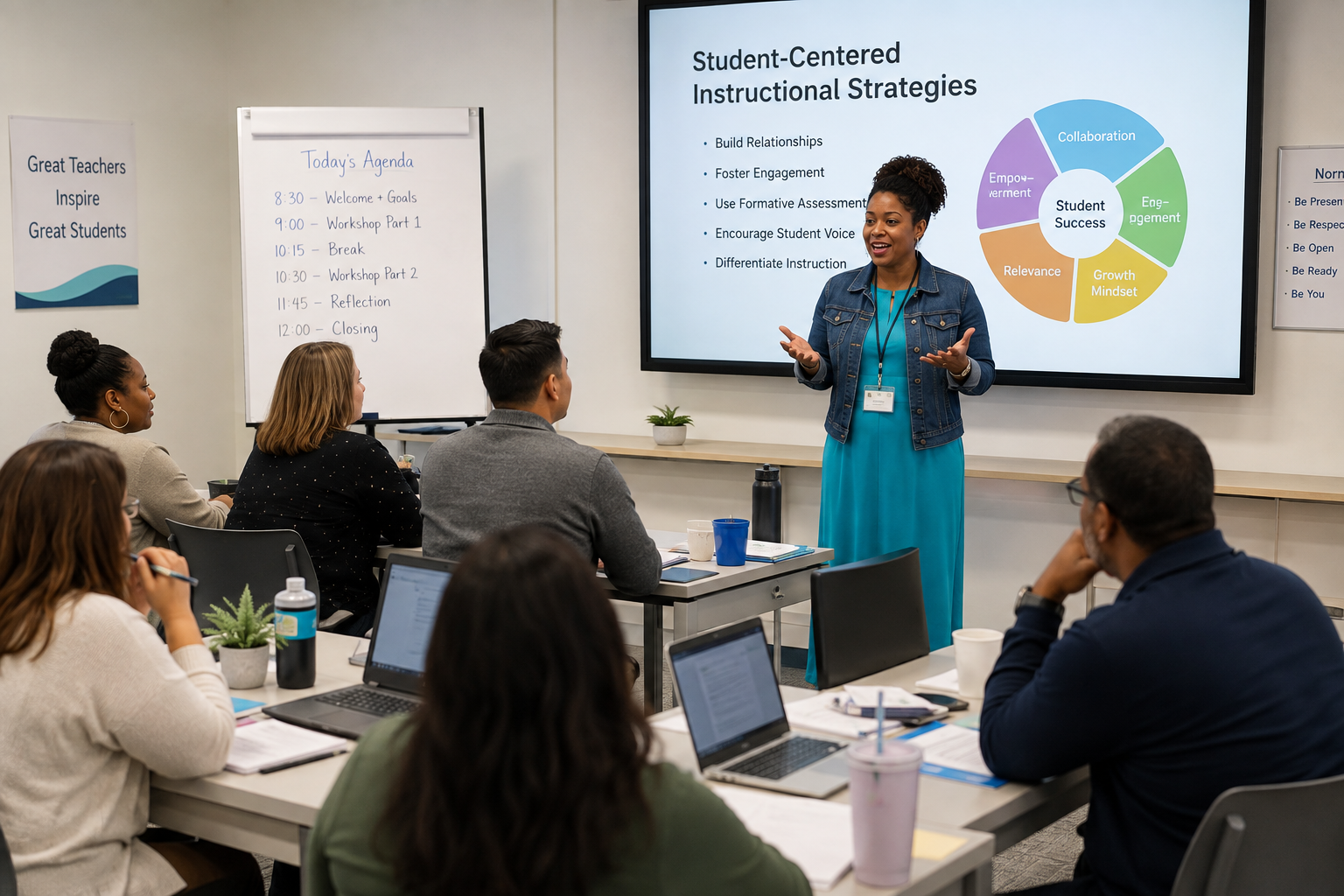
A Different Conversation About Student Engagement
This theoretical lens could reshape how we think about motivation and engagement in our schools.
Before concluding that a student “doesn’t care,” educators might ask:
- What level of thinking does this task require?
- Does the student understand why the learning matters?
- Are peer relationships helping or hindering development?
- Am I providing challenge without sufficient scaffolding?
- Does this classroom permit students to question, explore, make mistakes, and reconsider their thinking?
- Am I expecting a developmental response for which the learner has not yet been adequately prepared?
This does not eliminate accountability. Students still need expectations, boundaries, discipline, perseverance, and personal responsibility.
It does, however, make our response more intelligent.
From Teaching Content to Developing People
Perhaps that is the larger lesson for educational leaders.
A successful school cannot concern itself only with how much content students have mastered. Education should progressively transform how students think, interpret, decide, interact, and make meaning.
That means the student who enters Grade 7 should not simply know more by Grade 12.
Ideally, that young person should think differently.
More critically.
More independently.
More reflectively.
More capable of considering perspectives beyond his or her own.
For Bahamian educators wrestling with student motivation, classroom disengagement, peer influence, teacher-student relationships, and academic performance, cognitive development theory reminds us that sometimes the question is not simply:
“Why won’t this student respond?”
A better developmental question may be:
“What kind of environment, challenge, relationship, and support will help this student develop the capacity to respond differently?”
That is a very different way of seeing the learner.
And it may produce a very different kind of school.
Reference
King, P. M. (2017). Cognitive development. In J. H. Schuh, S. R. Jones, & V. Torres (Eds.), Student services: A handbook for the profession (6th ed.). Jossey-Bass.
The Way Christian Educational Leadership Institute
Educational Leadership Series | Volume 6
Walking in Truth • Walking Together
#EducationalLeadership #TheWayEducation #StudentDevelopment #CognitiveDevelopment #BahamianEducation #StudentEngagement #TeacherDevelopment #StudentSuccess #TeachingAndLearning #EducationBahamas
