


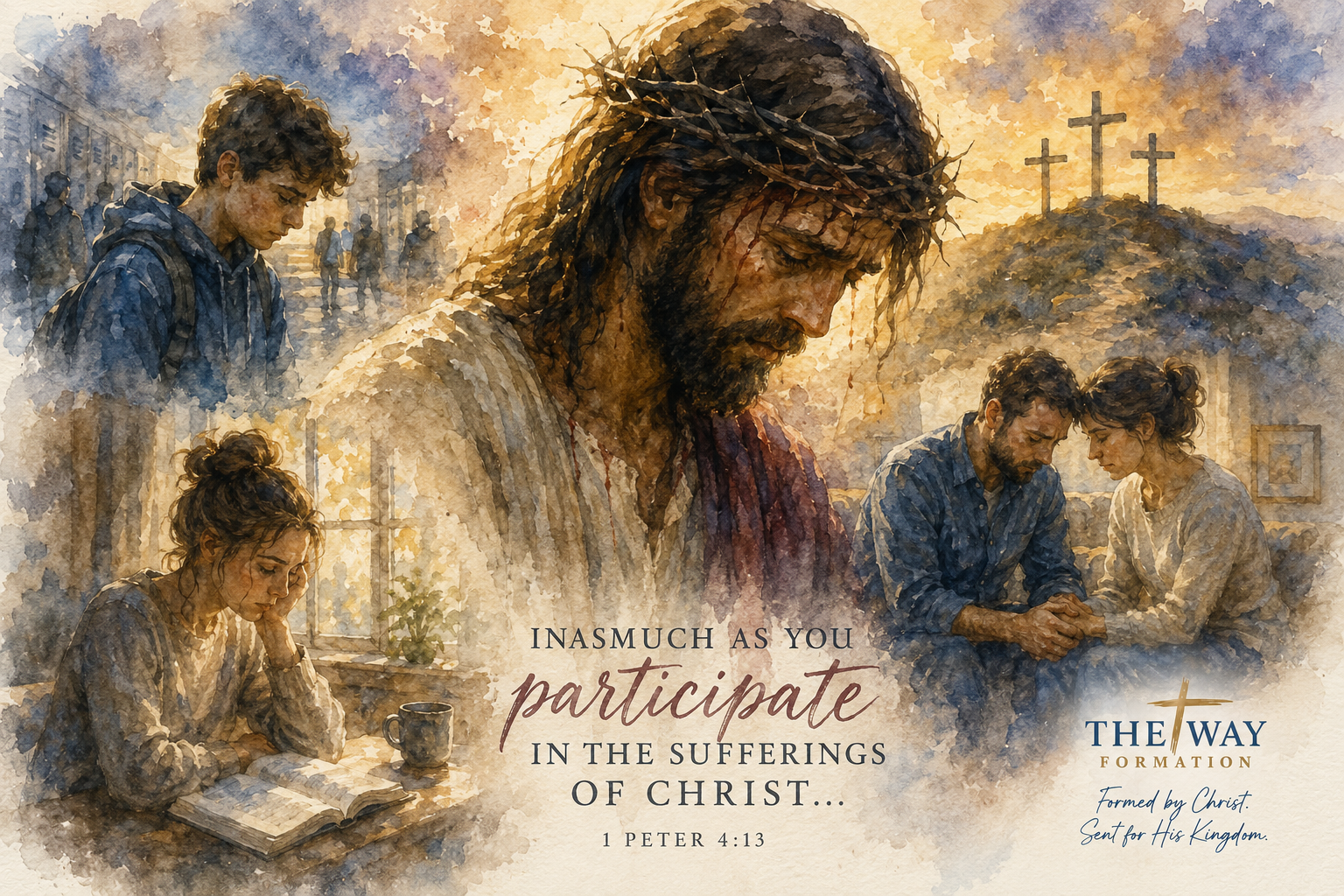
Peter himself never forgot the moment Judas approached with a kiss. One of Christ’s closest followers handed Him over. The disciples scattered. False witnesses lied about Him. Soldiers mocked Him. They struck Him, spit upon Him, stripped Him, and crowned Him with thorns. The One who healed others was beaten by the very people He came to save. The One who calmed storms stood silent while hatred raged around Him.
The cross was not only physical agony—it was public humiliation. Crucifixion was designed to shame. Jesus endured mocking crowds, abandonment, thirst, suffocation, and unimaginable pain. Yet perhaps the deepest suffering came in carrying the weight of sin and separation, crying out:
“My God, My God, why have You forsaken Me?”
And yet Peter says believers participate in these sufferings.
How?
Not because believers repeat Christ’s atonement. Only Christ could bear sin for humanity. But believers share in the pattern of His life. The world that rejected Him will often reject those who follow Him. The loneliness Christ felt, believers may feel. The misunderstanding He endured, believers may endure. The temptation, sorrow, pressure, and spiritual warfare He faced become familiar territory for those who belong to Him.
