


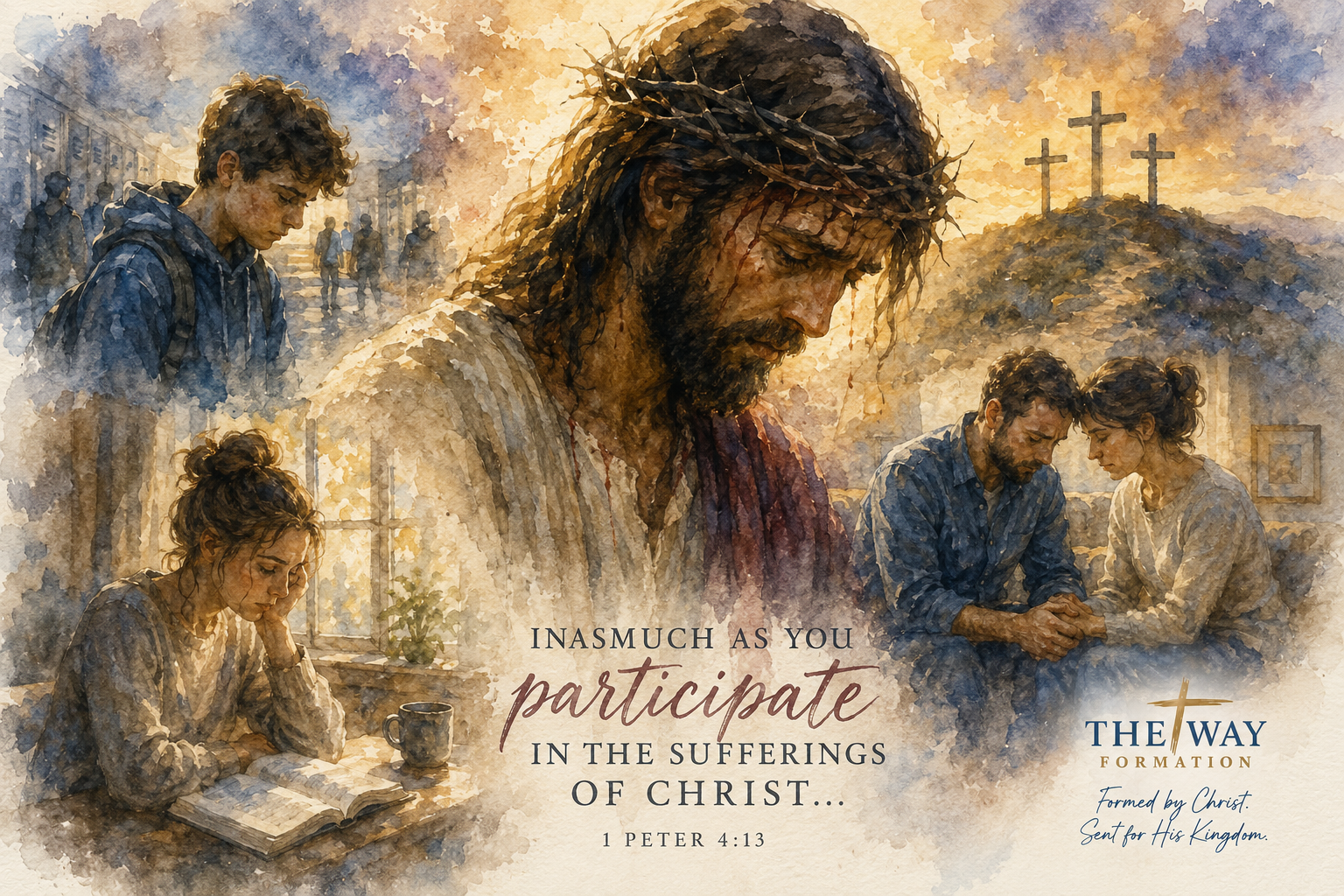
For a teenager, this might mean the pain of standing apart from peers. It may mean refusing to compromise values in order to fit in. It may mean feeling isolated for choosing integrity over popularity. Peter would say: Christ understands that loneliness. He too stood apart from the crowd.
For a single adult, the suffering may look different. It may be disappointment, delayed hopes, financial pressure, anxiety about the future, or the ache of carrying burdens alone. Watching others move into stages of life you long for can quietly wear upon the soul. Yet Christ understands waiting. He understands solitude. Much of His earthly ministry was walked without earthly comfort or permanent home.
For a married person, suffering may appear in the form of relational strain, misunderstanding, sacrifice, exhaustion, or the daily laying down of self for another person. Love often requires dying to pride, selfishness, and personal ambition. Christ understands sacrificial love better than anyone. His entire life was one long act of giving Himself away for others.
Peter’s point is not that suffering itself is holy, but that suffering connected to Christ becomes meaningful. Pain is no longer random. Trials become places where believers encounter Christ more deeply. In suffering, believers learn dependence, humility, endurance, and hope. They begin to understand parts of Christ’s heart that comfort alone rarely teaches.
This is why Peter can speak of rejoicing. Not because suffering feels good, but because suffering confirms belonging. The believer realizes:
“I am walking a road my Savior Himself walked.”
