


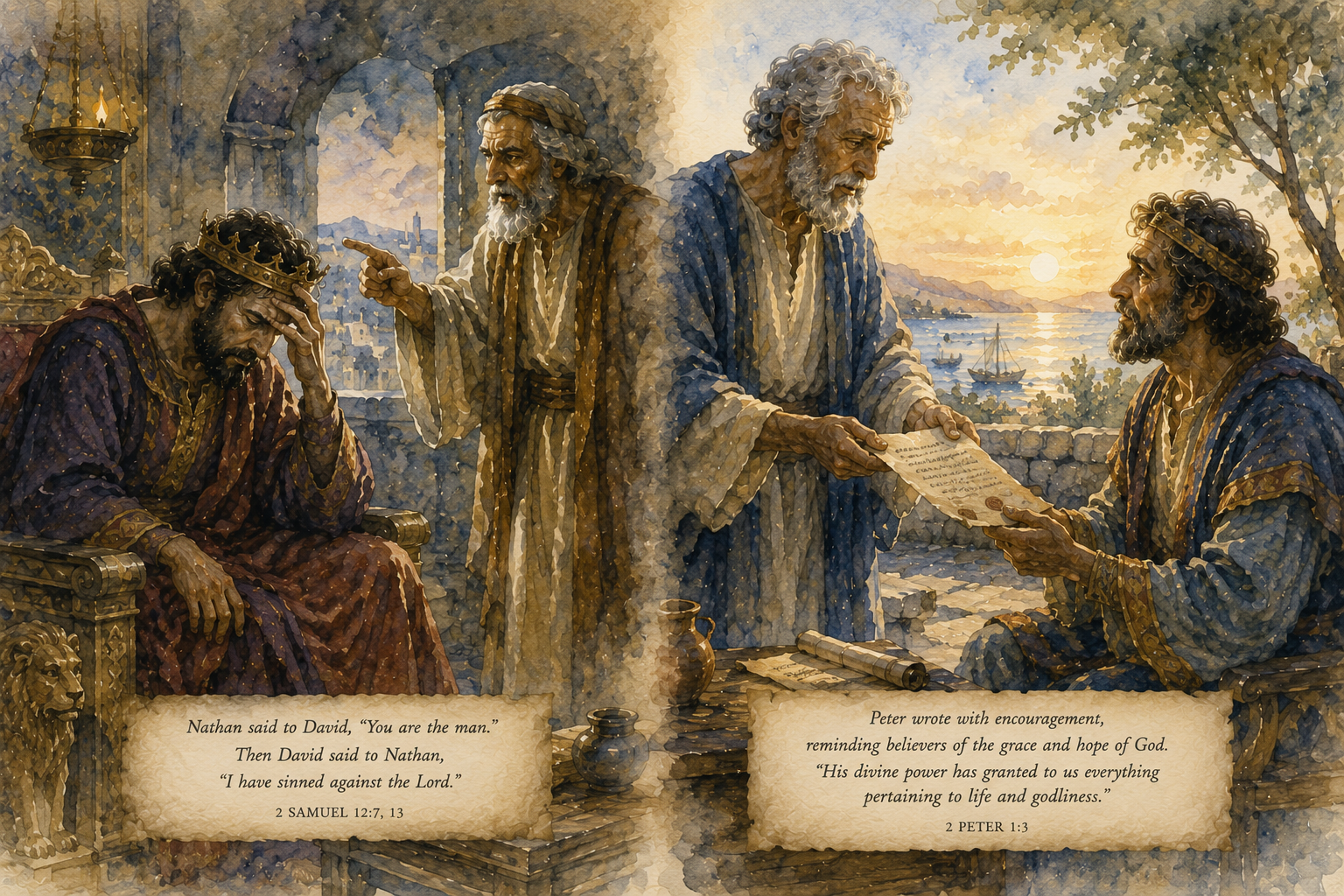
The Broken Heart of a King
David’s response reveals why Scripture remembers him differently than Saul. He simply said: “I have sinned against the Lord.” (2 Samuel 12:13)
No blame shifting.
No self-justification.
No attempt to preserve his image. Just confession.
The depth of David’s sorrow becomes even clearer in Psalm 51, written after Nathan’s confrontation. There we hear the cries of a broken man:
“Create in me a clean heart, O God, And renew a steadfast spirit within me.”
(Psalm 51:10)
David understood that his greatest loss was not his reputation. It was the damage done to his fellowship with God.
Again he prayed: “Restore to me the joy of Your salvation.” (Psalm 51:12)
Notice the language.
He does not ask God to create salvation. He asks God to restore joy.
David knew God had not abandoned him. But he also knew that sin had robbed him of intimacy, peace, and spiritual vitality.
Every fallen leader understands this pain.
The deepest wounds often occur within the soul long before they become visible to others.
